


May 30, 2026
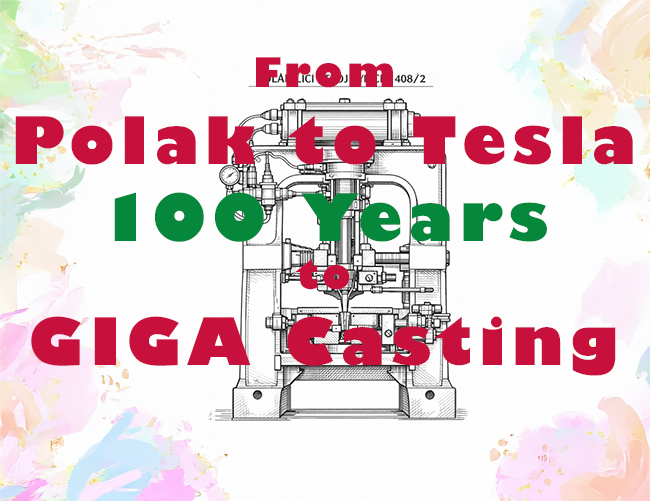
Sometimes you see things but don’t put them into context. Today I received a new blog from Euroguss in my inbox on the topic “A bond
May 14, 2026

Yesterday, not far from my house, in Lázně Libverda, a spring meeting of the Expert Committee 06 for Die Casting took place. I have already had
November 13, 2025
Great news, the presentation from the Holeček conference on Giga Tools for Giga Casting has been published. Many thanks to Ms. Ing. Barbora Bryksí Stunová, Ph.D.
September 24, 2025

Our research consortium will present at the NCK Days in Liberec. This time, Assoc. Prof. Tomáš Čegan, CSc. will present preliminary results from the development of
June 10, 2025

Hot work material applications to die casting dies require special control, as defined by Nadca 207:2025. It states: Grain size: Grain size shall be developed using
May 25, 2025

The frequency of new versions of Nadca 207 is increasing, now the version is :2025. Most of the changes are cosmetic, they are corrections of grammatical
March 21, 2025

I received an invitation from Mrs. Ing. Barbora Bryksí Stunová, Ph.D., from the expert committee of pressure casting, and it was a great honour for me.
March 16, 2025

Together with VŠB-TUO Ostrava (Technical University Ostrava) and Galvamet, we set out to verify the necessary technology for printing inserts of die casting dies according to
March 13, 2025

So, something has moved forward in GIGA Casting. Daido Steel has launched a new steel for GIGA molds. Its parameters are absolutely astonishing. https://www.daido.co.jp/en/common/pdf/pages/products/tool/dha_giga_leaflet.pdf If Nadca
February 1, 2025

GIGA casting is starting to take off in all directions. On March 5th and 6th, the Global GIGA-CASTING Congress will be held in Kassel, Germany,
January 27, 2025

Two years ago, I first mentioned the issue of GIGA casting and heat treatment of dies for this purpose at a conference of the Czech Heat
January 14, 2025

Last year, a new version of Nadca 207:2024 was released. Compared to the 2022 version, where some new principles were implemented, especially regarding the design of
September 15, 2024

Even though the floods are raging outside, the heat treatment market is in a calm mood. It looks like nothing is happening, but it isn’t. An
July 29, 2024

On my blog already in 2021, I published the theoretical course of the production process of the die-casting dies. https://www.jstconsultancy.cz/jak-na-zihaci-procesy-u-form-na-tlakove-liti/. Since time has advanced, I am
May 27, 2024

Fig. 1: Production of passenger cars by 2023 [1] I am personally very attracted to GIGA casting. On the one hand, because part of my
May 13, 2024

Questions are starting to multiply, where is the furnace that can quench the inserts for GIGA dies. So this is the beauty: And what are its
April 3, 2024

I’m two years late, but who doesn’t have one today. In 2022 the Nadca 207 update came out, but only now I managed to update
February 5, 2024

From the previous blog, it is clear that even if the pioneer of the new concept of car production is Tesla and Elon Musk, in terms
February 2, 2024

When I wrote last year after Thermoprocess in Dusseldorf about Mega and GIGA casting, I had no idea how big a problem was coming our way.
November 21, 2023

So glory, we already have the first samples … the next step is HIP Jiří Stanislav November 21, 2023
November 15, 2023

So I thought I was completely wrong when I prepared a lecture at a conference in Jihlava on the topic: Heat treatment of large dies for
June 25, 2023

After visiting Thermprocess 2023 in Dusseldorf, I was left a little scared. At the Chinese company Fulcrum-HSS, I found a mention of the 14th five-year plan
June 4, 2023

At the Heat Treatment Forum in Wroclaw, Janusz Kowaleski from Ipsen had an interesting presentation on “Choosing the right vacuum furnace”. All aspects of the selection
May 20, 2023

As I have long recommended this technology for testing thermal fatigue stress relaxation for die casting dies, I was a bit unhappy as I could not

March 16, 2023

Materials purchased in Class 2 In this case Nadca 207 says nothing. Even so, the steel should have the same quality as in the case
March 10, 2023

As I stated earlier, the material for die casting dies should be categorized in Class 1 or Class 2. According to this classification, testing also belongs
February 28, 2023

So, I’m back from vacation and I can continue my philosophizing about the Nadca 207. From previous posts I shared my opinion on the design of
February 15, 2023

If we have already designed the parts of the die, the next logical step is to categorize them in terms of process steps during the
February 12, 2023

I have already described the Nadca 207-2022 recommendation regarding radii on my blog herehttps://www.jstconsultancy.cz/nadca-207-2022-and-preparation-of-dies-for-heat-treatment/?lang=en, and regarding the placement of the thermocouples here https://www.jstconsultancy.cz/nadca-207-2022-thermocouples-placement/?lang=en However, there are
February 10, 2023

Not so long ago, I visited a major manufacturer of die casting tools. When I spoke with the designer, I asked him how he designs the
February 4, 2023

Sometime around 2003, I started promoting the R10 radius as the optimal radius for die casting dies parts for high-speed gas quenching. I was based on
January 31, 2023

Last year, a revision of AMS 2750 G was issued for the pyrometry of heat treatment furnaces. Because Nadca 207, rev. 2022 says that in order
December 11, 2022

As a forensic expert, I also deal with litigation in the field of the manufacturing and use of die casting dies. In this branch it can
December 3, 2022

At the conference in Jihlava, I expressed my opinion on the state of 3D printing in the Czech Republic. This video was posted on HeaTreatToday. I
October 22, 2022

There are few steel producers and suppliers who maintain a portfolio of heat treatment plants certified for the heat treatment of the steel they produce. At
October 21, 2022

Prospekt E Learning Engl 1 and samples October 21, 2022 Jiří Stanislav
October 7, 2022

Back in the days of Bodycote, I lectured on an alternative method for releasing internal stresses on die casting dies. At first glance, this method is
October 4, 2022

That’s how I managed to do an incredible job, my courses on Nadca 207 are translated into English. Almost two months of work! And why? Well,
October 1, 2022

Like last year, I have dedicated my time to an e-seminar hosted by SecoWarwick. Some things caught my attention, but many did not. I think the
August 31, 2022

One of the things I’ve learned over time is that tool makers or die casters don’t know, or don’t want to know, that they should be
July 25, 2022

After a long period of uncertainty, Nadca issued its publication No. 550 entitled “Tooling Certification for Die Casting, Die components fabricated by Additive Manufacturing”. I opened
June 30, 2022

Even if I’m already packing my suitcases for the holidays, he won’t give it to me, and I have to comment. The price of electricity has
June 24, 2022
18 Nadca 207 2016 As Quality Manual Proceedings of publications, Vacuum Heat Treatment and Heat Treatment of Tools, Conference, 2018, Puchov, Slovakia
June 24, 2022
17-practical-experiences-with-nadca Proceedings of publications, CZ National Conference, 2013, Jihlava
June 23, 2022

Are you looking for specifications for die casting dies at https://www.diecasting.org and can’t find it? Nadca has a new website and it is difficult to find
June 9, 2022

An interesting seminar of the Czech Association for Heat Treatment of Metals … June 9, 2022 Jiří Stanislav
May 12, 2022

Even before I deal with the practical possibility of applying this simplified control of steel input quality using Nadca 207 maps for annealed structures (Fig. No.
May 10, 2022

The vast majority of tool sources producing die-casting molds do not perform an initial material quality control according to Nadca 207. The question is why this
April 5, 2022

On Thursday, March 31, the spring meeting of the Czech Foundry Company, Expert Commission for Die Casting, Section 06, focused mainly on die casting of aluminum

February 11, 2022

Motto of my presentation : Murphy law .. It is very easy to complicate something, on the other hand, it is often very complicated to simplify
December 5, 2021

I have had a lot of promise since this event, unfortunately postponed due to Covid 19 …. 5 December 2021 Jiří Stanislav
November 19, 2021

My article on Nadca 207 has been published on the TAV Vacuum Furnaces website. Since I have been recommending and supporting this specification since 1999, it
November 7, 2021

On the side of die casting tool manufacturers, a permanent problem is that they do not consider input material control to be so important as
October 29, 2021

An integral part of die casting dies manufacturing process is annealing. Its purpose is to relax stresses, caused both by different types of machining and by
October 6, 2021

When I wrote in the last blog about the relationship between Nadca 207 and AMS 2750F, it occurred to me that our tool shops, which produce
October 2, 2021

Manufacturers of die casting dies should follow certain procedures under Nadca 207 to provide certain guarantees for their service life. In addition, they need a heat
September 13, 2021

In parts I and II, I described the heating phases, the aim of which is to heat up the parts to the austenitization temperature and then
August 3, 2021

In the first part of the heating, we achieved that the inserts are heated to a temperature corresponding approximately to the setup furnace temperature Tp =
July 12, 2021

Correct heating in a vacuum furnace has some drawbacks. Its success depends not only on the heat treater, but also on the tool manufacturer. Therefore, in
June 2, 2021

Sometime more than 20 years ago, I tried to find a model that I could show to the customer, and which could specify exactly why the
May 5, 2021



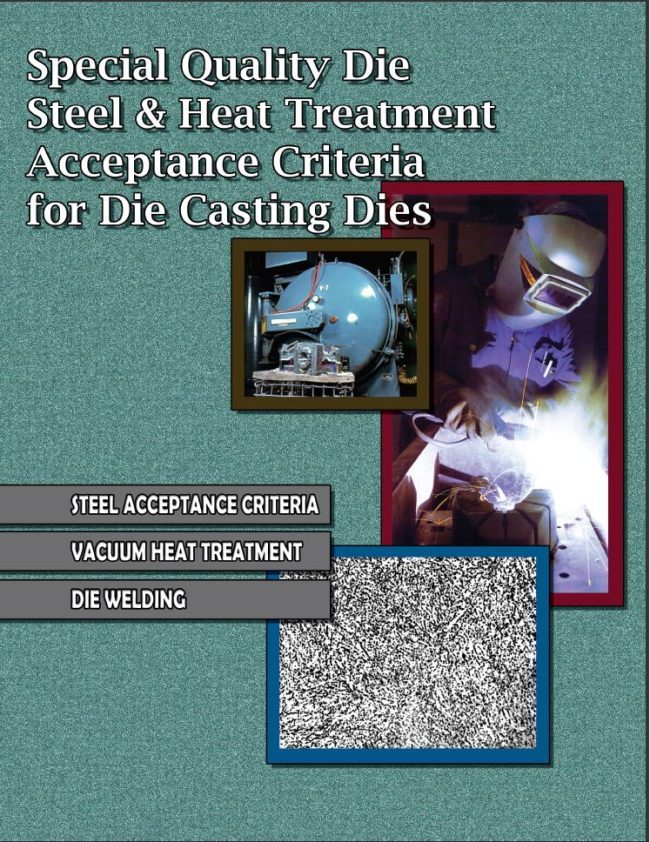


Case study damage of large tool by hardening process and compensation for damage in court proceeding
Introduction The heat treatment of the shaped insert made of 1.2343 ESU steel was ordered from the commercial heat treatment shop, vacuum hardening and tempering of