When a Polak beat Musk by a hundred years
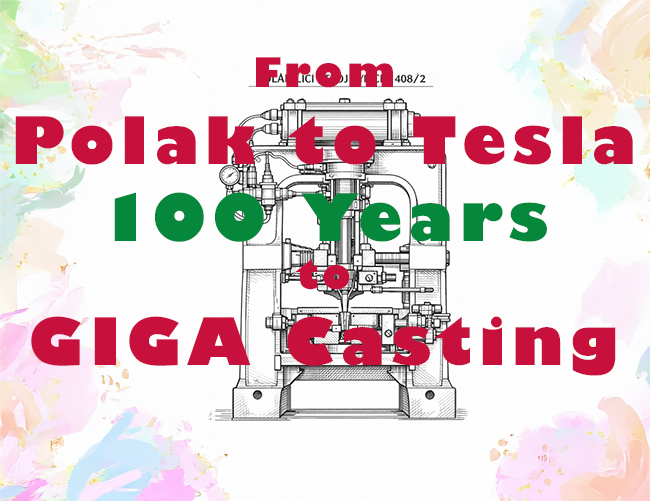
Sometimes you see things but don’t put them into context. Today I received a new blog from Euroguss in my inbox on the topic “A bond for life, or just for a moment? How electric cars are changing the partnership between the automotive industry and die casting” [1]. That wouldn’t be that interesting, but the very first paragraph mentions Josef Polák from Prague. He developed and patented a new die casting technology back in 1927, one of the first in the world.
That’s a bombshell, and I didn’t know that. In fact, Elon Musk and his GIGA casting for Tesla cars are still benefiting from these patents to this day. Does he know?
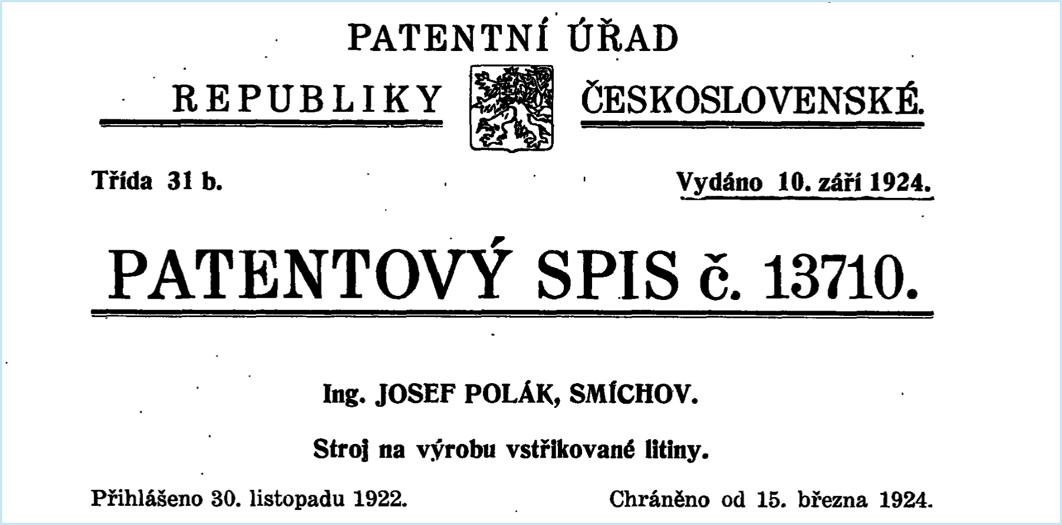
Fig. 1 – Josef Polák’s archive patent for a die casting machine
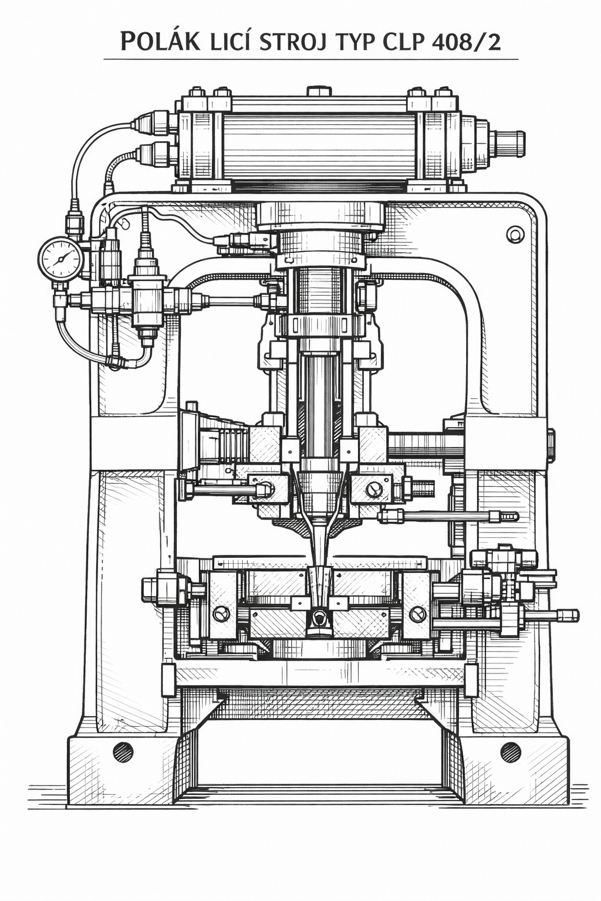
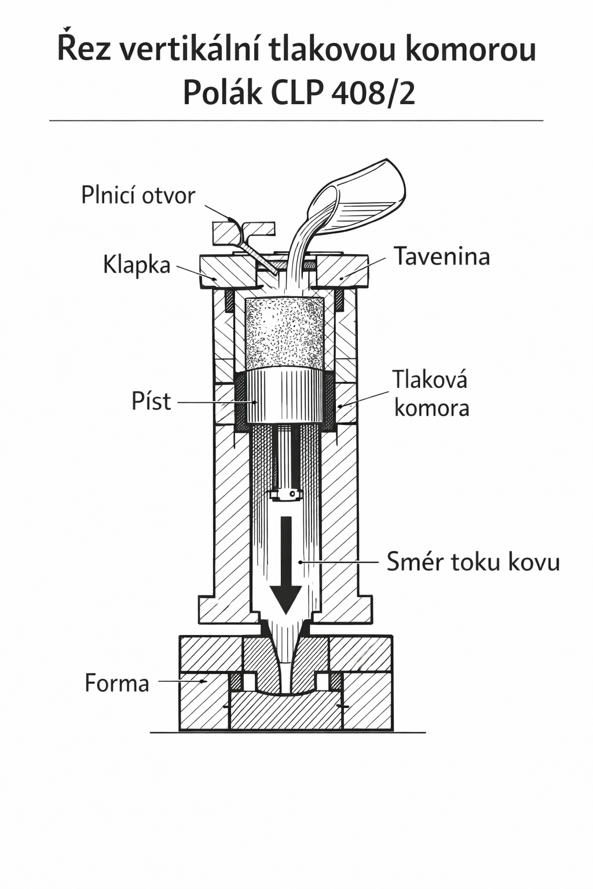
Fig. 2 and 3 – Schematic representation of the POLAK CLP408/2 die casting press
When we founded HT-PROGRES in 1992, the company POLAK from Prague, Dělnická 63, was one of our first clients for hardening tools for die casting. But the company no longer belonged to the POLAK family. Because I am sometimes quite neat, we even found our settlement agreement from 2001. The company was led, as it is further clear, by Antonín Procházka and the technical director was ing. Roman Papoušek.
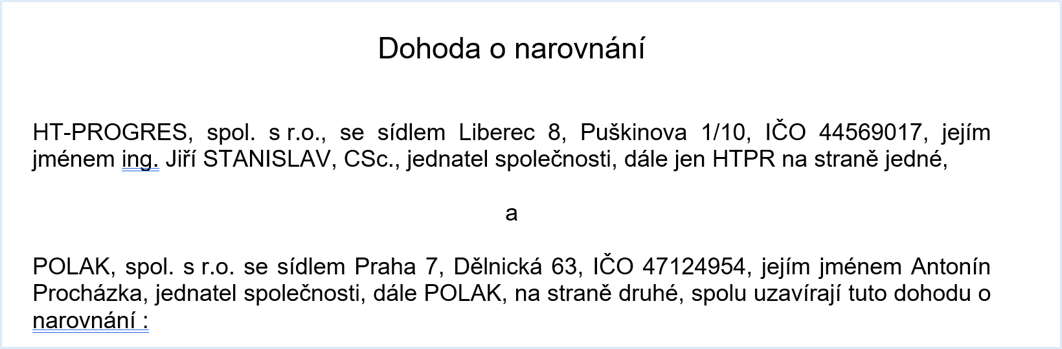
Fig. 4 – Archival document of HT-PROGRES s.r.o. settlement agreement from 2001
This settlement agreement was written because of a cracked die insert for Whirlpool Poprad. I still remember it today, because solving the cause of the cracked die insert became the basis and the beginning of my acquaintance with Nadca 207 and its promotion. Neither POLAK nor we knew about this specification. But because we were already Bodycote at that time, I met Corwyn Berger at a meeting somewhere.
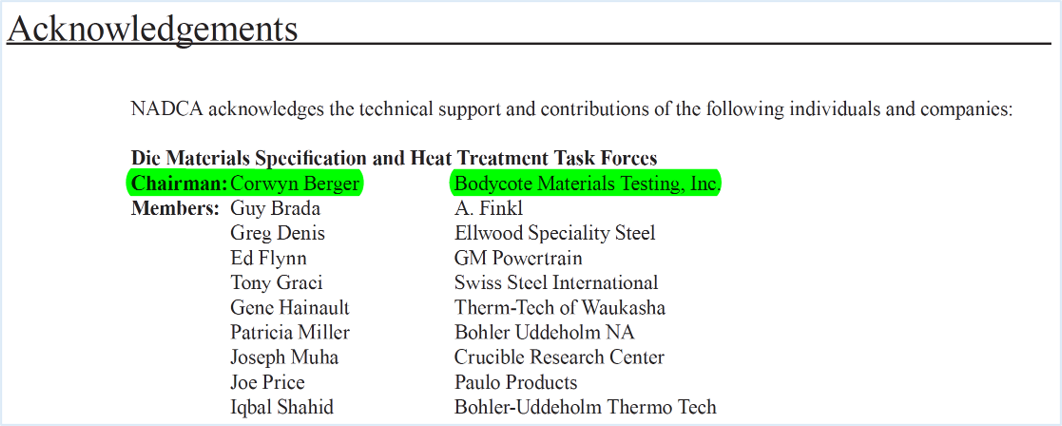
Fig. 5 – Authors of the Nadca 207 specification, version 2006
He worked at Bodycote Material Testing in the USA and was one of the co-authors of Nadca 207. When we told him the story, he immediately knew where the problem was. It was as if the Holy Spirit had enlightened me. Word got out and I invited him to the Czech Republic and we did a professional seminar for all the die casting and tool shops in Brno, probably at the Avanti Hotel, but I don’t remember exactly. I remember there were almost 100 people there. I still have his presentation hidden away to this day.
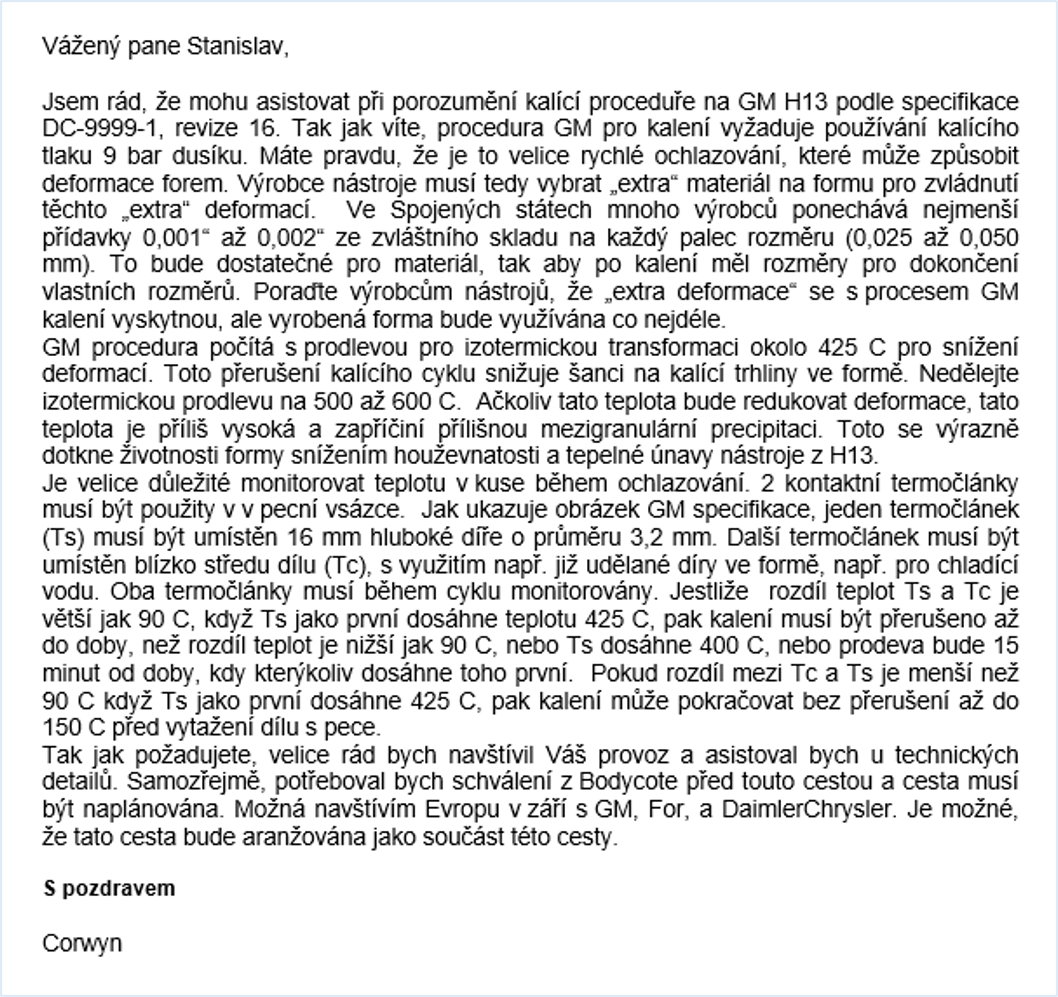
Fig. 6 – Translation of an email from Corwyn Berger from 2000, archive of HT-PROGRES s.r.o.
But if I return to the POLAK company, its history is mainly linked to the period before the Second World War. Ing. Josef POLÁK became a renowned innovator all over the world, with patents registered both in our country and in the USA, Germany, UK, Italy, and Sweden. He was the first to develop and manufacture cold chamber die casting machines, a technological leader in Europe in the years 1928–1938, an exporter to many countries, a development center that moved die casting from an experimental method to an industrial standard.
His work laid the foundations for modern high-pressure casting of aluminum and zinc. Ing. Josef Polák died on October 17, 1939 in Prague, just before he could emigrate. However, the production of pressure presses continued, but was transferred to the Vltavský company in Rakovník, later TOS Rakovník.
As I found on Wikipedia, Nazi Germany benefited significantly from his patents and machines during the war. Companies producing aluminum castings for war production (Nüral, Mahle and others) largely used machines from the POLAK Prague company, or their copies. This is documented in a file by two American experts, researching the machinery and technology of die casting factories in occupied Germany in 1945. Of the Polák family, only the older son survived the consequences of the Holocaust, who managed to leave for Britain in time. There he later founded a die casting company under the name Proma (Progress Maschienen).
Because the Polák family was of Jewish origin, the property was probably Aryanized during the war, and later nationalized. I have not been able to find out if it was returned to the family as part of the restitution after the revolution, but it is unlikely. From the records, it seems that the restitutions applied to property nationalized after 1948, and here the property was taken during the war by the Nazis. The second problem was that there was no one left to take over the company
In 1992, just like our first vacuum heat treatment shop in Czech Republic HT-PROGRES, the company POLAK s.r.o. was registered in the Commercial Register. However, no Polák name appears in the history of entries under ID 47124954, so it is not clear how it happened exactly. The company’s managing director was Antonín Procházka. If I recall, there was only a tool shop and one pressure press for testing dies at Dělnická 63.
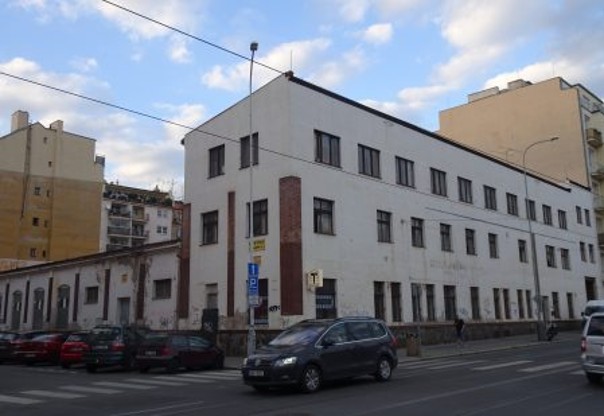
Fig. 7 – The original building of the POLAK company at Dělnická Street 63(https://martinfryc.eu/galerie/tovarna/)
In 2007, the company merged with CML SYNERGY s.r.o., but Antonín Procházka had already been removed from the register at that time, having left the company in 2003. Subsequently, POLAK s.r.o. was pressured to move out of the address Dělnická 63, and they suffered a similar fate to many others; such production is simply not allowed in the city center today.
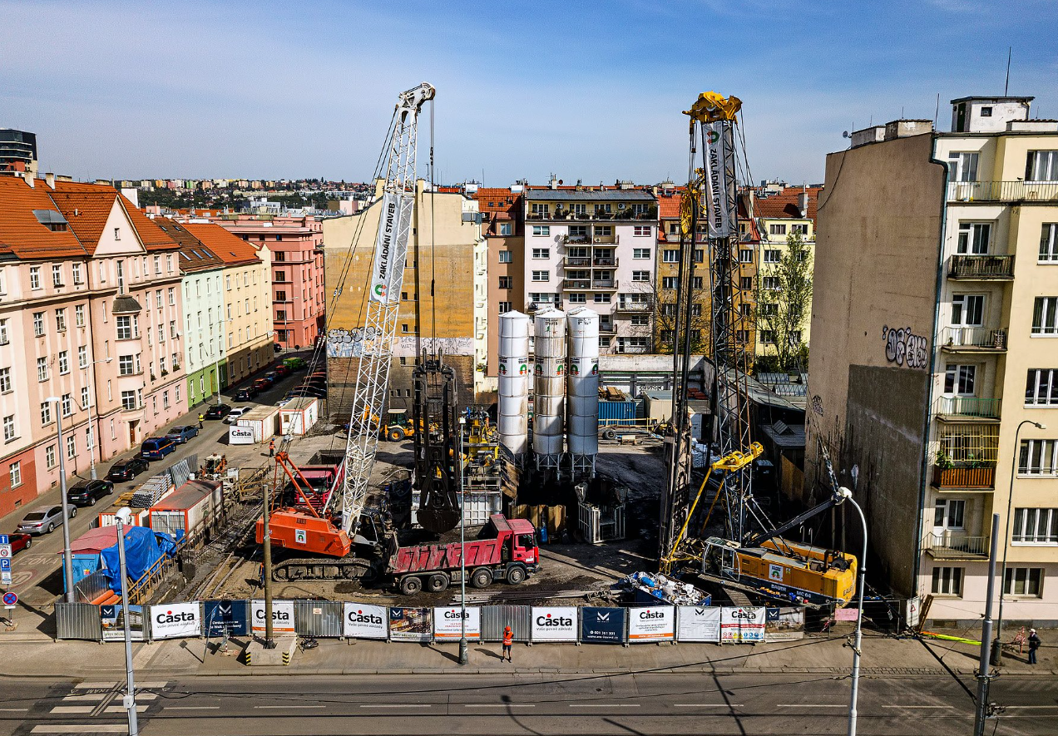
Fig. 8 – Address Dělnická 63, photo from https://zakladani.cz/cs/realizace/archiv-realizaci/delnicka-ul-63-praha-7-holesovice, z roku 2020
The next intermediate step is the company BaL Z08 s.r.o., registered in Mimon and registered in March 2007. In 2013, it merged with Beneš a Lát. This marked the end of the fundamental historical changes. The die casting plant in Mimon is still operational today and is managed by the family company Beneš a Lát.
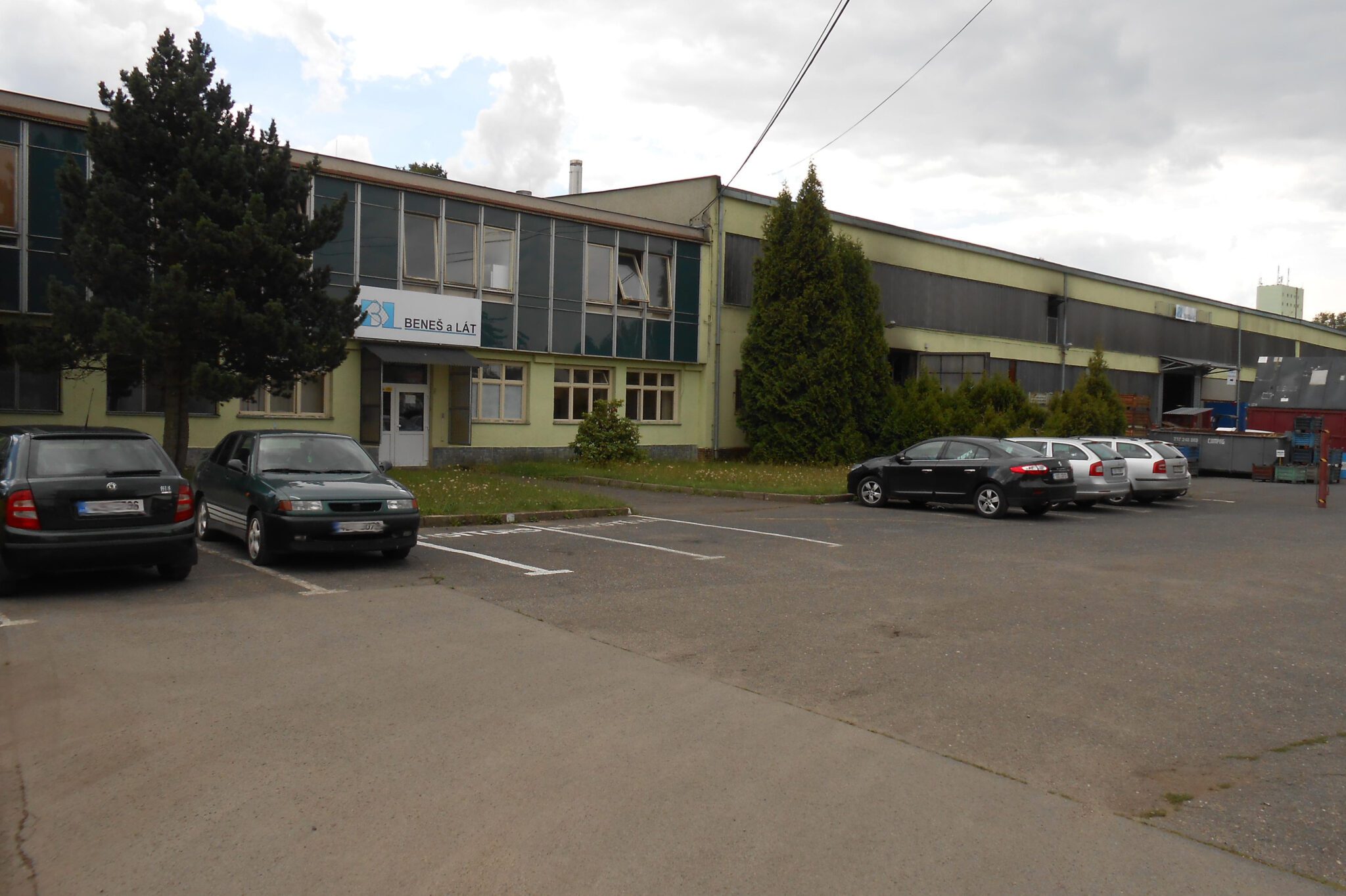
Fig. 9 – Beneš and Lát die casting factory in Mimon
Development projects are being created in the Holešovice location, and so POLAK s.r.o. is definitely disappearing.
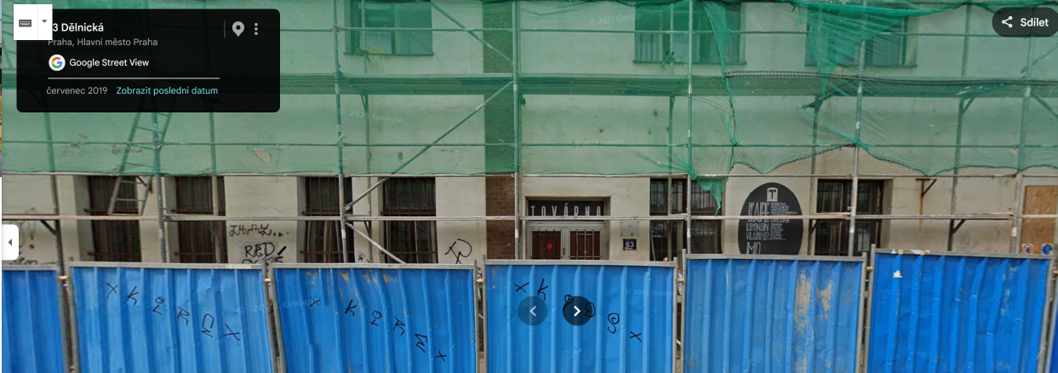
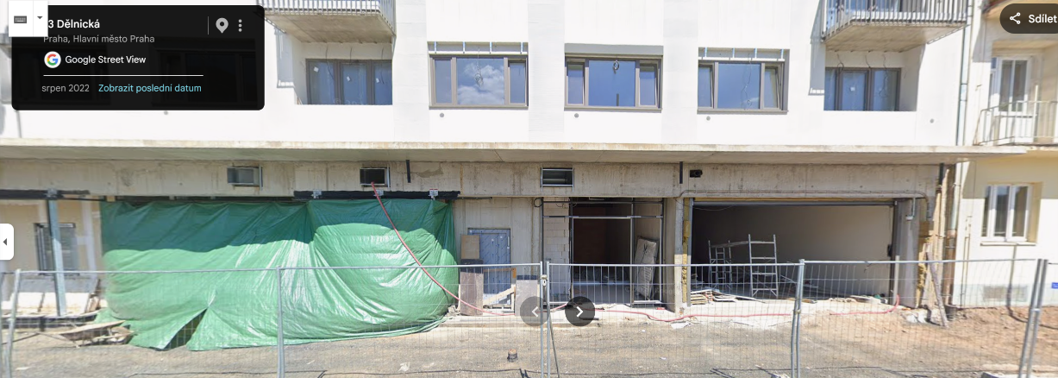
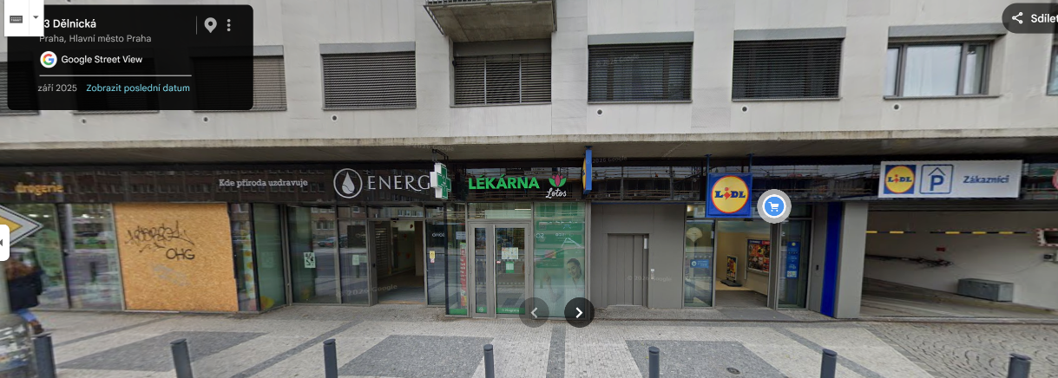
Fig. 10 – Dělnická 63, Google Street z roku 2019
Fig. 11 – Dělnická 63, Google Street z roku 2022
Fig. 12 – Dělnická 63 Google Street z roku 2025
I found this beautiful illustration on the website of the entire genesis of the Beneš & Lát company, which, surprisingly, was also founded in Holešovice. It was founded in 1934 by Mr. Josef Beneš, but in 1938 it moved to Průhonice. From the company’s website, you can read that the name Lát already appears here at this time, when Mr. Josef Lát becomes the husband of the founder’s widow.
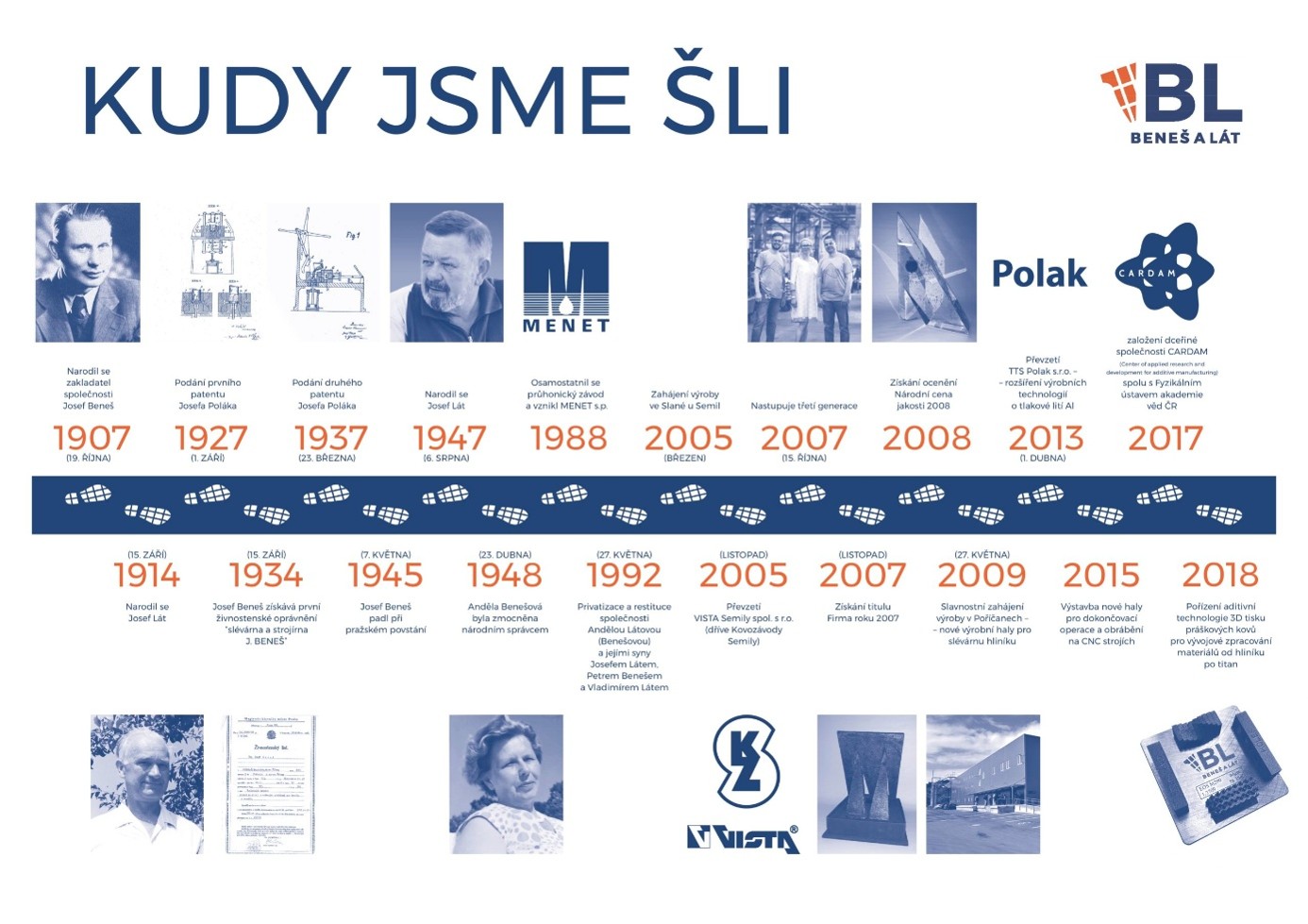
Fig. 13 – Historical map of the Beneš and Lát company [2]
In this case too, the company was nationalized in 1948, and in the following years 1948-1976 it was gradually incorporated under Kovolis and later under METAZ. All this under the baton of Mr. Josef Lát. After the revolution, the company’s assets were returned to the family as part of restitution, and so this story continues to this day.
The story of the pioneer of die casting, Ing. Josef Polák from Prague, is slowly coming to an end. Even though the complaint from the POLAK company caught us off guard, POLAK essentially changed our lives by forcing us to study die casting dies hardening for these applications. And since Bodycote also had Corwyn Berger on his team at the time, we had a perfect teacher in our own team. That cannot be forgotten. Unfortunately, since 2001, when he lectured in Brno, tool shops have not learned much.
On the other hand, die casting has skyrocketed into a field that now wants to preferentially produce cars via GIGA casting. And let’s face it, it’s the path of the future, which was started by our engineer Josef Polák from Prague.
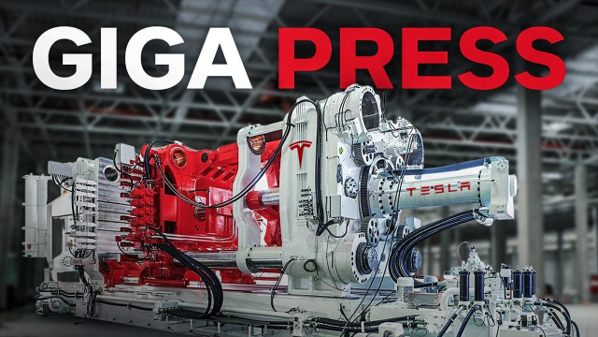
Fig. 14 – https://thinkster.co/content/tesla-giga-press-6
The circle has closed. Our cooperation with the POLAK company evoked our entry into the world of Nadca 207 a long time ago, without us knowing the historical context. Now that I have penetrated this history, I appreciate even more that we were able to contribute at least a little to what ing. Josef Polák started. And since this year it will be exactly 100 years since he filed his first patent for a casting machine, it is a reason to remember it when we meet a Tesla car on the road.
[1] – https://www.euroguss.de/en/euroguss-365/2026/05/how-evs-are-reshaping-automotive-die-casting-partnerships
[2] – https://jansusanka.cz/ostatni/rodinny-podnik-benes-a-lat-a-s-1-cast/
=======================================================================================================
Are you solving a similar problem? I will help you with the analysis…
 40+ years of experience in the field
30+ years of experience… HT-PROGRES, Bodycote, Galvamet
cooperation… VŠB, Czechimplant, ECM Technologies, TAV Vacuum Furnaces, GHC Invest
12+ years of expert activity
Want to ask for a solution or want a non-binding consultation? Click on this link, I will usually respond within 24 hours. Contact email
========================================================================================================
Jiří Stanislav, Ing. CSc.
Consultant and forensic expert
========================================================================================================
30/5/2026