How many GIGA vacuum furnaces will be needed?


Fig. 1: Production of passenger cars by 2023 [1]
I am personally very attracted to GIGA casting. On the one hand, because part of my life I worked as the head of a large tool factory, on the other hand, because the rest of my life I was involved in vacuum heat treatment, and above all the application of Nadca 207 for our customers. But as I register the happenings regarding the issue of GIGA casting and GIGA die casting dies, I can’t find anything related to the hardening of heavy weight inserts for GIGA tools. And so, I embark on my own reflections. Already because VOLVO started building the GIGA factory in Košice, and I already know that it will not be the last application of this revolutionary technology in the Czech and Slovak Republics.
In 2023, 75.7 million cars were produced worldwide. Half of it in China, the rest US + EU27+UK + Japan. Since most large car companies are playing with the idea of switching to GIGA casting, it is possible to estimate how many GIGA presses will be needed, how many GIGA dies, and how many GIGA vacuum furnaces for the heat treatment of GIGA die inserts will need to be put into operation.
For the basic consideration, I assume that gradually 30% of the world’s car production will switch to GIGA casting, so we will be talking about the production of 22.5 million cars per year. That’s a cautious view.
The fact that it is a prospective direction is evidenced by the considerations of most car companies. And it has nothing to do with electromobility, even if it started it. In fact, not only an electric motor and a battery, but also any other motor can be placed in those aluminium castings. And even if it brings a high initial financial cost, it can be seen as the only technology today that makes it possible to produce the base of a car in 3 minutes, and the entire car in 10 hours. For the classic existing concept of car production, it is from 18 to 35 hours [2]

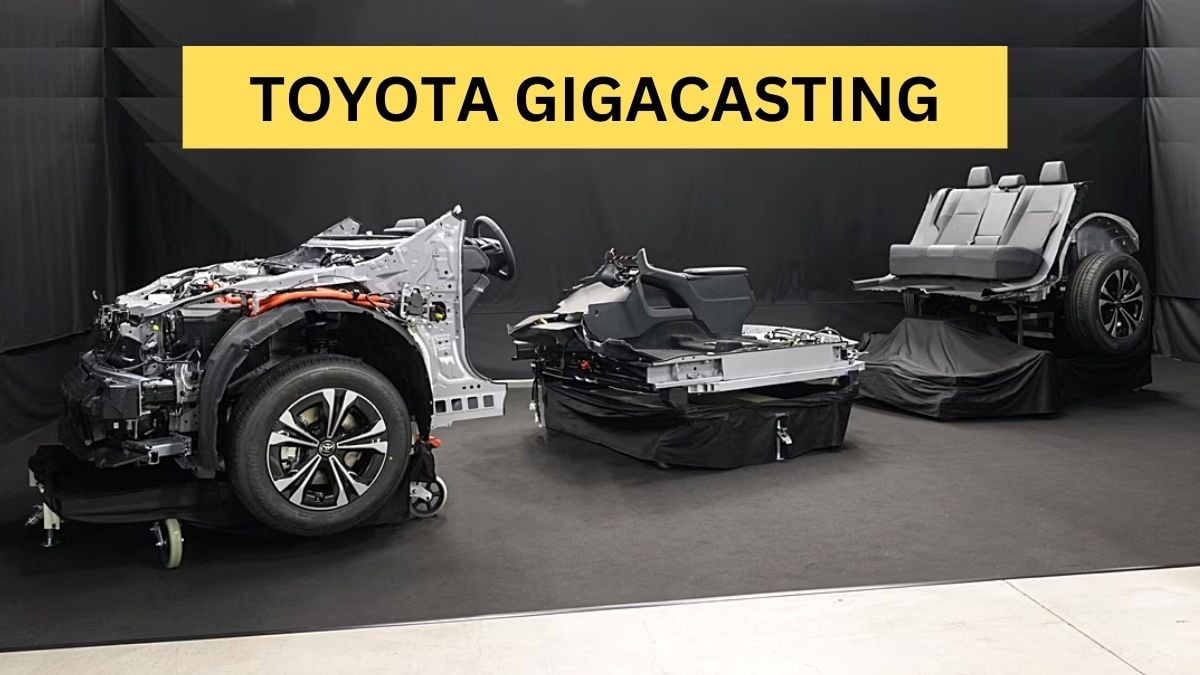
Fig. 2: Toyota car manufacturing system [3]
The basic concept of GIGA casting is that 3 basic parts of the car are cast. Front, middle and back. It is possible to consider the variant of GIGA presses over 16,000 tons, when all 3 parts are combined into one casting, but for simplicity I am taking into account the current situation, when we need 3 parts.
The basic equipment of the GIGA factory is 3 GIGA presses, each equipped with one die with a service life of 100,000 shots. This is also the estimated annual capacity of one GIGA factory. So, if I want to make 22.5 million cars, at a minimum I need 3 x 22,500,000/100,000 = 675 GIGA presses, depreciated over 20 years, and 675 GIGA dies that I have to renew every year.
But if the lifetime of the die will be only 50 thousand shots, and this is announced by Alon Musk, the creator of the company TESLA, then I need 2 dies per year for one GIGA press. In total, it is therefore something between 675 pieces of GIGA dies with a lifetime of 100,000 shots, or 1,350 GIGA dies with a lifetime of 50,000 shots. And 13,500 to 27,000 pieces will be needed during the life of the GIGA press of those dies. When each one weighs up to 200 tons, that’s a really large amount of steel.

Fig. 3 – Estimated annual consumption of GIGA tools
The question is, are we even prepared for this in terms of heat treatment? What applies to small die casting dies will also apply to large GIGA dies. That is, the rules of NADCA 207. And since CQI-27 for die castings says that whoever makes tools for the automotive industry must follow Nadca 207, then the rules for GIGA dies are quite obvious.
So, we need to achieve a cooling rate of 28 C/min from the surface thermocouple Ts. And since the die parts weigh several tons, not several kg, we don’t have the equipment for that. That is, GIGA vacuum furnaces with adequate weight and cooling capacity.
The following figure shows the effect of the characteristic dimension of the insert, i.e. the thickness, on the cooling rate of the block, measured from Ts. It can be seen that a 1×1 m and 400 mm thick block made of DIEVAR material can still be reliably quenched without having carbides, bainite or pearlite in the structure. All this is of fundamental importance for the lifetime of the die. We only have to increase the furnaces and cooling capacity accordingly. So, it is theoretically feasible.

Fig. 4 – CCT diagram for DIEVAR
And how many such furnaces will be needed?
Each die will have a minimum of 4 inserts measuring up to 1×1 m, and each such insert will have to be hardened in a vacuum oven and tempered at least twice, preferably three times. I can’t even imagine two tempering’s for such large tools, so we’d rather count on three.
Therefore, 1,350 * 4 = 5,400 inserts weighing 1 to 5 tons will have to be hardened and tempered 3 times. Each hardening cycle will last at least 24 hours, and the tempering cycle will probably take the same amount of time.

Fig. 5 – Heating and Cooling Model for insert 1000x1000x400mm
So we will need a capacity of 5,400 * 24 Nh = 129,600 Nh for quenching, and 5,400 * 24 * 3 = 388,800 Nh for three tempering’s. When the furnaces are used at 80% of utilistaion, we have a capacity of 365*24*0.8 = 7008 Nh available for each furnace.

Now we simply calculate that for this number of inserts for GIGA dies we will need approximately 18 GIGA furnaces for hardening and 55 GIGA furnaces for tempering (Variant 1). Furnaces should not be loaded to more than 50% of maximum furnace capacity to maintain a cooling rate of 28 C/min

Fig. 6 – Estimated number of vacuum GIGA furnaces for the production of 22.5 million cars
Therefore, if we think about GIGA factory, GIGA presses and GIGA dies, we must also think about GIGA vacuum furnaces. And why do we have to have both a quenching and tempering furnace?

Fig. 7 – Single chamber GIGA furnace from TAV Vacuum Furnaces up to 8 tons, overpressure 15 bar
From twenty years of experience operating vacuum haat treatment plants in the CZ, I took away several basic knowledge.
- No matter how well the quenching furnace is designed, it will never work as efficiently at low tempering temperatures as it does at quenching.
- Even if the quenching furnace is designed with convection heating, the heat transfer efficiency at temperatures below 600 C will be significantly limited by the low radiation component from the heating.
- The convection turbine and its performance are limited in the quenching furnace by the need for its survival at austenitizing temperatures, i.e. above 1,000 C. Even though its use is usually limited to a temperature of 850 C, which completely covers the temperature range of tempering temperatures, the performance and efficiency of the convection turbine will be limited precisely by the fact that it should rotate up to 850 C, and then also survive temperatures in a static state up to 1350 C.
- When hardening in a single-chamber vacuum furnace, we can achieve energy consumption values of roughly 1 kWh/kg. But for tempering in a quenching furnace, it is only 10% less, i.e. 0.9 kWh/kg. If we temper in a furnace designed for tempering, then we will be significantly more efficient and can reach values of 0.3-0.4 kWh/Kg.
- Never consider tempering in a retort furnace, the economics of tempering will automatically require 30% more energy to heat and cool several ton retorts.
- If the price for the quenching furnace is 100%, then the price for the tempering furnace will be a maximum of 50% of this amount. Tempering in a tempering furnace is the greatest luxury we can afford, because it will cost at least twice as much as tempering in a tempering furnace.
- And the last argument is that if we temper in the tempering furnace, we cannot temper in it. At that point, the need for quenching furnaces will increase many times, and thus the total investment.
Each GIGA insert needs 96 hours of furnace capacity for H+3T. In our hypothetical case, we need a total capacity for processing GIGA inserts of 5,400 pcs x 96 = 518,400 Nh. In this case, it would therefore follow that we must not have 18 quenching and 55 tempering furnaces, but 74 purely quenching furnaces (Variant 2). These will be more expensive by €57 million compared to the combination of quenching and tempering furnace (one GIGA quenching furnace will cost roughly €2 million, one GIGA tempering furnace €1 million).
Variant 1:
Quenching furnaces 18 * 2 mil. € = 36 mil. €
Tempering furnaces 55 * 1 = 55 mil. €
Total 91 mil. €
Varianta 2:
Quenching furnaces 74 * 2 mil. € = 148 mil. €
Total 148 mil. €
Varianta 3:
Quenching furnaces 83 * 0,8 mil. € = 66,4 mil. €
Tempering furnaces 253 * 0,4 mil. € = 101,6 mil. €
Total 168 mil. €
Of course, we have to ask why Tesla shows such a low lifetime of the dies [4]. It reminds me a bit of the situation when car manufacturers were dealing with a life of 100,000 units on dies for engine blocks. This was precisely the reason for the creation of the Nadca 207 specification. My personal opinion is that it is precisely because of the lack of GIGA furnaces and full acceptance of the Nadca 207 specification for their heat treatment.
Although we can split the die into more inserts than 4, the standard furnaces are only up to 1.5 tons, i.e. up to 750 kg of charge. Picture No. 5 shows a 400 mm thick block with dimensions of one meter by one meter. It weighs 3,480 kg. This means that instead of one insert, we would have to divide the die into 4.6 inserts weighing 750 kg. The number of furnaces, even if of a smaller size, would therefore have to be 4.6 times greater than in our hypothetical case. So, 83 quenching furnaces and 253 tempering furnaces (Variant 3). This type of furnace is on the market at prices of 800 k€ for a quenching furnace and 400 k€ for a tempering furnace. Our investments will grow to €66 million for quenching furnaces and €101 million for tempering furnaces.
Of course, everything is only on a theoretical level. There will be more investors in this GIGA vacuum technology and they will be variously located on all continents. Even so, it is clear that GIGA casting brings completely new opportunities, not only for commercial heat treaters, but above all for furnace manufacturers. On the other hand, if we want the GIGA factory to be effective, we have to solve the lifetime of the tools, and thus also their heat treatment.
GIGA die casting dies are a challenge not only for steel manufacturers, furnace manufacturers, tool shops, but also for the NADCA organization itself. The current Nadca 207 specification was designed for die inserts estimated to be up to 1 ton. With GIGA die, we will move completely differently, both in terms of dimensions and weight. Will the current specification be enough for us? I personally think not. There is a difference between testing the input material for inserts with a typical weight of up to 100 kg, and blocks weighing several tons. How to deal with it? Do we need one test coupon or will we need more? And is it enough for us to test only the edge of the delivered block, or will we have to deal with the properties of the block inside? And if we are going to produce inserts weighing tons, can we quench the entire block before machining and then machine it into a material with a final hardness, e.g. 46-48 HRc?
Of course not. First of all, we have to rough out the shape of the insert including the casting cavity, we have to properly prepare the holes for the thermocouples so that we have an idea of how fast we are cooling, but above all we have to have control over the condition of the material before and after hardening in the place where its functional properties are to be. That is, in the casting cavity. This is a completely different approach than what Nadca 207 says, or she doesn’t say anything about this at all.
And how can it be changed? Each tool manufacturer can establish its own internal rules, beyond the scope of the Nadca 207 specification. These can be elaborated in detail for the case of GIGA die casting dies, and they can be stricter than what the Nadca 207 itself says. And maybe sometime in the future Nadca 207 will be updated as well for these types of GIGA tools.
So straight forward to the GIGA world of GIGA ovens…
[1] https://finlord.cz/2023/09/celosvetove-prodeje-aut-roce-2023/
[2] https://www.cartalk.com/content/recent-economic-downturn-and-less-work-do
[3] https://www.torquenews.com/sites/default/files/images/TOYOTA%20GIGACASTING.jpg
Jiří Stanislav
27. května 2024