HIP like a cool trick

Every technology always has its “waste”, which can surprisingly be used for something we never expected. The entire HIP technology is based on heating parts under high pressure to a temperature close to liquidus, when the high pressure and plasticity of the material cause the material to flow and eliminate porosity.
However, this effect only occurs if the pores or cavities are closed. If, for example, we have through-flow cooling channels or open porosity on the surface, they will remain in their original form.
The fact that changes in size, or elimination of cavities, can have a big impact can be seen from this picture. In this case, the cavity was up to 22 mm in diameter.

Fig. 1 – School example of filling a cavity in a material
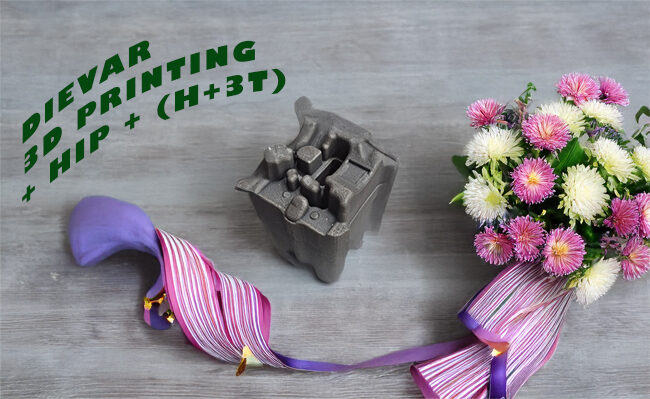
But what if we have a part that unexpectedly cracks? This is an example of a 3D printed part made of Dievar steel. If we leave the crack open, then we can throw it away. If we close it, weld it, then we can completely repair it with HIP technology.
Can you think of any of your applications? I’m not saying it’s self-saving, but in some cases it can be a solution.


Fig. 2 and 3 – Print design and print result


Fig. 4 and 5 – This is what happens when there is no vacuum oven available to ensure stress annealing immediately after removal from the printer.
Jiří Stanislav
October 21, 2025