FIT55

So, they agreed to the FIT 55 package, which means that we will reduce emissions by 55% by 2030 compared to the current state. Since a normal person can’t imagine much yet, I tried to find some explanation for myself. If I’m going to curse at it, at least let me know why.
The basis is this diagram (KPMG 2021):
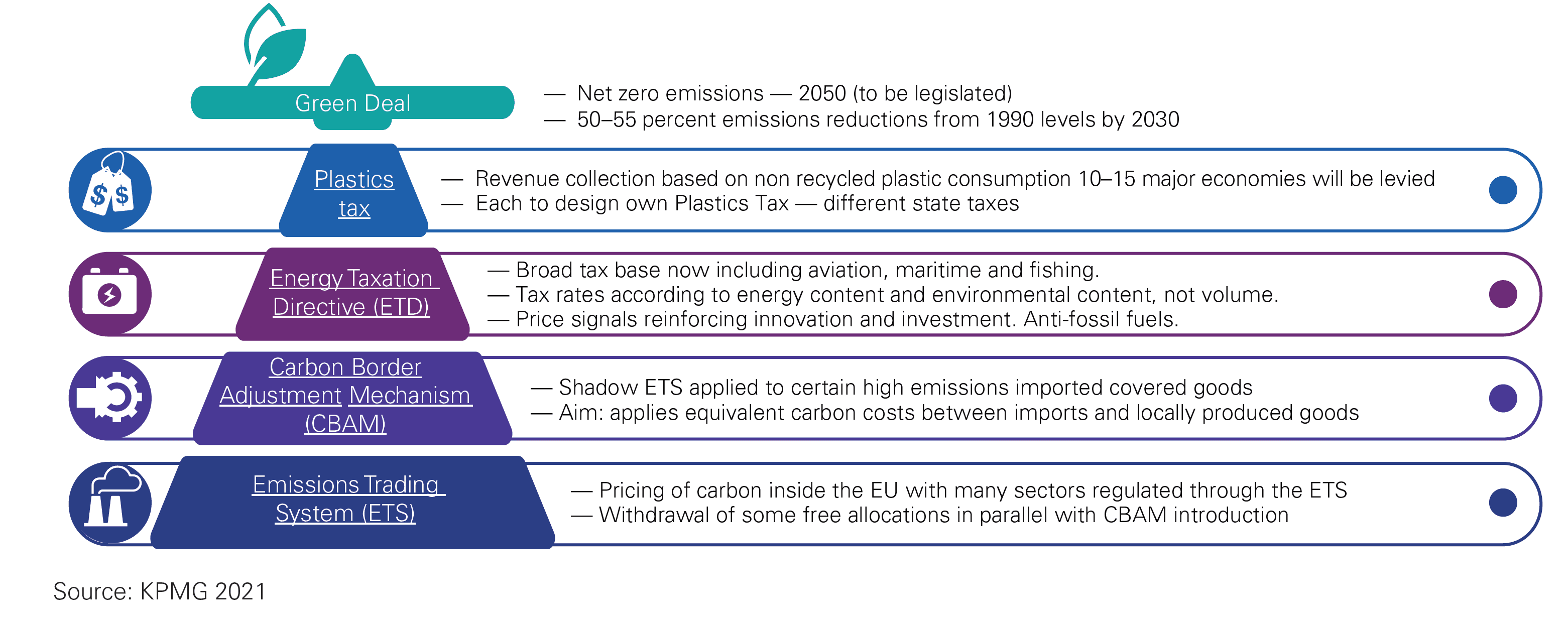
- Plastics Tax – For each non-recycled kilogram of plastic, the state should pay 0.80 EUR, i.e. roughly 20 CZK, to the Union treasury. The impact on the heat treatment plants will be practically zero.
- Energy Taxation Directive, (ETD) – taxation of energy consumption. Its purpose is for consumers to preferentially consume greener energy. These can be compared to this scale according to the picture, the expected tax is also listed here.

In the case of a heat treatment plant with electrically heated furnaces, it will therefore be 0.15 EUR/GGJ, i.e. 0.15 EUR per 277,8 kWh, i.e. 0.0005399 EUR/kWh, i.e. 0.0129 CZK/kWh. At an electricity price of CZK 5/1kWh (without VAT), this represents an increase of 0.258%. Therefore, the tax impact on the heat treaters will be minimal.
But if we heat with natural gas, then the rate is 0.6 EUR per 277,8 kWh, i.e. 0.0215 EUR/kWh, i.e. 0.51 CZK/kWh. The increase is therefore 1,02%.
Other types of furnace heating can almost be excluded, they will not show up in the heat treatment plants.
A typical heat treater with electrically heated vacuum furnaces, with a turnover of around EUR 4 million, consumes approximately 3 GWh of electricity annually. At a price of 5 CZK/kWh, the cost is 15 million CZK per year. The new tax will increase the costs of the dyeing plant by CZK 38,700 per year.
A similar size heat treatment plant, but with gas-fired furnaces, consumes roughly 3 GWh of energy per year. At a gas price of, for example, CZK 2.5/kWh, the annual cost of natural gas is CZK 7.5 million, but the new tax from FIT 55 is already CZK 153,000 per year. Even if this is not a fatal amount, it is already significantly higher than for heating with electricity. It should be an incentive for the heat treaters to provide such savings in energy consumption, compensating the cost of this tax. Therefore, a saving of 1.02% in consumption is enough, and the impact of the tax will be zero.
- Carbon Border Adjustment Mechanism (CBAM) se kalíren rovněž netýká. Pouze říká, že pokud se doveze zboží, tedy i energie, se zemí, zatěžující emisemi zboží více jak v cílové zemi, uplatní se rozdílová daň na toto zboží při vstupu do země, tzv. uhlíkové clo
- Emission Trading System (ETS) – The purchase of one emission allowance represents for its holder the right to release one ton of carbon dioxide, or nitrous oxide, perfluorinated hydrocarbon derivatives, methane, chlorofluorocarbon derivatives or sulfur hexafluoride into the atmosphere.
Emission allowances apply to power plants, aircraft flying between airports in the EU, Norway and Iceland, and companies from energy-intensive industries – e.g. chemical industry, refineries, production of steel, iron, lime, cement, cellulose, paper, etc. In the system approximately 11,000 power plants and production facilities and 600 aircraft operators are included.
Allowances are traded under the EU Emissions Trading System (ETS), which sets emission ceilings, or the maximum total amount of certain greenhouse gases that participating companies and their facilities can emit into the air
Each above-mentioned polluter must purchase as many allowances in the ETS system as correspond to the amount of greenhouse gases created by him. The price of the permit is variable and currently fluctuate around EUR 100 (see chart).
If the pollution source does not succeed, then the fine for failure to fulfil this obligation is of EUR 100 for every ton of CO2 equivalent emitted not covered by a permit, while the operator’s obligation to purchase emission allowance continues even after the payment of the fine. The price for allowances will therefore be doubled.
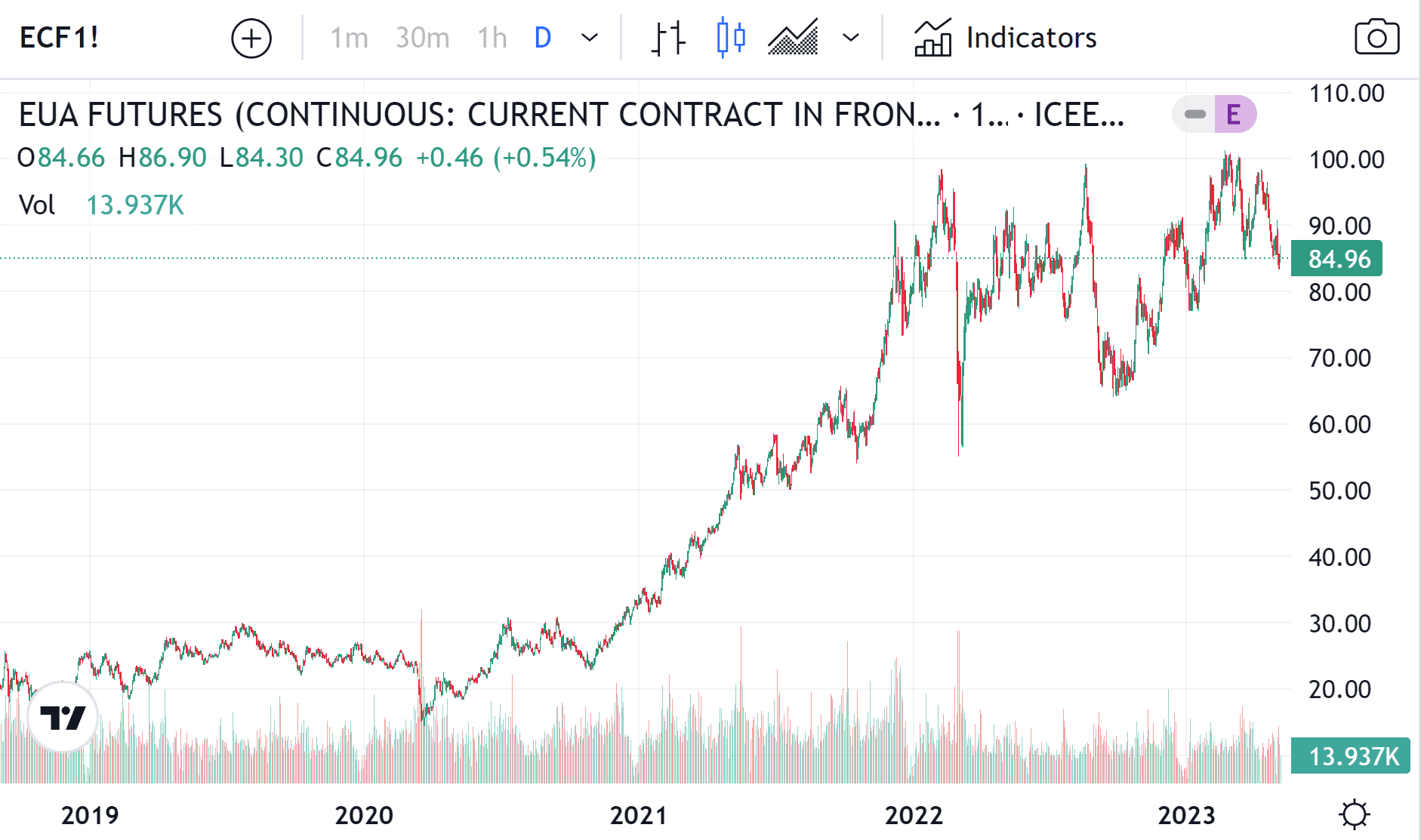
Source: https://www.kurzy.cz/komodity/emisni-povolenky-cena/
The costs of emission allowances go into the costs of the electricity source and are therefore part of the energy price with which the electricity supplier enters the Leipzig Energy Exchange.
In this way, all the demands are collected on the European Energy Exchange (EEX) and against them the power plants send their offers and the amount they are able to produce. On the EEX, these are ranked from the cheapest to the most expensive, in the capacity that is needed to cover the expected consumption.
Conversely, when demand is reduced, the most expensive resources cease to be used first. Of course, this principle is affected by the fact that full power may not always be available for the cheapest sources – the sun does not shine, the wind does not blow, nuclear power plants may have planned shutdowns. This order in which the power plants are switched on is called the merit order.
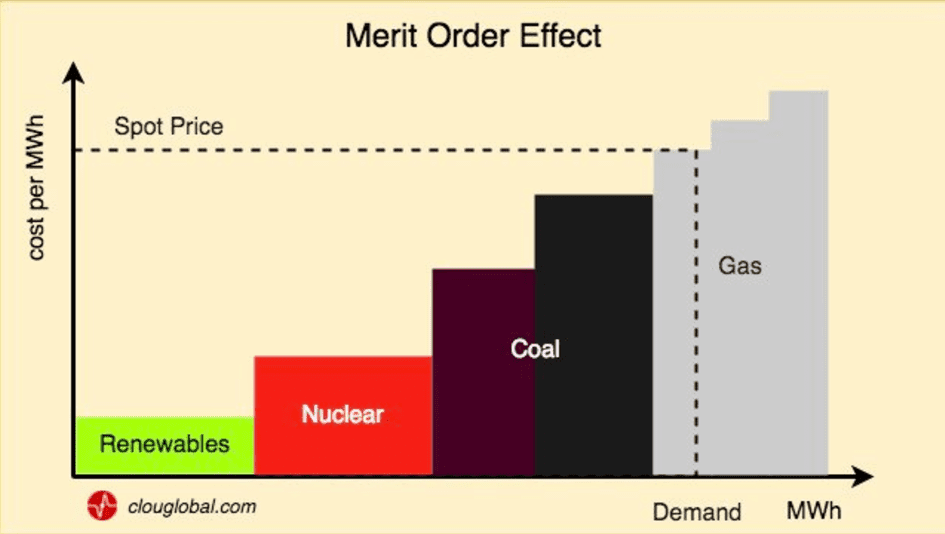
Source: https://clouglobal.com/european-merit-order-energy-trading-obsolete/
The resulting price of electricity received by all power plants involved in production is the price of the most expensive source that had to be connected to cover the consumption. This is called the marginal power plant. Most of these are currently gas-fired power plants, where we can see a clear connection as to why the price of electricity rises rapidly as the price of gas increases. In addition, the time and financial cost of turning off/on production enters the whole process. This is almost impossible with nuclear power plants (they run all the time), gas plants are very flexible, and that is why they are used as a backup source to cover periods when renewable sources do not work.
Overall, this means that the higher the demand for electricity, the more expensive and expensive sources have to be connected, which increases the price of electricity for the whole market.
The problem with the price of electricity is therefore not in the production costs, but in what the price is for the marginal power plant. In the source below is this example of how the Leipzig Stock Exchange works:
“To illustrate, let’s imagine two bakers. One is (thanks to experience, more capable people, better technology) able to bake bread for 20 CZK. The second one, which has a different operation, bakes bread for CZK 50. Both are of comparable quality and taste, bakers have to supply both to the market to meet the total demand in the city.
The second baker cannot sell bread for less than CZK 55, otherwise he would not even cover his costs and would be at a loss. The first baked it for CZK 20, but will also sell it for CZK 55, just like its competitor (final source). Why should he sell cheaper when the competitor has a price of CZK 55 and the demand in the city is sufficient? It generates a nice profit for him and he can continue to develop. If demand in the city were lower, he would sell for CZK 45, and there would be no interest in the more expensive competitor’s bread due to insufficient demand.”
Going back to energy, if gas power plants can’t generate electricity to cover their costs, they probably won’t generate electricity at all. But this means less electricity produced than what is needed. As we certainly know from economics, this entails a further rise in prices, at the same time the closure of some businesses that run out of electricity, possibly controlled blackouts and rationed electricity
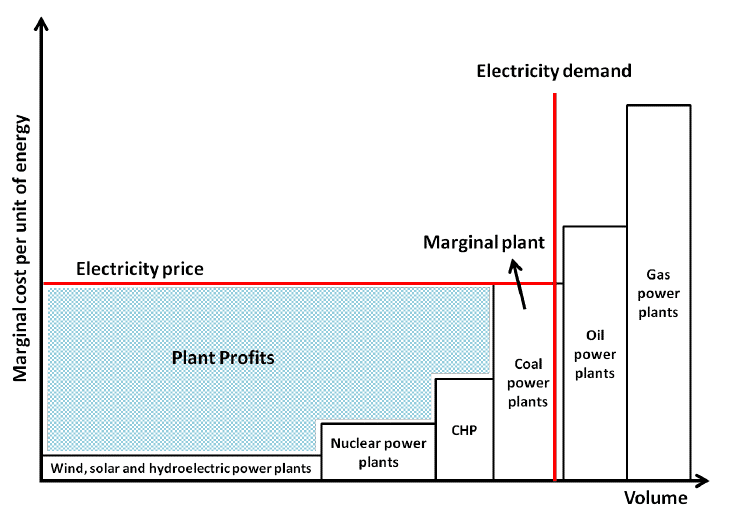
On the other hand, for power plants that have lower production costs, this principle is advantageous because it generates funds for further investments. It also gives us the answer to where CEZ’s record profits or financial resources for renewable energy come from.
Source:
https://www.lpenergy.cz/proc-rostou-ceny-elektriny-3-dil-ctyri-hlavni-duvody-extremnich-cen/
The marginal power plant in the common European market is now a power plant burning natural gas. This was not always the case – in the days of cheap gas, it regularly happened that the role of the final source was occupied by a coal-burning power station. However, since January 2021, the price of hard coal on global markets has increased threefold, while natural gas has risen sixteenfold. Gas-fired power plants are now secure in their position as the final, and therefore the most expensive, resource. This means, among other things, that the operators of coal-fired power plants are now, regardless of the high price of allowances, making royal money – their operating costs compared to gas-fired power plants were roughly 66 to 80 percent lower in the past days.
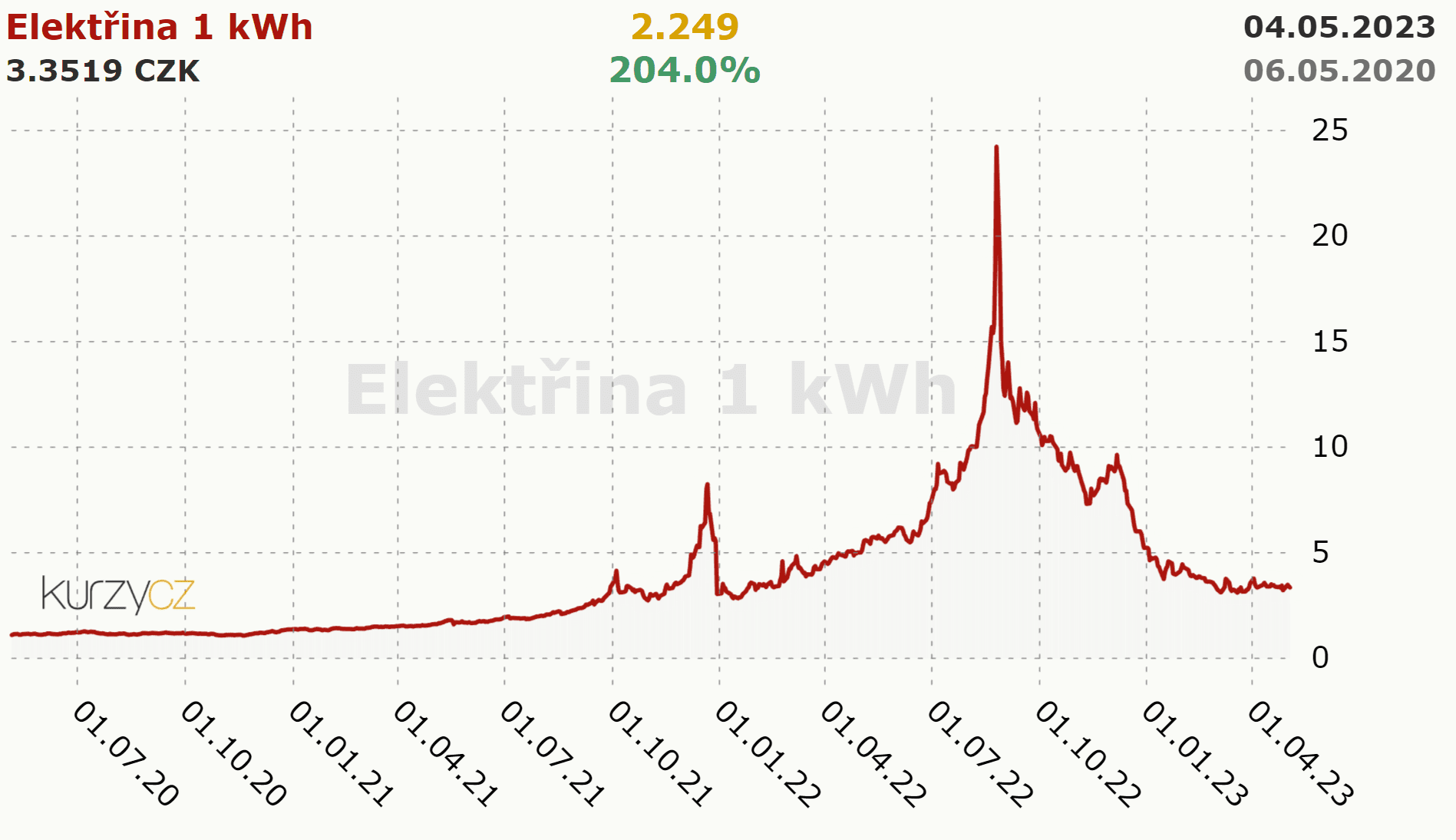
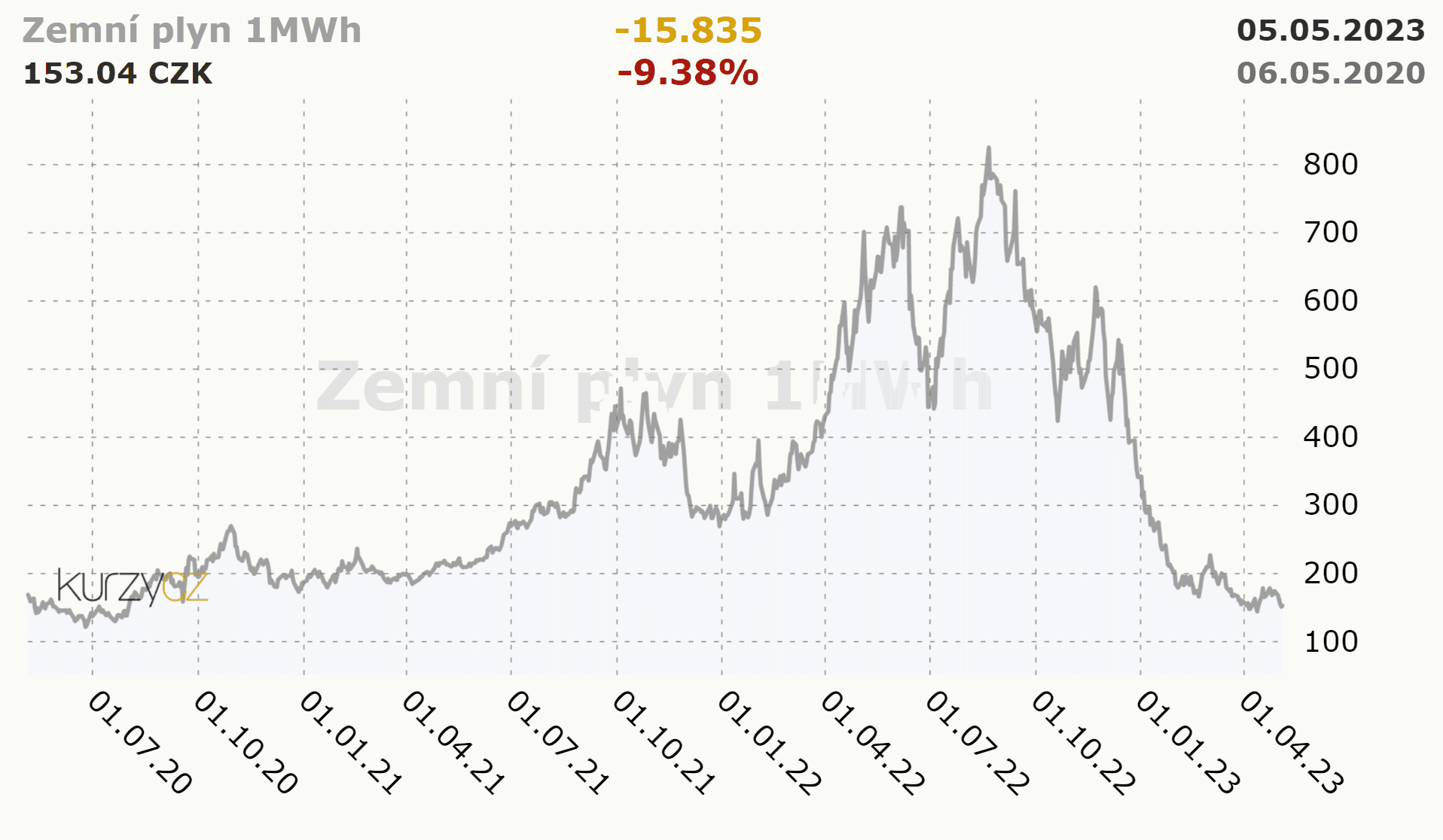
The price of electricity is therefore not tied to the cost of its production, but to the cost of its production in the most expensive marginal power plant. Because it is a power plant based on burning natural gas, there is a direct link between the price of natural gas and the price of electricity.
The following diagrams show the consistent movement of electricity and natural gas prices. But this is not because natural gas would be the main or significant source of electricity, but because it represents the marginal power plant, forming the final price on the stock exchange (European Energy Exchange (EEX)).
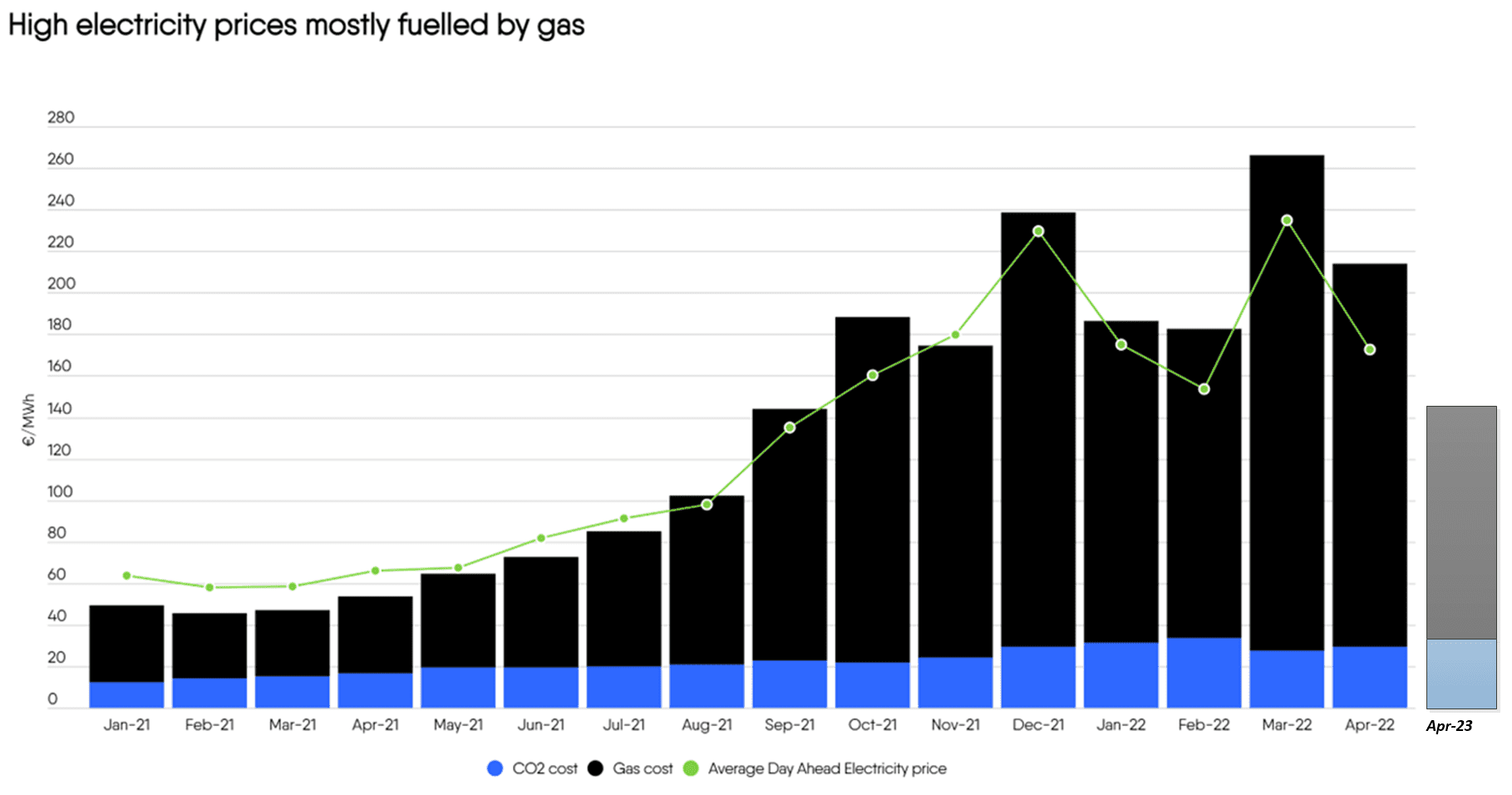
The next graph shows the dependence between the price of gas, the share of emission allowances in electricity production and the price of electricity. Therefore, if gas prices are high, the price for electricity from the marginal power plant will be high. The price for emission allowances will move regardless of this, but only seemingly. The less environmentally friendly electricity is produced, the fewer free emission allowances there will be on the ETS market, and the more expensive the
Source: https://www.eurelectric.org/power-prices/
And we go to the final. Our electricity supplier on the Leipzig Stock Exchange will buy electricity for us. Paradoxically, if it is ČEZ (Czech Energy Plant), our price will not be the famous CZK 0.6 per 1 kWh, but the price for the marginal power plant at the time of purchase, and that is a gas-fired power plant. Today, this is affected not only by high prices for natural gas, but also by a permanent, essentially unchanging environmental burden of at least 220 gCO2/1 kWh of energy.
If I ignore the revenue cup on energy at 5 CZK without VAT, then the difference between the production costs and the selling price to the end user on the stock exchange is CEZ’s profit.
Subsequently, however, there are still other taxes and fees regulated by the state. Additional items will be added to the unregulated price for power electricity:
- Distribution fees
- Fee for reserved power
- Contribution to production from renewable energy sources
- System service fee
- Market operator fee
ETD will be added to these items, i.e. the tax for the carbon footprint in the energy contained, in this case for the electricity consumed, and in some cases also the carbon duty. For households VAT in the amount of 21%.
For illustrative purposes, the price of household electricity, 2015, Comfort tariff, ČEZ, rate D02d, circuit breaker 3×25 A, zdroj https://dspace.cvut.cz/handle/10467/62067
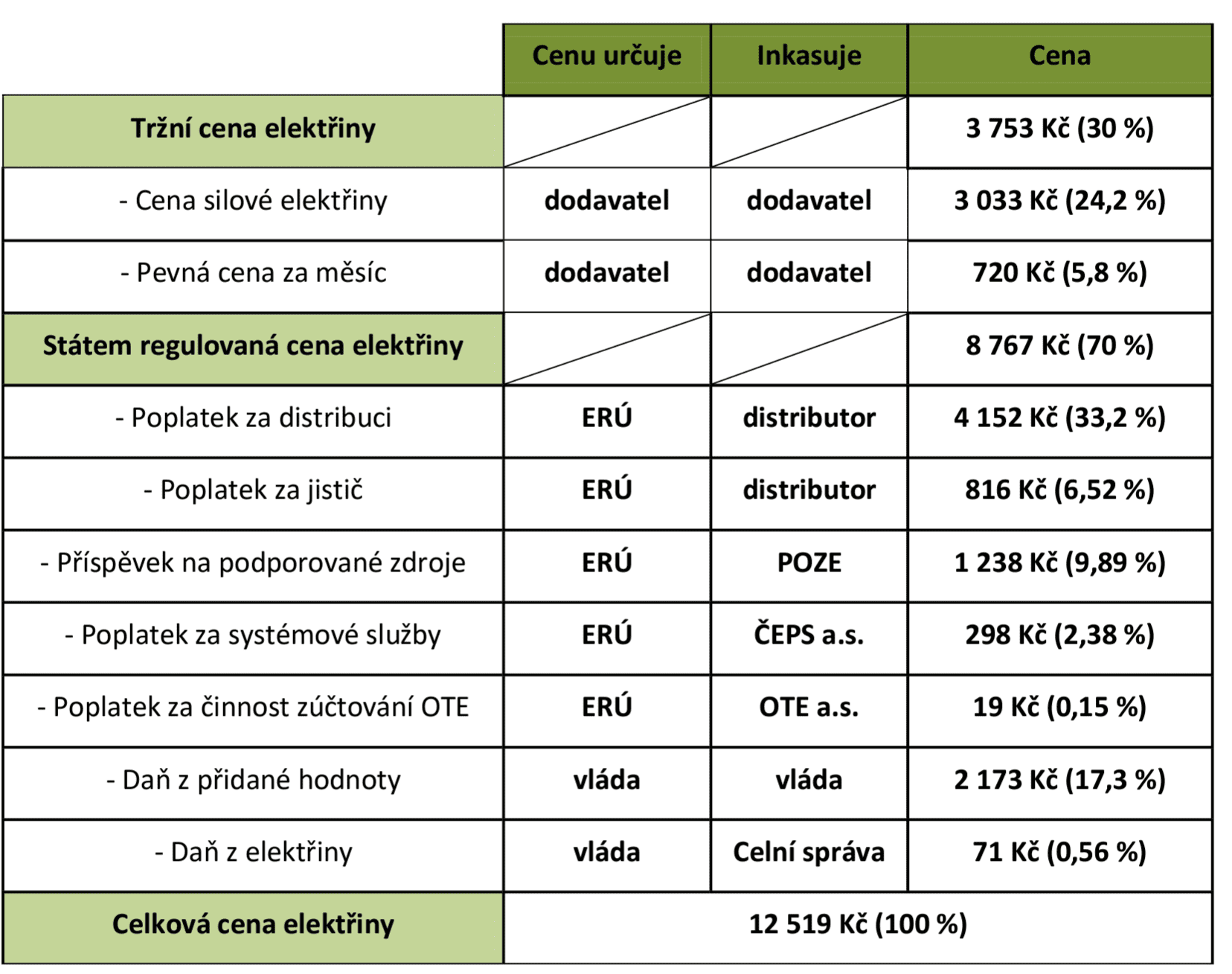
Another view is directly on the electricity for the heat treatment plant, connected to high voltage (HV), turnover approx. EUR 4 million, monthly consumption 400 MWh, annual reserved capacity, contracted ¼ maximum 900 kW, full power factor compensation, environmental tax applied, although for year 2023 this item was cancelled. However, the numbers must be taken as a guide, they may actually differ both according to the distributor and also according to the consumer.

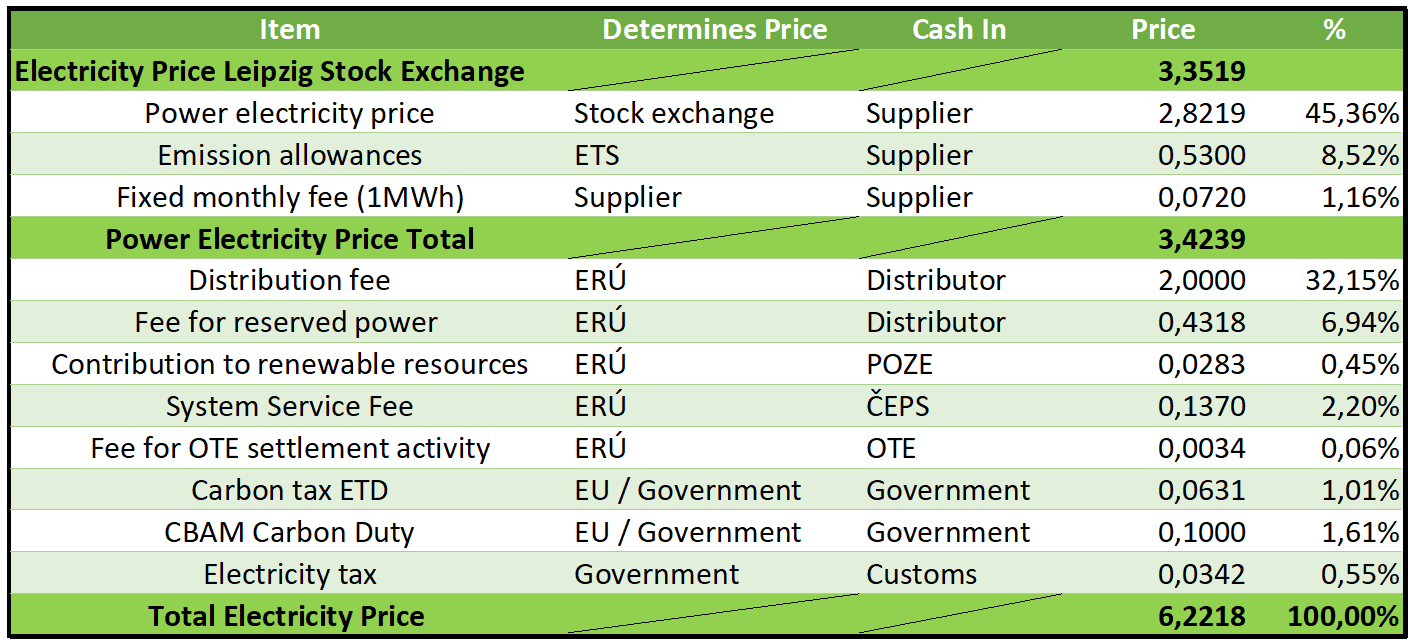
The own price for power electricity, including emission costs, is therefore roughly 55% of the total price, and this is the price at which we buy energy on the EEX in Leipzig. The rest are various fees and taxes, more or less of a local nature. As the values for ETD and CBAM have not yet been established, their value is only an estimate based on published figures
What don’t I like about it? Well, maybe everything. If I start with the Leipzig Stock Exchange and the example of those bakers. The idea that only the best will consume the profits from the sale on the stock exchange is seemingly nice, but on the other hand, what are we actually supporting? Is there even a market mechanism in this field? If so, then the most expensive sources should go bankrupt. So even a baker who bakes for CZK 50 has nothing to do on the market. On the contrary, the one who bakes cheaply should grow, but at the same time the market price should fall. However, due to the fact that the price of energy today is tied to the marginal power plant, which is the power plant with the highest price, to natural gas, then paradoxically this situation significantly supports energy from coal, drawing profits completely unintentionally from the market distortion of natural gas prices.
But there is another paradox here. The argument in favor of a market mechanism on EEX is compelling. But which entrepreneur can afford to maintain a marginal gas power plant that will only be started when there is high demand? But she will be stopped for the rest of the time. The economics of the marginal power plant will therefore be more loss-making than profitable. In order for such a resource to survive on the market at all, it must be maintained non-market, either by redistributing the profits of previous resources or by subsidies. Therefore, the market behavior of EEX is rather non-market.
And what do we actually sell in Leipzig? If it concerns CZ, then only and exclusively what the communists built. That is, above all, nuclear energy, cheap and ecologically sound, with a minimal carbon footprint. And what do we get for it? Electricity 5 times more expensive than we offered. And since natural gas is at prices corresponding to the destruction of the Nord Stream, all this ridiculous green activity leads to the fact that we are paradoxically supporting electricity sources with the worst carbon footprint.
But it wasn’t so long ago that boiler for heating subsidies to switch households from coal to natural gas were a major government priority. And voilà, two years have passed and everything has to be thrown away. All those who invested in ecological gas boilers must now throw them away and replace them with heat pumps, the operation of which is completely dependent on electricity. And if the sun isn’t shining or the wind isn’t blowing, they’re powered by electricity at prices flowing from unfriendly coal or gas-fired power plants.
Overall, it reminds me of the opposite Jánošík, where we take from the poor and give to the rich. And the argument that we need to free ourselves from natural gas? Well, that’s complete nonsense. Once we shut down gas-fired power plants in addition to nuclear power plants, there is nothing to replace it. The supply of electricity will decrease significantly and this will only lead to further price increases. According to the statistics below, Europe uses about 20% of its energy from gas sources. But in some states it is the primary source. Such an intervention would have fatal effects
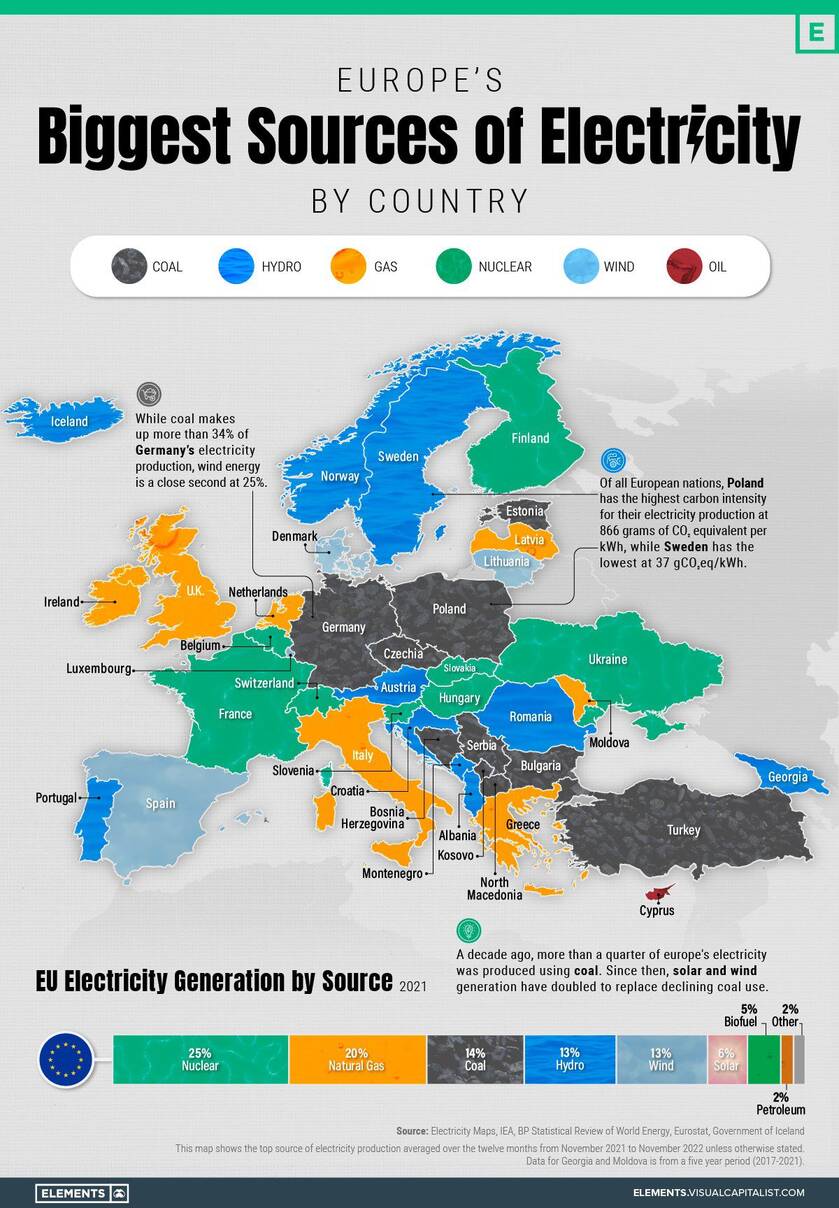
Source: https://www.visualcapitalist.com/mapped-europes-biggest-sources-of-electricity-by-country/
If I return to the heat treatment operations, it is clear from the above that the cost of power energy is absolutely fundamental to their heat treatment shop economy. That is, the price created on the stock exchange in Leipzig, tied to the marginal power plant. This accounts for ~55% of the total price for electricity. Even if we were to cancel emission allowances, we would save around 8 to 9% on the price of energy if this electricity comes from gas-fired power plants (I calculate 220 gCO2/kWh). However, if the marginal power plant is the nuclear plant, then the price for emission allowances will be limited to zero. It is published that the core is a source of 5 – 33 g CO2/kWh, so we are also 10 times better off ecologically.
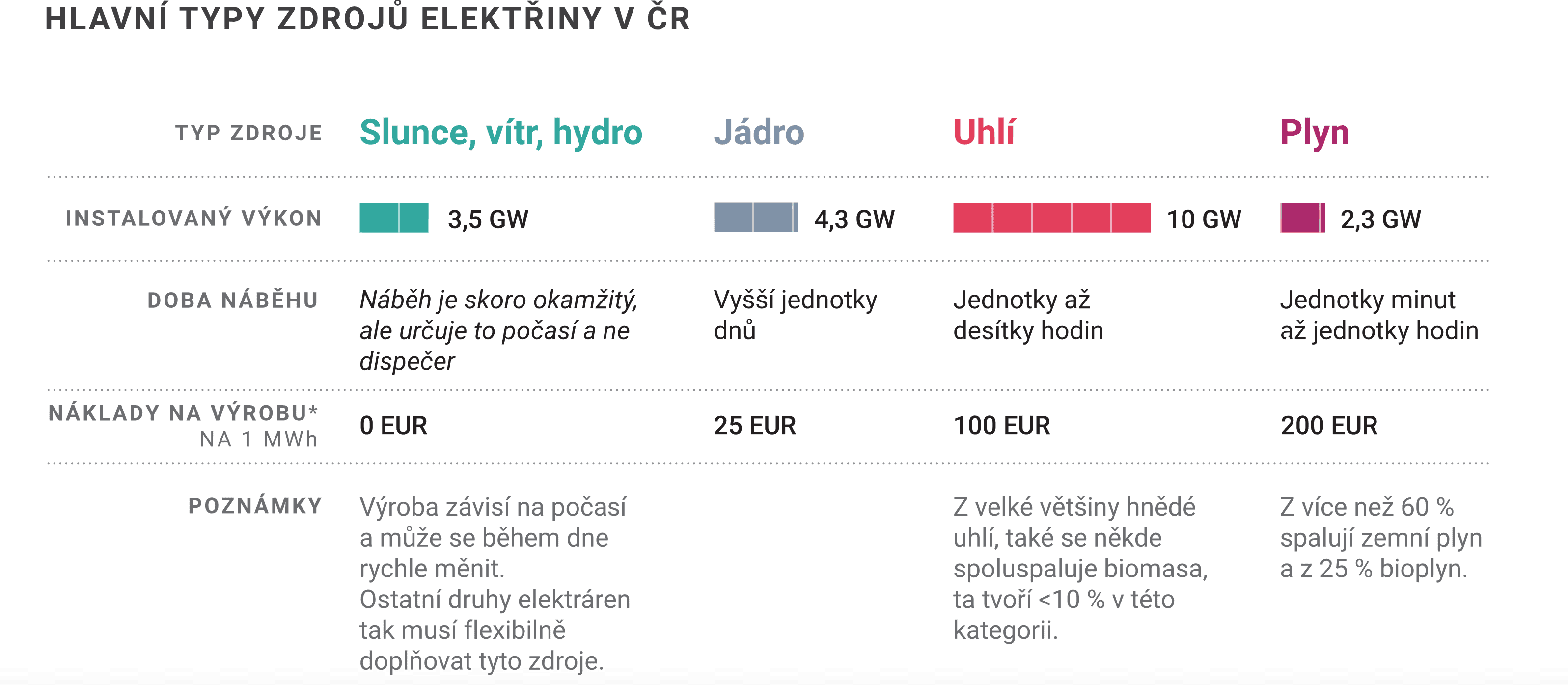
But where are we going today? If we were to return to cheap natural gas, the consequence will be that coal will once again become the marginal power plant. In the event that all the cheaper and ecological sources do not cover the demand, this, the least ecological source, will stimulate the resulting price. From the point of view of the market mechanism, what should happen is that this resource will go bankrupt, just like that baker. But our politicians think otherwise.
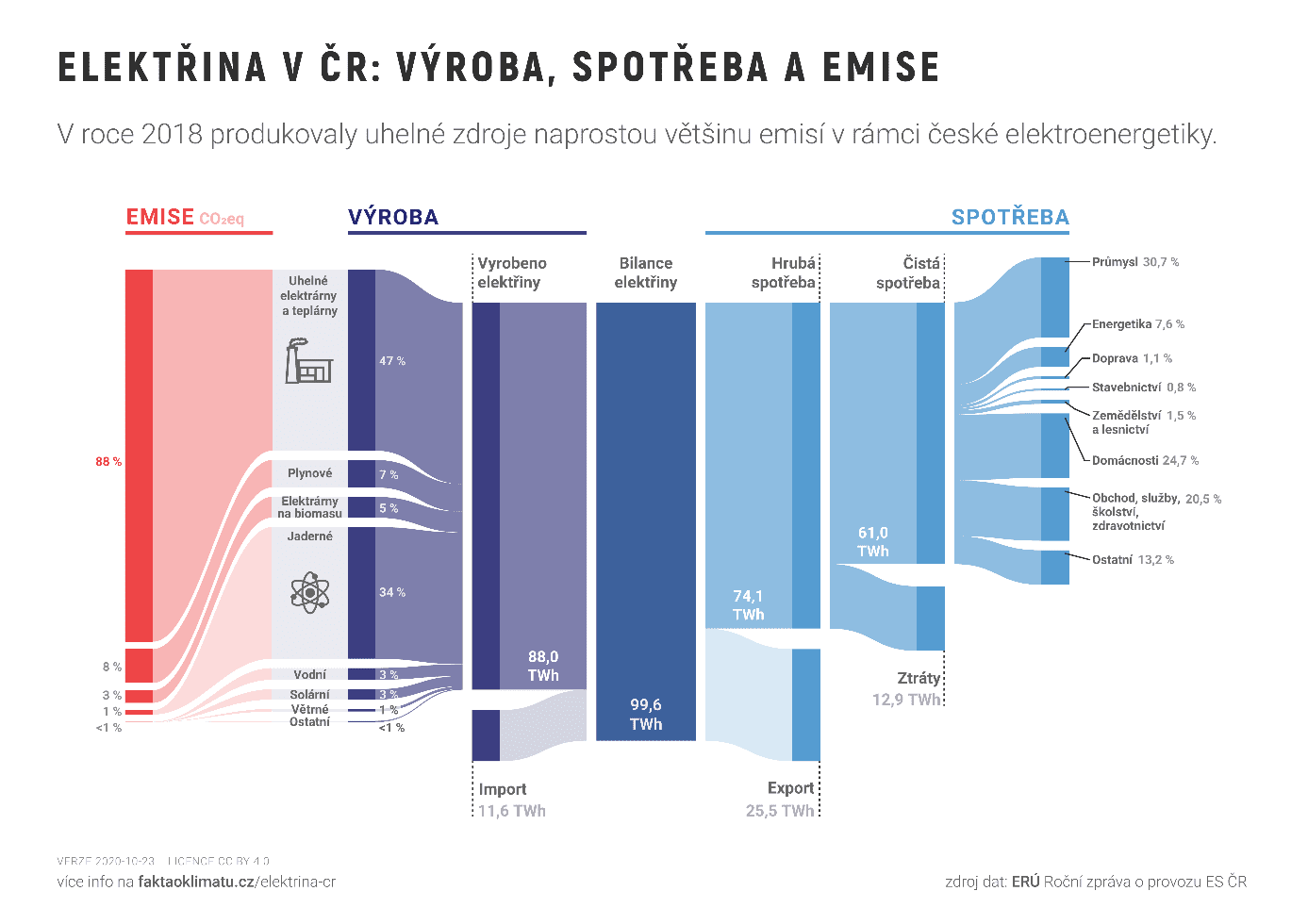
Source: https://faktaoklimatu.cz/explainery/cena-elektriny-na-trhu
The harm from this policy will certainly be greater than the benefit. As a result, the remediation of all bankrupt productions will be more expensive than the temporary subsidy of industrial energy prices. They have already started in Germany……
A new term “temporary bridging price of energy for industry” is introduced and is aimed at a value of 5 to 6 cents per 1kWh, which after conversion is 1.2 to 1.5 CZK/kWh. Kerstin Maria Rippel, CEO of the Steel Industry Association stated on May 5, 2023:
“Even if there must eventually be a market-based and unsubsidized solution, a transition electricity price of 4 to 6 cents/kWh at the most is urgently needed as a bridging solution for the transition period. We expressly welcome a concept that provides a workable solution under the State Aid Act as a basis for discussion.”
But the European Commission itself already sees the unsustainability of the current situation. Three main proposals are currently under discussion:
- adoption of a revenues cup from electricity generation technologies within marginal areas;
- creation of two separate energy exchanges, one for assets generating low marginal costs and one for assets with high marginal costs;
- payment of a subsidy to gas power plants for the purchase of natural gas electricity production
The following graph shows what we actually have to pay for.
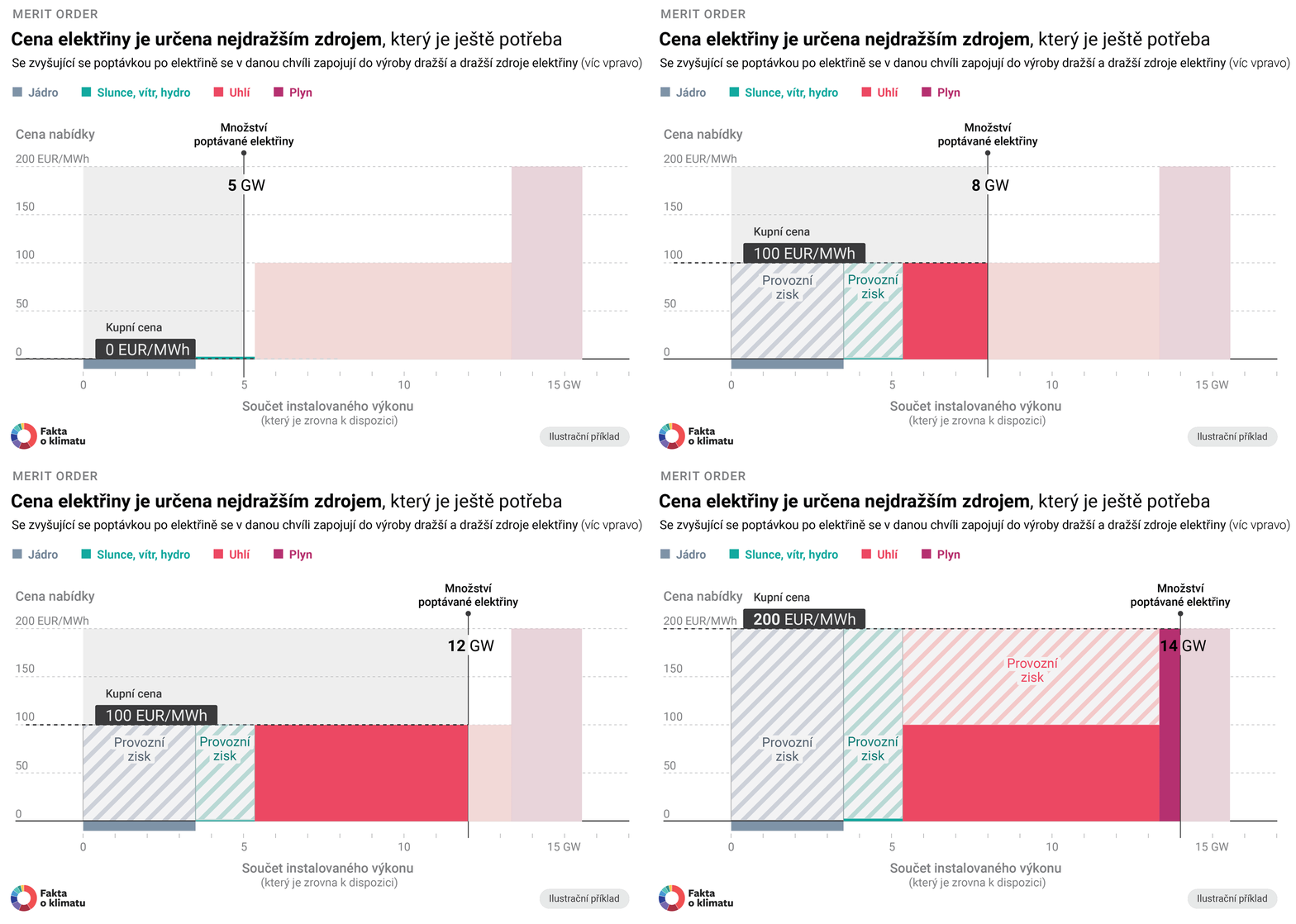
Source: https://faktaoklimatu.cz/explainery/cena-elektriny-na-trhu
If a price limit were applied to natural gas for the production of electricity, there is an interesting opportunity to reduce the price. What is in the red rectangle represents the potential to reduce the price of electricity by up to half.
In conclusion, I can state that what is newly introduced by the FIT55 policy will essentially affect us far less than what we have created with our policy at the Leipzig Stock Exchange. Whether it is a carbon tax or a carbon duty on energy imports from outside the EU. So, I don’t have a major problem with it. Unfortunately, I have to state that no consumer will solve for the state a marginal power plant that critically influences the price of energy. This is where the politicians failed. And the fact that they deal in recycled straws? They probably already know in advance that we will need them to ensure breathing underwater
May 10, 2023
Jiří Stanislav