Contract review
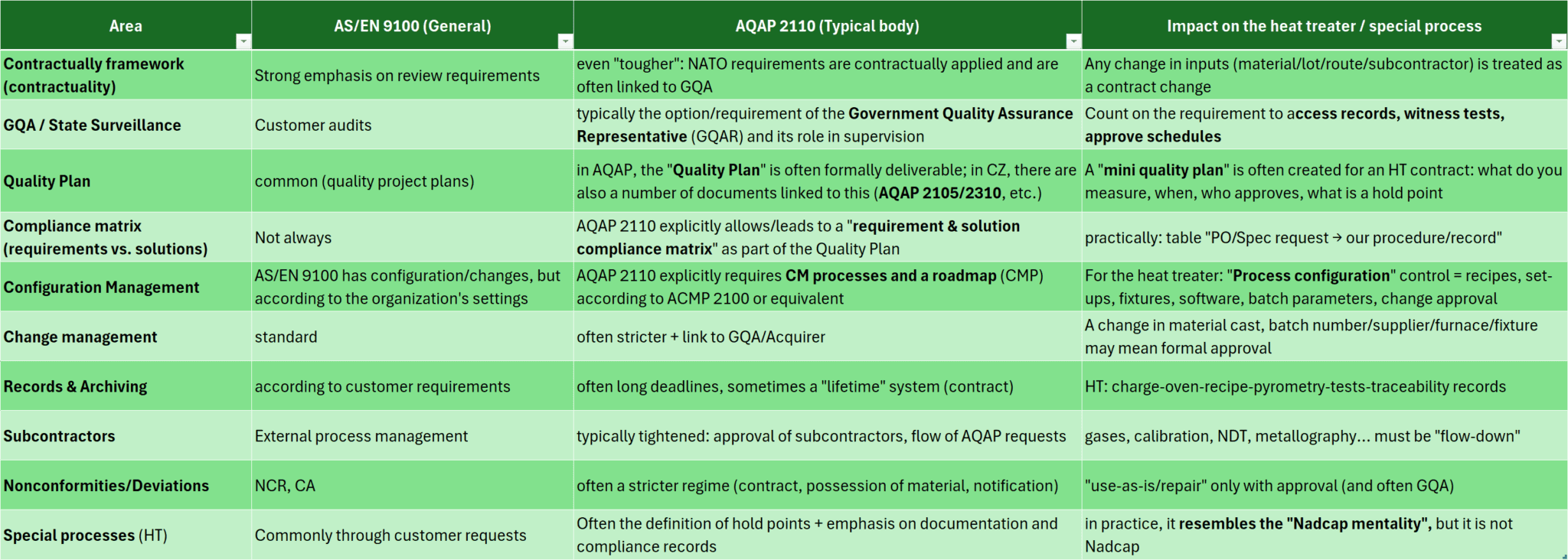
So I started to look into quality management systems in hardening plants, especially from the perspective of Contract Review. A term that not everyone knows, but contracts obviously have to be reviewed, otherwise they would have long ceased to exist. If the end is wrong, everything begins here. And it is always the same, what was agreed upon must be delivered. The emphasis that individual systems or standards place on this is in this table.
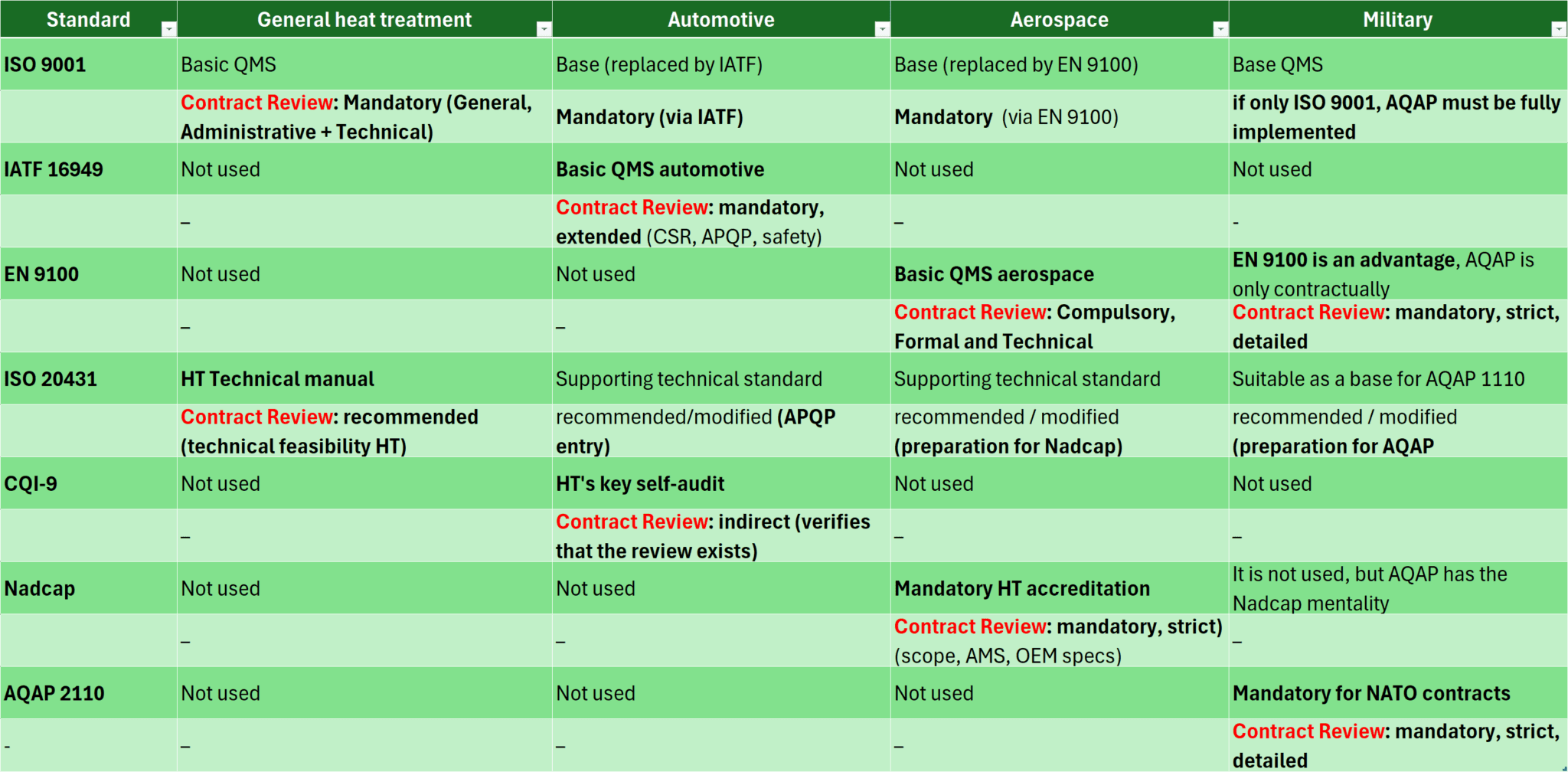
The result of my research is that, in addition to ISO EN 20431, for all quality management systems, a contract review procedure is mandatory. And the more important the type of production, the more weight the Contract review has. For general heat treatment, it is simple, most of the obligations, self-evident from automotive or aerospace, can be ignored. The only method here is self-learning, the bigger the mess, the more the quenching plant management will deal with it.
For automotive, where the IATF 16949 standard is mandatory, it is more complicated. There is an obligation to comply with CQI-9, and also the need to work with CSR (Customer Specific Requirements). In this case, the Contract review is supplemented by other documents APQP (Advance Product Quality Planning) containing other necessary documents such as PPAP (Production Part Approval Process), Control plan, FMEA, etc. . Feasibility is therefore examined from all sides and in great depth. Moreover, in many cases, automotive standards take precedence over other standards.
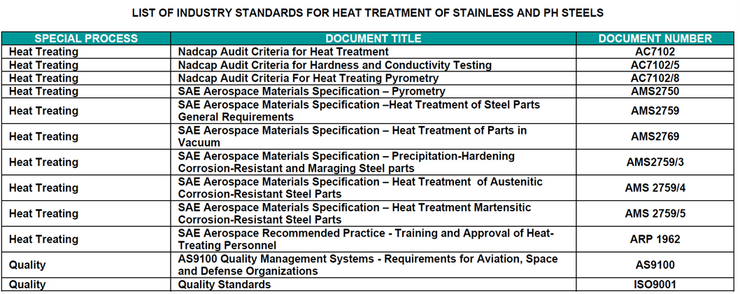
In aerospace it is even worse. There is not only the obligation to have AS 9100 (Quality Systems – Aerospace – Model for Quality Assurance in Design, Development, Production, Installation and Servicing), but especially Nadcap certification for Heat Treatment. But there is also a whole package of special SAE Aerospace standards that must be met. This is just an example.
But what about the military? Although ISO 9001 is a requirement that military requirements are attached to, no other standard is defined for this area. It is mostly resolved through national standards.
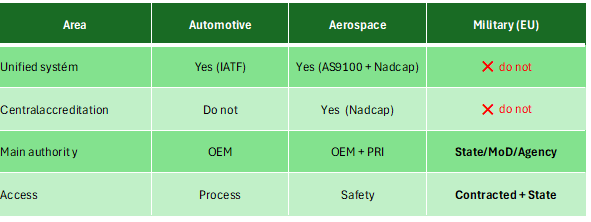
The exception is NATO contracts. Here, NATO standards, AQAP (Allied Quality Assurance Publications), are used. Although they are not certification, they are binding for compatibility reasons.
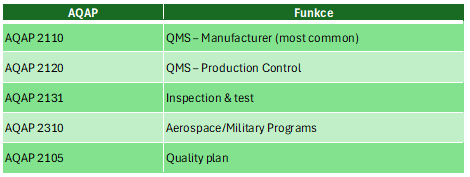
What does this mean for contract review in these conditions? Contract Review is extremely strong here, it is:
- mandatory
detailed
change without consent = breach of contract
material, process, subcontractors = approved items
👉 changing material, even a batch with a different chemical composition, without notification, is a fatal mistake in the military
In addition, Government Quality Assurance (GQA) applies
- the state has the right to audit production
has access to the operation
access to records
supervision of tests
This has no analogues in automotive or aerospace. In addition, there is an extended traceability period, from 10 to 30 years. Surprisingly, ISO 20431 has a significant position here and is strongly accepted.
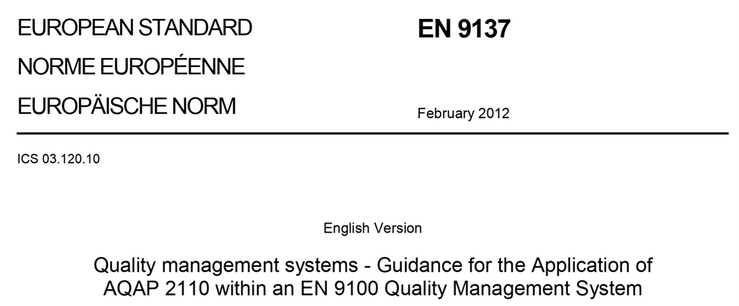
However, there is the EN 9137 standard, which acts as a bridge between quality systems and AQAP 2110. Those who only have ISO 9001 must implement AQAP 2110 in full. Those who have AS 9100 can fulfill AQAP 2110 without a parallel system. However, the individual conditions of AQAP must be resolved contractually:
- Contract Review
changes
GQA access
Archiving
EN: An order with AQAP 2110 is accepted only after a documented Contract Review according to AS/EN 9100 with the application of EN 9137.
What does this mean? Contract review and the entire contract review procedure are an important prerequisite for concluding a contract. If it is carried out in accordance with the standards, any defects and non-conformities can have their owner. If not, and the contractual documentation or CSR is ignored or incorrectly defined, then legal disputes can have difficult solutions, with a direct impact on the liability of the quenching plant. It is necessary to realize that this procedure, Contract review, is supposed to protect us from future disputes.
Jiří Stanislav
January 25, 2026