The mythical island of Kalymnos
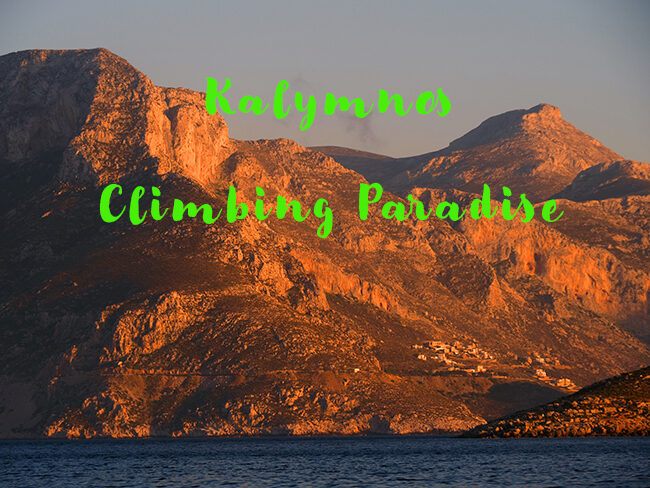
I’m sure you’ve missed me here, but I just have to relax too. And how else than rock climbing. And so I went for a week-long stay in a climbing paradise called Kalymnos. In a week, we climbed 27 routes, climbed more than 600 m, ate 6 pork steaks for dinner and drank a few beers. A great expedition to celebrate my 75th birthday, with a friend who is 77
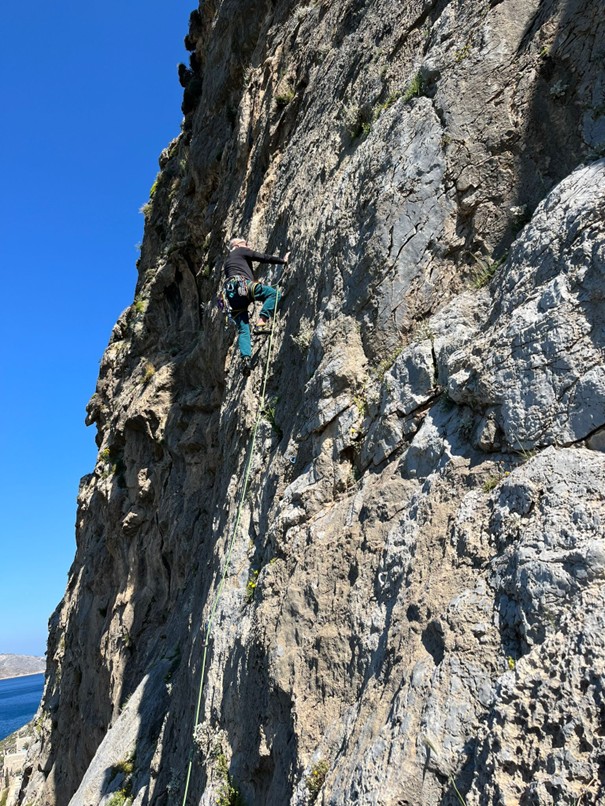
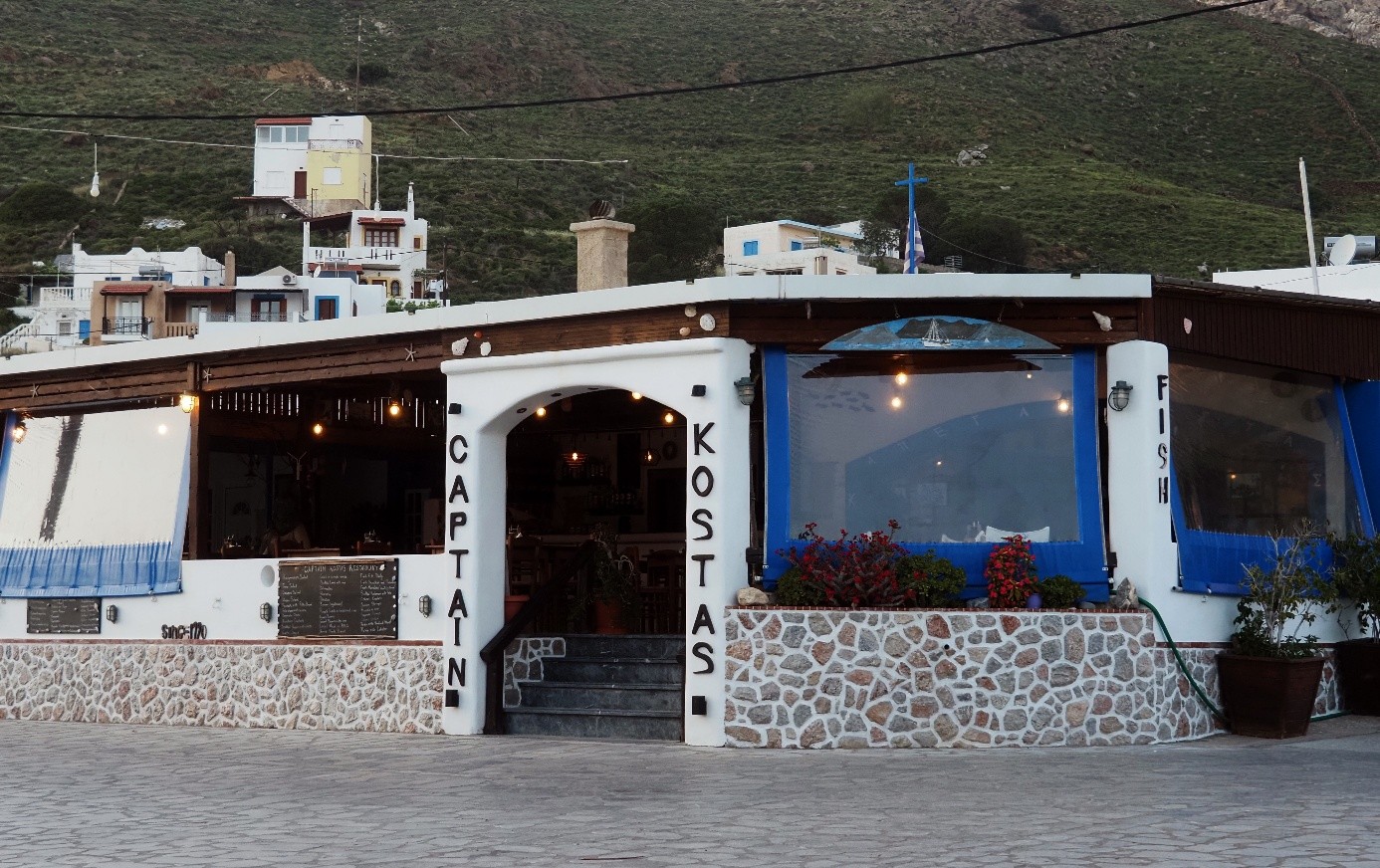
Fig. 1 – My little thing
Fig. 2 – Kaptain Kostas pub in Emporia
But even here I did not get rid of my profession. It has been a month since a friend, a climber from Czech, who had already stayed permanently on Kalymnos, killed himself here. And the reason? 3 screws fell off with him on the stand of the road while he was abseiling. 2 directly at the belay point and he tore out another bolt when it was falling down (Fig. 3)
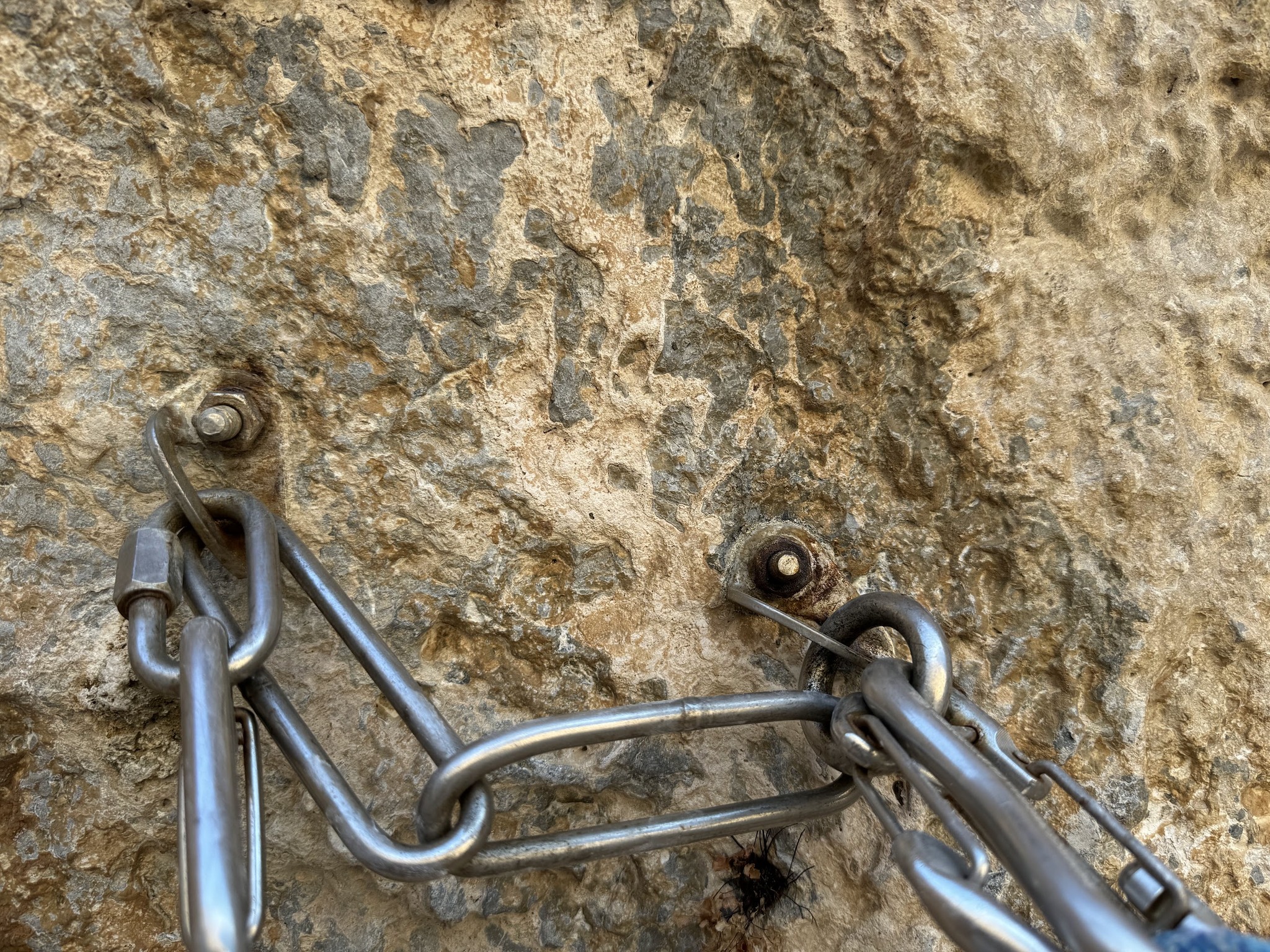
Fig. 3 – Illustrative picture of the method of the end belay point on Kalymnos
The probability that this will happen is almost zero. And yet…. And because we met our old friend Joska Nežerka in the pub at Captain Kostas’s, this problem was also discussed. Joska also settled permanently on Kalymnos, he was part of not only the Greek but also the Czech community, and he was quite taken by it. They were neighbors. And so he said to me – hey, you wrote the article about those bolts by Bělina, don’t you want to write something about this problem as well?
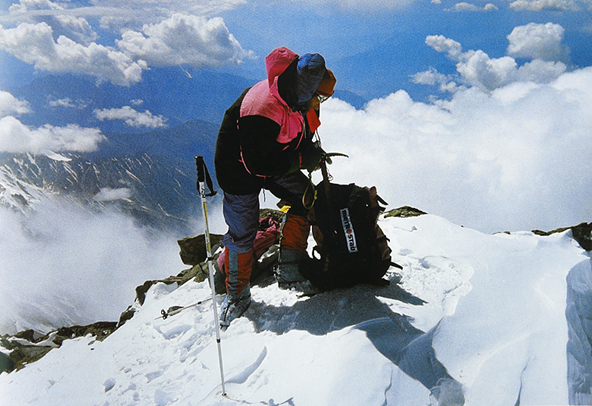
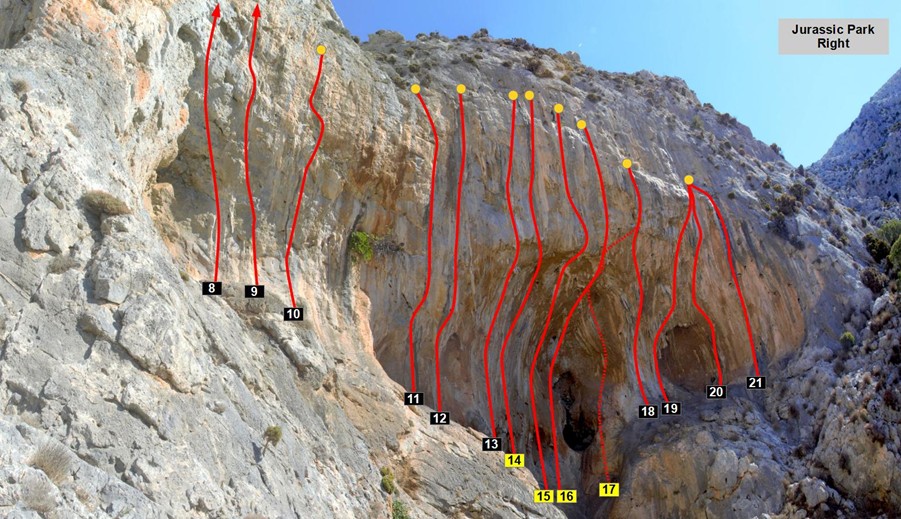
Fig. 4 – Joska Nežerka climbed Nanga Parbat, where he climbed together with Joska Rakoncaj
Fig. 5 – Jurassic Park with route no. 10, St. Savvas, 7b+,
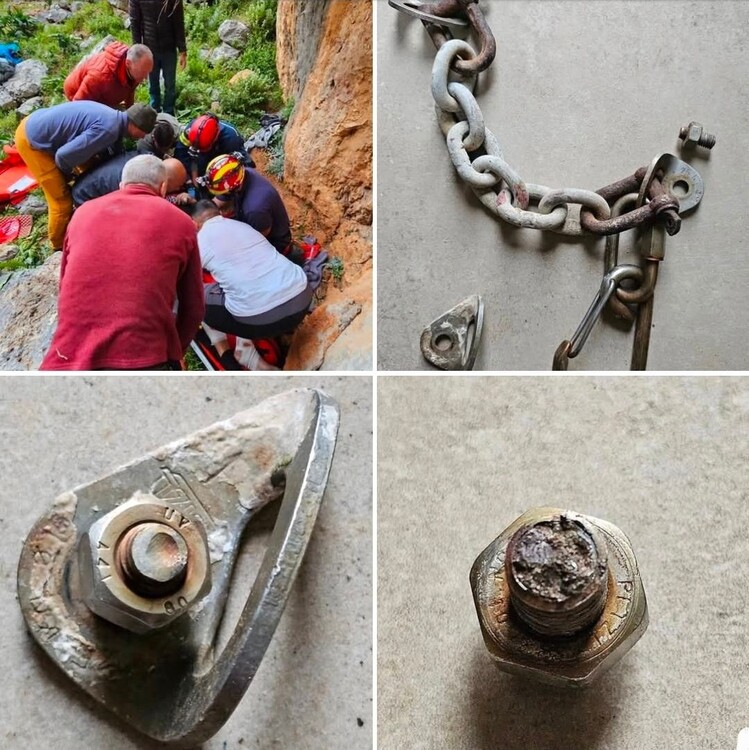
Fig. 6 – https://www.8a.nu/news/kalymnos-safety-first-3u15k
The bolts are made of 316L steel, from Peztl, and looked something like this (Fig. 6). As can be seen from the fracture surface, the crack developed over time so that only millimeters were left for the quarrying. This became fatal for him. But how is this possible when the bolts are from the renowned Peztl company and are made of certified AISI 316 L steel?
Well, the rule is that even stainless steel rusts. But the problem is more complex, and it is necessary to focus on the corrosion mechanism under conditions where we have the ideal material at the beginning, but after years it may not be so. However, it is very well described with regard to another case in these articles, the author of which is Dave Reeve, technical advisor to UIAA. (Cabo da Roca is a cape in Portugal). I found it on FB, but with limited access. According to the website, David Reeve is a prominent expert in the safety of climbing anchors and corrosion analysis. What he writes makes sense and I bow to its detail.
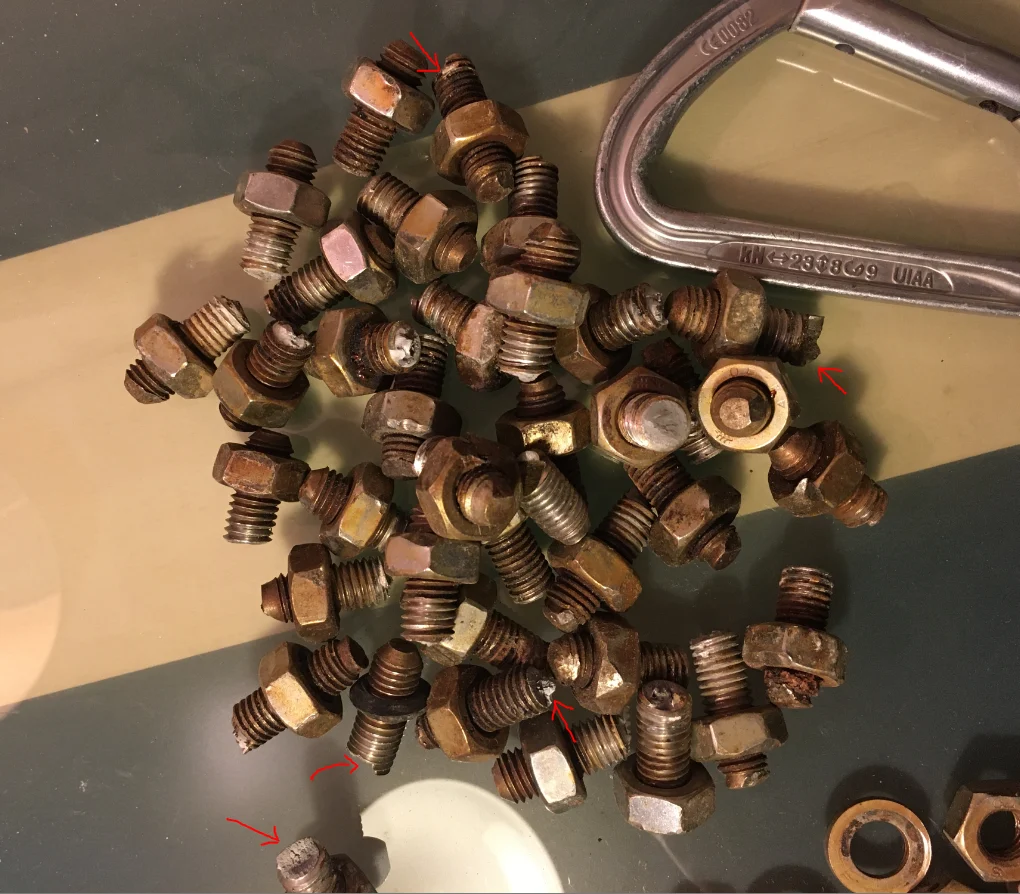
Fig. 7 – Pile of damaged screws from Cabo da Roca
https://cragchemistry.com/2020/07/04/corrosion-at-cabo-da-roca-1/
https://cragchemistry.com/2020/07/16/corrosion-at-cabo-da-roca-2-a/
https://cragchemistry.com/2021/06/07/corrosion-at-cabo-da-roca-3/
https://cragchemistry.com/2021/08/21/corrosion-at-cabo-da-roca-4/
What the bolts actually looks like can be seen in Figure 8. To exclude any corrosion potential, all parts of the bolt must be made of the same steel. Therefore, they must have galvanic compatibility. This is a basic prerequisite. Galvanic compatibility determines the ability of different metals to resist corrosion if they are in direct contact with an electrolyte such as moisture or water. With an inappropriate combination (e.g. AISI 316L, carbon steel), a galvanic cell is formed, where the less noble metal corrodes faster. The key is to choose materials with close electrochemical potential or use insulation between them, which is not possible in our case.
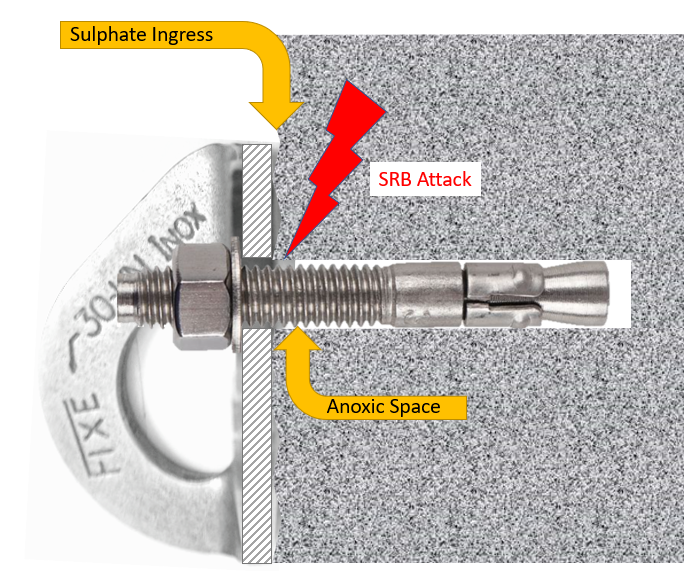
Fig. 8 – Drawing with a vision of the reason for the damage to the screws in Cabo da Roca by David Reeve
In our case, we will assume that all parts of the bolt were made of identical AISI 316L steel. It is a stainless austenitic steel that has a minimal amount of carbon. The predominant elements are chromium, molybdenum and nickel.

Although it is a stainless steel, it has limited resistance to chlorides in a long-term cycle. In the coastal environment, local depassivation (removal of the chromium oxide passivation layer) and the subsequent SCC (Stress Corrosion Cracking) phenomenon can occur. This is one possibility.
The second, studied by David Reeve, is known as Sulfide Stress Corrosion Cracking (SSCC).
In the first case , we need chlorides, tensile stress and temperature cycles in combination with moisture, leading to microcracks without plastic deformation. At the same time, fatigue loading, e.g. from abseiling, can also be taken into account. Primarily, however, it is enough to tighten the nut on the bolt with too much torque, or in the case of an expansion bolt, to drag the bolt in the rear cone.
In the second case, we need sulfides and tensile stress. David Reeve builds on this type of damage. It cannot be completely ruled out, but the problem is that we need H2S. There is a theory about the so-called SRB (Sulfate-Reducing Bactteria). This bacterium is able to reduce sulfates (SO₄²⁻) to sulfides (S²⁻, H₂S). However, these bacteria occur in anaerobic environments (without oxygen), in environments with constant humidity, with organic carbon as an electron donor, at a temperature of 20-40 °C, and in enclosed spaces (mud, sediment, pipes, reservoirs). They can usually be found in mine boreholes, mud, sewage, etc. Do you remember the famous movie Oilmen?
But here we have dry limestone, if the bolt is not glued, then air access is also ensured, the organic matter is almost zero. Limestone (CaCO₃) may contain small inclusions of CaSO₄ (crushing stone, anhydrite), but their content will be trace in nature. In addition, sulfates are very stable compounds, and are usually not a source of reducible sulfur for bacteria, and therefore are not a source of H2S. In addition, AISI 316L steel is corrosion resistant to H2S. Of course, seawater also contains sulphates (~2.6 g/l SO₄²⁻), but biological conditions must also be met for the SSCC itself, i.e. a natural source of carbon for bacteria. And there is no such thing. This applies to both expansion bolts and glued ones. The sealant itself is epoxy / vinylester / polyester → has no bioavailable carbon. So the SRB has nothing to live
So since we can almost certainly rule out the SSCC mechanism, let’s go back to SCC. The picture shows the SCC effect on M64 nuts from offshore wind farms. The nuts fell apart a few weeks after installation. But here we have bolts that have been in the rock for 24 years.
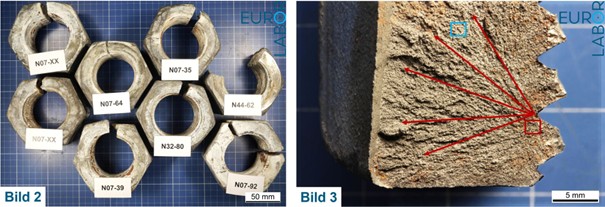
The cracking of the nuts in the picture manifests itself as a physical separation of the material due to hydrogen embrittlement. Not by anodic or electrochemical dissolution of metals. The starting point is a (local) corrosion attack. Significant red rust formation is not necessary – minimal electrochemical activity is often sufficient, for example at increased humidity. The corrosion component acts primarily as a source of the formation of atomic hydrogen H+, which then diffuses into the steel. Preferably in areas with maximum tensile stress, such as notches, grooves or defects. Thus, in our case, the thread of the bolt screw is the most vulnerable area of the assembly. But there is another interesting fact from David Reeve’s analysis. It can be as significant as SCC. Part of the bolts or glue-in bolts is magnetic. This can be seen in this video.
Again, they are made of AISI 316L stainless steel, but it is fully austenitic and therefore non-magnetic. So how is this possible? Theoretically, because steel has only 0.030% carbon, martensite cannot form by thermal transformation processes. However, the prerequisite is that the steel is properly alloyed, properly heat-treated and free of deformation. However, if it becomes magnetic, it means that part of the austenite has been transformed into martensite (α’-martensite). This is the so-called deformation martensite – it is formed mechanically, not thermally, by phase transformation.
Deformation martensite can form during thread forming or when bending glue-in bolt, and if recrystallization annealing does not follow, this martensite remains in the steel. The video shows how to find out in a simple way. However, this can also happen if we overtighten the nut on the screw, so much so that plastic deformation begins to form, for example, on a stretched cone. But it may be enough to hammer it with a hammer. Everyone can try it to check where the limit of this material is.
In any case, if this mechanical martensite is formed, it will significantly strengthen the SCC. Martensite in austenitic stainless steel is very bad news:
- Increases hardness → increases brittleness, → crack spreads more easily
- It reduces corrosion resistance → the passive layer is less stable.
- Increases sensitivity to SCCs → martensite + chlorides + tensile = ideal conditions for brittle cracking.
- It increases sensitivity to hydrogen embrittlement (HE – Hydogen Embrittlement → even small amounts of hydrogen (from pitting, from corrosion traces) can cause brittle fracture.
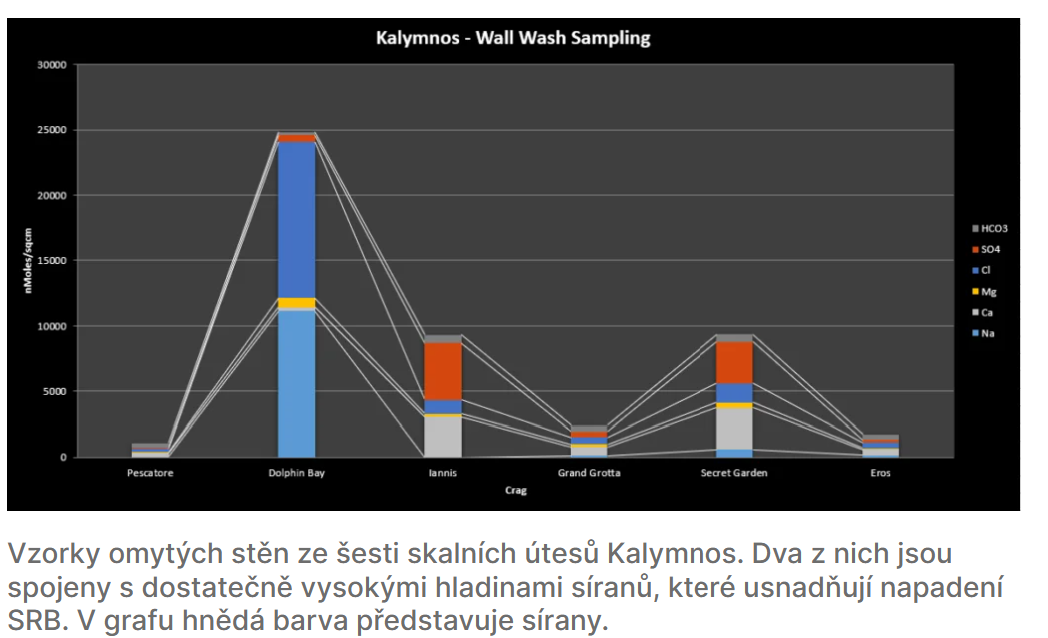
Fig. 10 – Sulphate exposure in individual areas of Kalymnos
In his reports, David presents this graph (Fig.10) of the sulfate load of individual areas of the island of Kalymnos, and he also uses this graph as an argument for the SSCC theory. However, I believe that this is misleading. Just as sulfates spread from the sea, chlorides also spread. However, unlike sulfates, they do not need significant concentrations. Sulfates themselves do not destroy 316 stainless steel, sulfates are not a trigger for SCC, and sulfates are not a problem without SRB. However, SRB bacteria are not active on dry, ventilated, overhanging walls, which is exactly Jurassic Park where the accident happened. It is overhanging, not exposed to rain, well ventilated, without permanent moisture, without organic matter, without anaerobic pockets. This is an environment where SRBs cannot operate.
On the other hand, chloride SCC + crevice corrosion + tensile stress also takes place where: there is no rain, no water, no visible corrosion, no high sulphate load. All you need is: chlorides from aerosol, micromoisture in the gap between the bolt and the rock, permanent stress in the expansion bolt, unstable austenite (martensite), absence of recrystallization annealing, pitting in the thread.
Since there is no history of the bolts from 2002, nothing is known about the initial material structure. This is extremely important for any analysis, because we have to compare the end state with the initial state. Only then can we understand what actually happened. Here I would like to draw attention to one more seemingly minor problem. In AISI 316L steel, the so-called δ-ferrite can occur. It is a phase that is magnetic and occurs mainly in welds or castings, or if nickel is at the lower limit of alloying, or if recrystallisation annealing is performed in the wrong way. And it is precisely these processes that we know nothing about.
Since bolts and glue-in bolts are safety features, each should have its own “birth certificate” individually. This should contain an ID that can identify the production process from the manufacturing of the steel to its delivery. Is this possible? But it is, but no one has yet completed it. In the aviation industry, this has long been established for critical parts. If you have seen the shell of an airplane and the thousands of bolts that fix it to the skeleton, then each of these bolts must have its birth certificate, when, by and how it was made, and when, by whom and how it was bolted on the airplane. And all this in digital form. Bolts or glue-in bolts are a trivial problem on the other hand.
In this context, and I do not mean this ill to those who produce safety parts for climbing, according to the Civil Code, the manufacturer’s liability for hidden defects applies for a period of 2 years. However, if there is an injury to health, according to EU Directive 2024/2853 – The limitation period for claiming compensation for damage caused by a defective product is 10 years from the placing of the product on the market. However, if the injured party was unable to commence proceedings within ten years from the dates specified in paragraph 1 due to the latency of the injury to health, the right to compensation under this Directive will cease to exist after a period of 25 years. This seems to me to be quite a big threat to the manufacturer of the climbing material. And that the manufacturer can argue that he did not know that the bolts would be by the sea? There is a simple answer to this in the Czech Commercial codex:
Proper performance
§1914
(1) A person who performs for consideration to another is obliged to perform without defects with the characteristics specified or customary so that it is possible to use the subject of performance under the contract and, if known to the parties, also according to the purpose of the contract.
What does this mean? Because we have to pay for bolts, the above paragraph applies, and the manufacturer must perform without defects. And if the bolt cannot be installed in Jurassic Park, it must be explicitly stated for the product – e.g. not suitable for seawater environments, for environments containing Cl, sulfates, etc. Otherwise, he will be forced not only to return the money for defective goods, but above all to pay for damage to health. And this will be quite a large bundle of money, measured in millions.
The whole problem is summarized in this table.
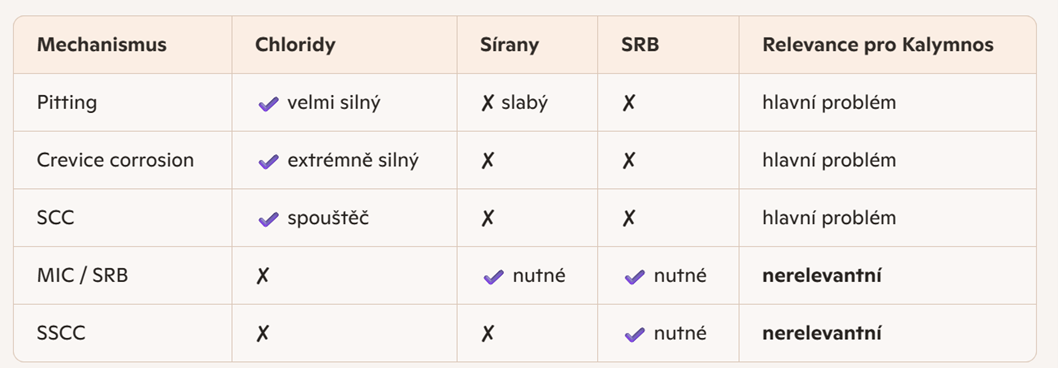
Fig. 11 – Comparison of the effects on SCC and SSCC
What can I say about it? All the screws fell off at once. That is, they were from the same series, they were installed and persisted in the way for 24 years under the same conditions. Seemingly a coincidence, but in fact a logical result. Unfortunately, it just cost our friend’s life.
There is now a mournful mood on Kalymnos and an effort to re-bolt critical areas. Yes, it makes sense. But how long will it last again? The lifespan of 316L steel bolts can be estimated at 10 years in this environment. But there are already almost 5,000 of those routes. Each of them has 10-15 bolts, including the upper abseiling points. So it is an exchange of an estimated 50 to 75 thousand bolts every 10 years. This is a terrible idea.
Are there other options? Yes, one of them is Duplex 2205 steel, which seems to be better than AISI 316L, but Petzl demonstrably does not produce bolts from this material. The second option is Titanium Grade 2, commercially pure titanium (approx. 99.2% Ti), which offers an excellent balance between strength, ductility and corrosion resistance. It is characterized by high biocompatibility and resistance to seawater and chemicals. This type of material has a virtually unlimited lifespan.
But if the cheapest bolt from Peztl costs €4, in this case we will be around €10 to €30 per piece.
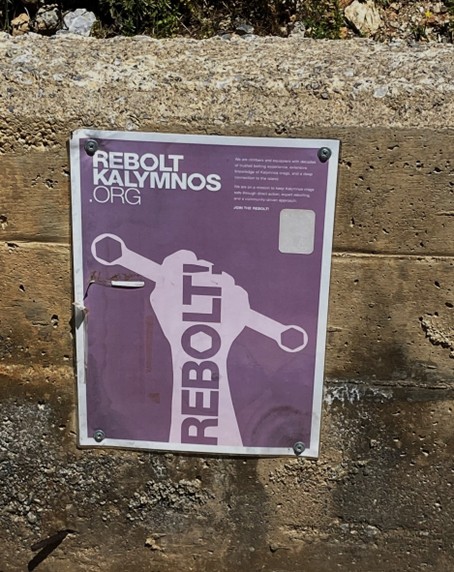
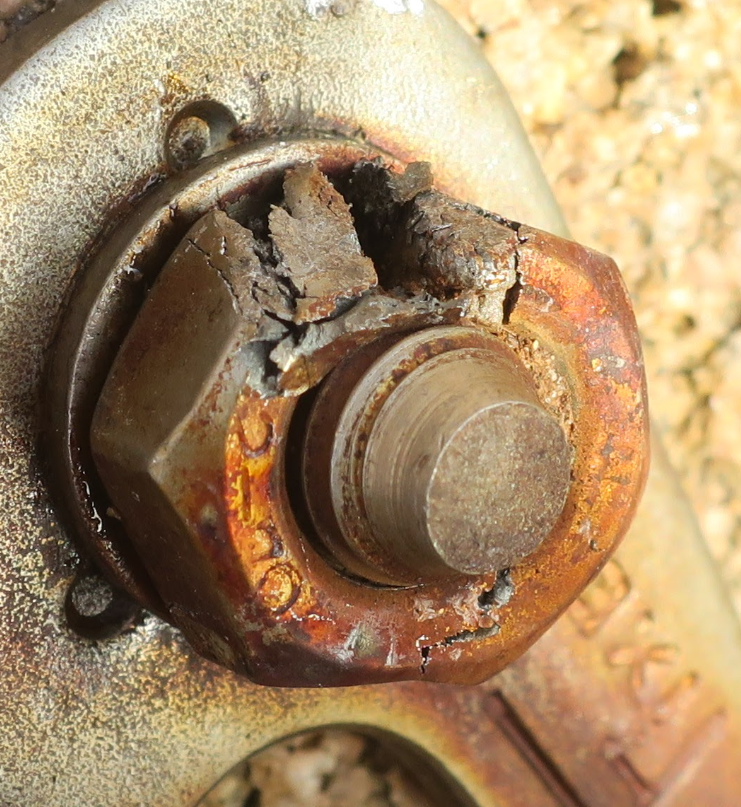
Fig. 12 – Photo from last week, notification to the website www.reboltkalymnos.org
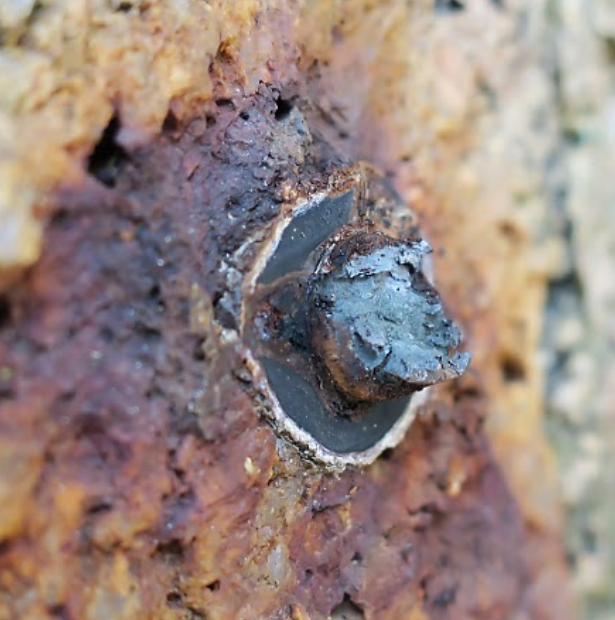
Fig. 13, 14, 15, 16 – Other examples of SSC on bolts
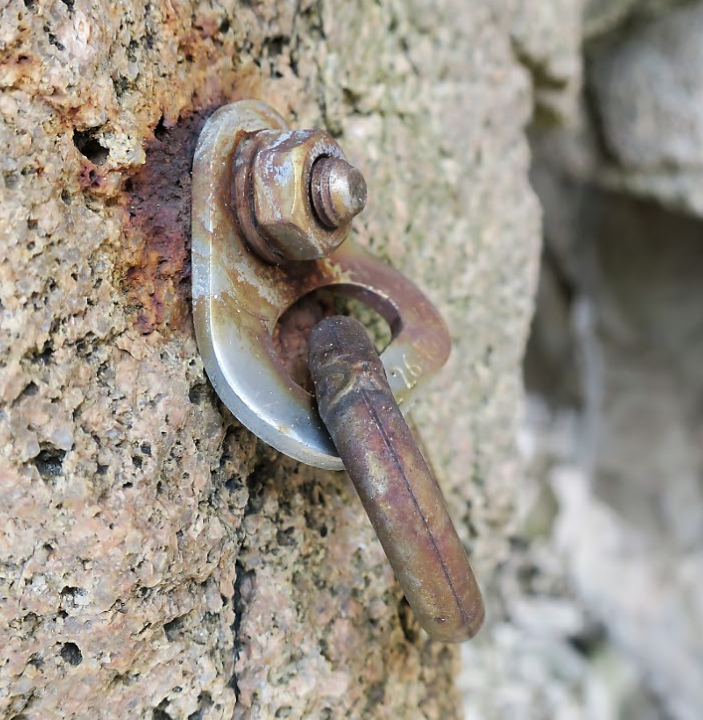
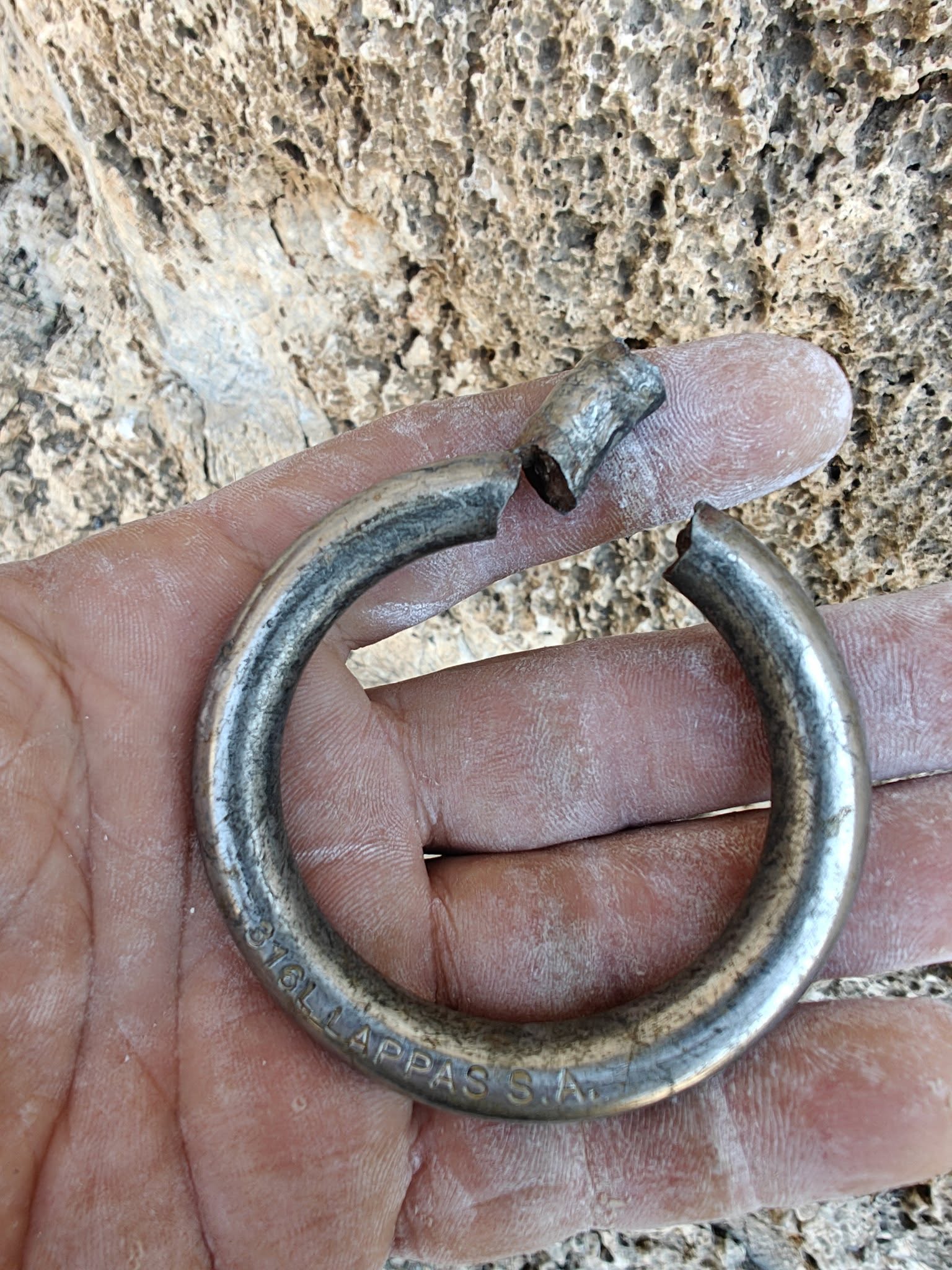
What can I say in conclusion? Climbers are a special breed. Adrenaline and risk are part of their life. A good climber is one who lives. But it is not just a sign of athletic performance, but above all a sign of luck. And so I am glad that I was lucky and that I lived to this age. And a big thank to everyone on Kalymnos for the effort they put into making sure that luck remains for everyone who comes to this climbing paradise.
And finally, a final lesson:
- When you buy rivets, read the instructions. There may be something you shouldn’t do.
- Never buy cheap rivets of uncertain origin, the recrystallization burping may not have been done correctly
- When installing rivets, never use force. If you do, you will accelerate SCC
- The guide to Kalymnos says to climb with a 17 wrench and tighten any loose nuts. Remember that too much tightening force can paradoxically harm others
- When installing a rivet, make sure that there is no biological material inside the hole (mouse, your finger, etc.), it can be potential food for SRB.
- If you want to make it safer by disinfecting it, never use anything that contains sulfur
Good luck
Jirka Stanislav