Science fiction or reality?

I was thinking about how to start the new year 2022, with some wish, motive or just one sentence – a lot of health and love. But then I came across this diagram of rising energy prices in 2021 and it froze me. This is basically a threefold increase in energy prices.
Fig. 1 – Development of electricity prices in the Czech Republic in € / MWh, source https://energiebezemisi.cz/novinky-v-oboru/co-zdrazilo-energie-v-cesku-plyn-a-fosilni-paliva-ukazuje-analyza/
I immediately recalled my 20 years of negotiating electricity and gas prices with different suppliers and at different times when every penny increase was hard to win. And now all of a sudden, the heat treaters are faced with the fact that there will be no negotiation, it’s just like that, or you turn off the furnaces.
So I started researching this and came across a forecast of the trend in electricity prices in the EU from 2017. It predicted that in 2050 we would be at around 90 € / MWh.
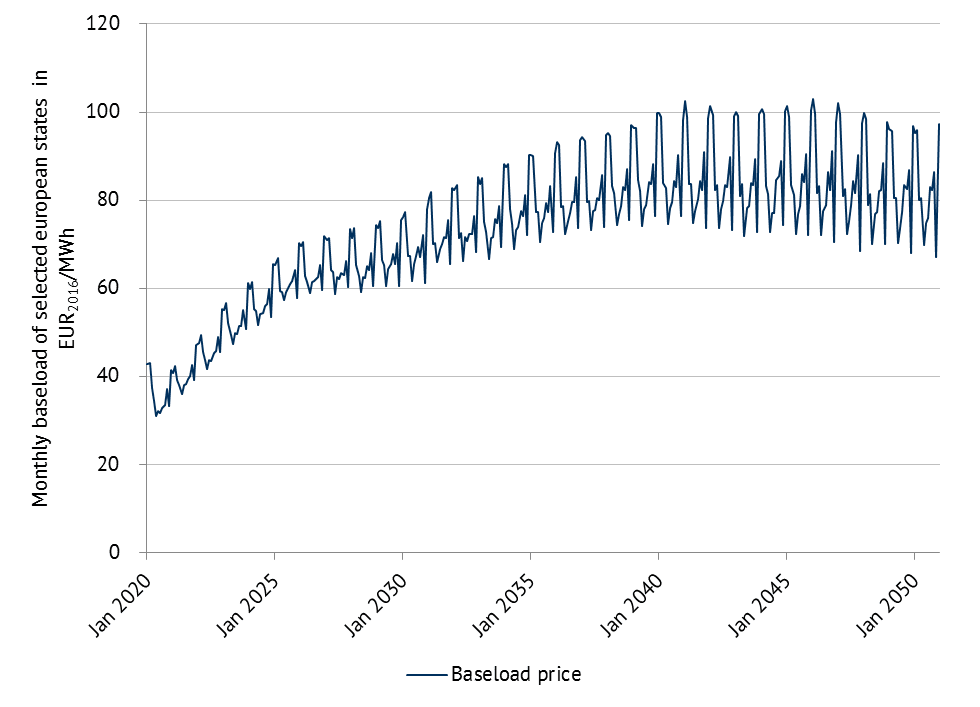
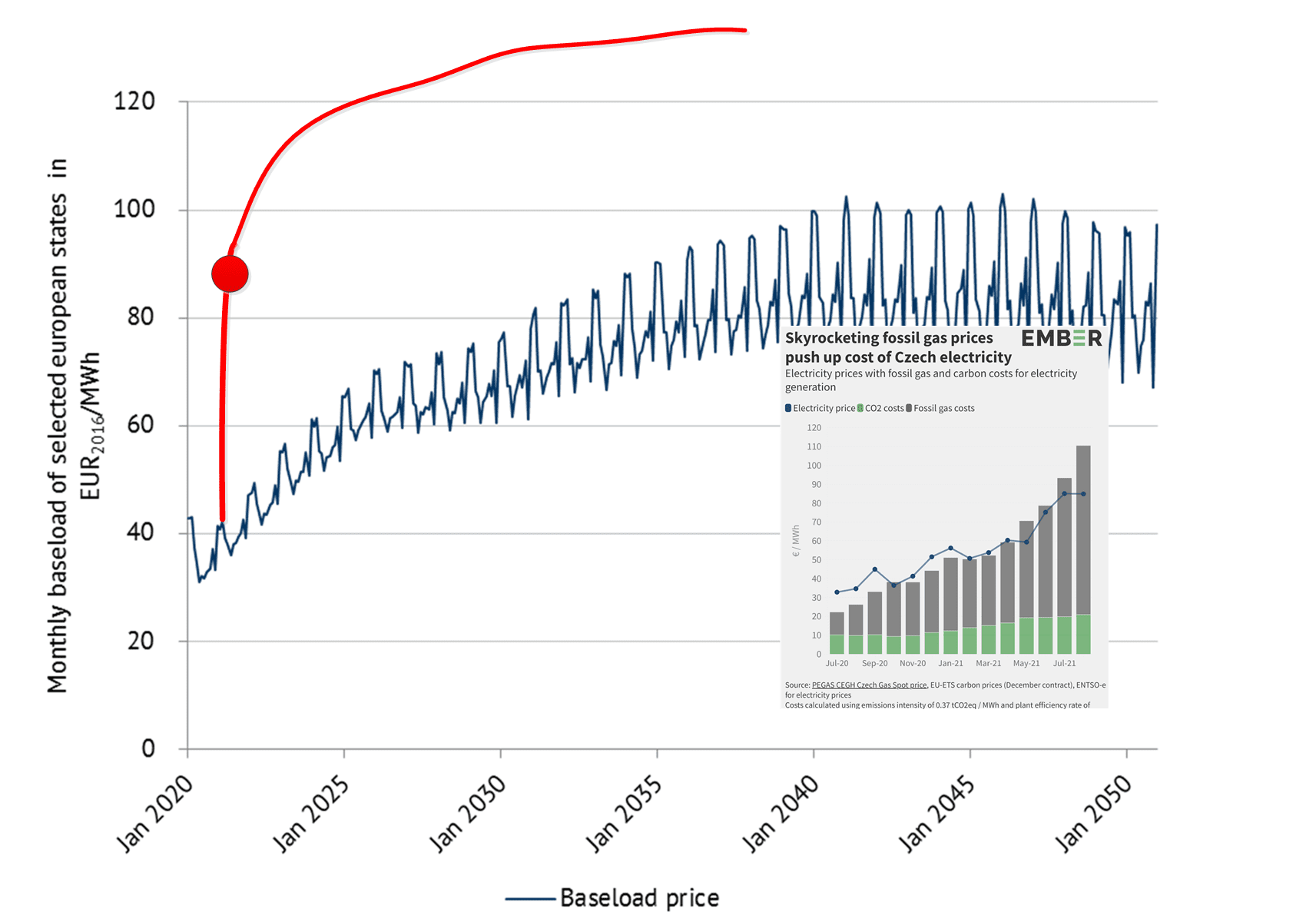
Fig. 2 – Electricity price growth trend in the EU from 2017
Fig. 3 – My trend interpolation (in red) based on status as of 1.1.2022
However, this forecast did not take into account that the level of 90 € / MWh would be exhausted as early as 2021. But how will it continue? What can heat treaters actually conisder? Will it be like on my red line, where I get some 150 € / MWh?
If we look at the cost structure of heat treatment (Fig. No. 4), these are approximately the following values: 40% of wages, 13% of energy, 5% of technical gases, etc. Of course, each technology has a slightly different percentage, but the ratio between them it did not change for many years and could be relied on, and could be predicted and planned accordingly.
But now suddenly such a leap. But how will it go on? My red line marked interpolation is a warning. It does not end with this state, but it will continue. But where does it end?
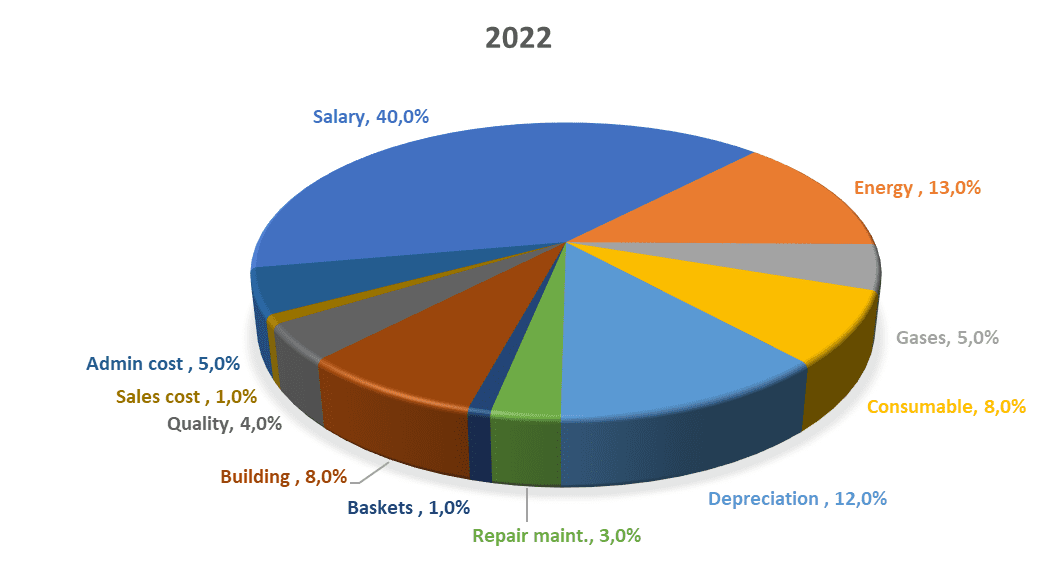
Fig. 4 – Initial state of the year 2022
I made a model example. It is generally known that the standard European cost price for 1 kg of carburizing per 0.80 to 1.20 mm is around € 1. Number one is a great number; it will count well.
I set sci-fi criteria. Energy per year + 10%, wage inflation + 5%, diesel + 2%, technical gases according to the formula New price = Old price * (0.5 * Electricity index + 0.3 * Wage index + 0.2 * Diesel index) = 6.6%, consumables + 6%, baskets and fixtures + 10%, buildings + 2% and others + 5%.
And what did I get out of it?
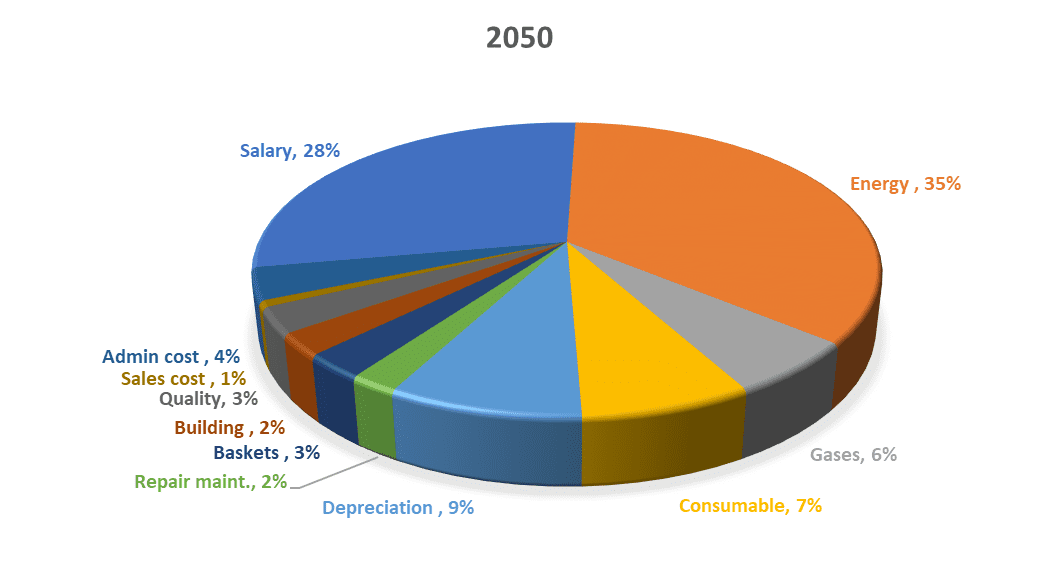
Fig. 5 – Final state year 2050
The most important items of wages and energy are changing fundamentally, the other items are significantly less affected. Energy rises from the original 13% to 35%, the share of wages will fall from the original 40% to 28%, technical gases with regard to wage, energy and diesel indices will increase their share from 5% to 6%. For the same reasons, the cost of baskets and fixtures can be expected to increase from 1% in 2022 to 3% in 2050.
As the individual percentages determine the level of interest in innovation, a complete change in strategy in the field can be expected. Currently, everyone is focused on saving labour costs, whether in the form of larger furnaces, automation or cycle optimization, in the future we will have a significant change in the fact that priority will be energy consumption and energy savings.
If we look at the costs expressed in money, then we see the trend according to Figure 6. Costs will increase from today’s 1 € / kg to an incredible 5.82 € / kg, ie 5.82x. The share of energy or wage inflation will therefore increase the pressure on savings of any type.
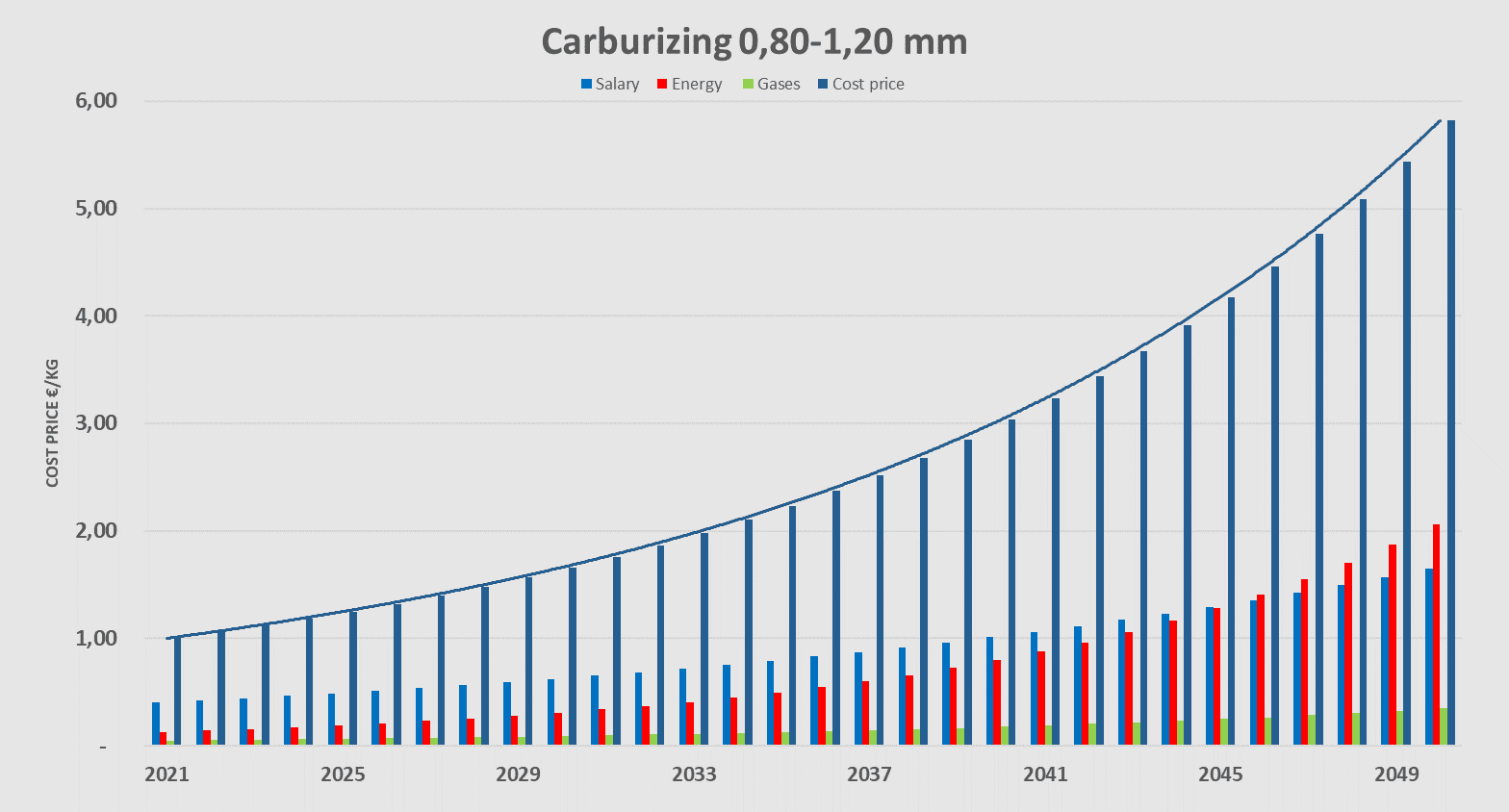
Fig. 6 – Rising processing prices due to rising energy prices and inflation
But what we do not affect are the laws of physics. If we want to heat the parts to the working temperature, we must supply them with enough heat energy to reach the temperature. Although we can increase the percentage of usable energy by improving the efficiency of heat flow transfer from heating source to parts, or improve the insulation of furnaces, the current state of the art does not give us much opportunity.
I don’t even want to think about how to deal with it. It will not be easy and the current state of the art does not give many optimal solutions.
So when I go back to the beginning, it might be easiest for someone to press the START button again in the power plants that shut down and return to shutting down only when we have a solution ready. I don’t know how today, but the price for 1 MWh from a nuclear power plant in the Czech Republic was, and probably still is, 28 € / MWh. That is 70 pennies per 1 kWh.
So I wish all heat treaters until the New Year 2022, not only good health and love, but above all strong nerves. And maybe to every heat treatment shop of a company psychologist….
PS: All of the above will never happen because it’s Sci-fi
Yours Jiří Stanislav
9th of January, 2022