Made in EU China
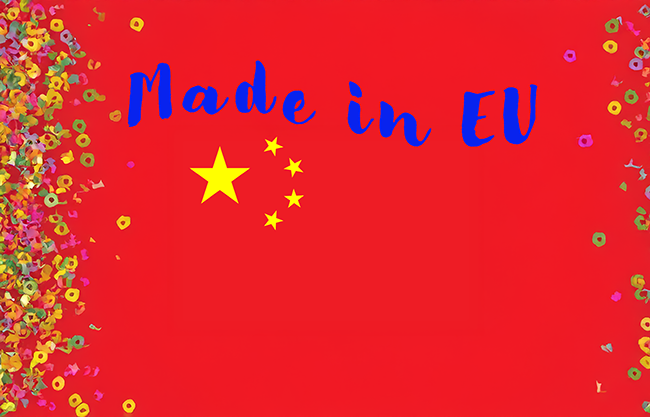
If you order a vacuum furnace today, you may have a problem. This furnace can be made not in Europe, but in China. This is not to say that the furnace will be worse off than a furnace made in Europe, but there are certain legal steps involved that you should not ignore.
Contractual specifications of the manufacturing site
- Obligation to inform: If the contract explicitly states that the furnaces will be manufactured in the EU, any change in the place of production is considered a change in the contract. In such a case, the furnace supplier is obliged to inform the customer and obtain his consent.
- Standard clauses: If the contract does not specify the place of production and refers only to standards, the supplier has the right to use its global production capacity (including China) as long as it adheres to the agreed quality and technical parameters.
Origin of goods and certification
- Certificates and standards: Furnaces must comply with European standards (e.g. CE marking) if they are intended for the Czech market. Production in China must not affect the ability of the equipment to obtain the necessary safety and technical certifications.
- Certificate of origin: If the customer requires “EU origin” for the purposes of subsidies, insurance or internal regulations, this must be declared in the contract. Changing the origin to “Made in China” would then be a fundamental breach of contract.
Transparency and practice
- Information obligation in the GTC: The General Terms and Conditions for the US market state, for example, that the seller may not use materials manufactured outside the USA without written consent. Similar restrictions may exist in the European versions of contracts, if the customer has negotiated them.
Recommended procedure for a Czech company
- Check the article on “Place of Performance” and “Origin of Goods” in the signed contract.
- Check the referenced T&Cs: Look for passages about “Substitutions” or “Deviations“.
- Request technical documentation: If you suspect a change, ask for confirmation of the final assembly location and the list of key components.
Summary: If the contract does not explicitly state “Place of production: EU”, the supplier company usually does not have to inform about the specific place of production legally if the equipment meets all agreed technical parameters and standards. However, if EU origin is a contractual condition, it is a breach of contract.
What about transport?
- Sea Freight (Most Likely): Takes 30-45 days. It is a standard for heavy equipment (furnaces), but carries the risk of delays in ports or due to geopolitical situations (Suez Canal).
- Rail transport (Silk Road): It takes about 14-25 days. It is faster than a boat, but more expensive.
- Air transport: For such heavy machines, it is economically unrealistic, it is used only for urgent spare parts (period 5-10 days)
Shipping costs
The price is based on the so-called Incoterms (e.g. DAP, CIF, FOB), which determine who pays for which part of the journey.
- Price Estimate (2026): For one standard container from China to Europe, the price is between $15,000 – $30,000.
Insurance and risks
Insurance is an absolute necessity for industrial units worth millions of crowns.
- Rate: Usually 0.08% – 0.15% of the declared value of the device. With a furnace value of 500 k€, it can be up to 75 k€.
- Coverage: “All Risks” insurance is recommended, which covers damage during transport, fire, theft and damage caused during loading and unloading.
- Liability: Without additional insurance, the compensation from the carrier (according to the CMR or Hague Rules) is limited by the weight of the goods (approx. 10 EUR/kg), which does not cover the price of expensive furnaces. If the furnace weighs 10 tons, the insurance will be 100 k€.
Incoterms 2020 Terms
Incoterms determine the moment when the risk of damage to the goods passes to you and who pays for the shipping. For large orders, you will most often encounter the following variants:
- DDP (Delivered Duty Paid) – The most convenient for you. The furnace supplier takes care of everything: transport from China, insurance, export formalities in China and import duties and taxes in the Czech Republic. You only take over the furnaces at the destination.
- DAP (Delivered at Place) – The supplier will arrange transport to your company, but you have to arrange and pay import customs and VAT in the Czech Republic yourself.
- CIF (Cost, Insurance and Freight) – The supplier pays for transport and basic insurance only to the port (e.g. Hamburg or Copenhagen). From the moment the furnaces in China are loaded onto a ship, you bear the risk of damage. You handle the transport from the port to your hall and customs clearance yourself.
- FOB (Free on Board) – The supplier only loads the furnaces onto a ship in a Chinese port. All sea transport, insurance and customs clearance are paid for and organized by you
Customs classification and fees
Industrial furnaces are usually classified under Chapter 84 in the TARIC system.
Customs classification (HS Code)
For these devices, the most commonly used code within the EU (TARIC system) is:
- 8514 20 10 00 – Industrial or laboratory electric furnaces and ovens operating on the principle of induction or dielectric losses.
- 8514 10 80 00 – Other resistance furnaces and ovens (most common in vacuum furnaces for heat treatment).
Duty rate for imports from China:
- For the above codes, the basic rate of customs duty to the EU is 0% (the so-called autonomous exemption or zero contractual rate).
- VAT: Even with zero duty, you have to pay 21% VAT on the total value (price of goods + transport + insurance) in the Czech Republic.
- Origin of the goods: As they will be produced in China, no preferential (zero) rates from the free trade agreements that the EU has with other countries can be applied
The use of furnaces made in China for sensitive military production is legally and technically possible, but it carries specific risks and limitations that your business must assess. Some furnace suppliers routinely supply technology from a Chinese plant to the aerospace and defense industries around the world. But you need to consider:
Security Clearances and Cyber Risks:
- Remote access and connectivity: Modern furnaces have network-connected control systems (PLCs) for diagnostics and service. There is an increased risk of so-called “backdoors” in Chinese production. For military production, these furnaces must be operated in an isolated network (air-gap) without Internet access.
- NÚKIB certification: If your company falls under the Cyber Security Act, the use of technologies from high-risk vendors may be limited or prohibited.
Export Checks (Dual-use)
- Chinese restrictions: As of December 2024, China has strict rules for the export of dual-use goods. Chinese authorities may require information about the end-user certificate and the purpose of use. If you specify “military production” in the questionnaire, the GOC may block or make the export of furnaces subject to inspections.
- Service dependency: If there were political tensions, the Chinese plant could stop supplying spare parts, which would jeopardize your ability to meet your obligations to the state in the case of a military contract
Technical standards and audit
- AMS and NADCAP standards: Vacuum furnaces are designed to meet stringent aerospace and defense standards (e.g., AMS 2750). So technical quality should not be an obstacle.
- NSA clearance: If you work on orders in the “Secret” mode, the NSA (National Security Authority) can check the origin of your means of production
Recommended procedure:
- Check the contract with the Ministry of Defence of the Czech Republic: Do your contracts contain a clause prohibiting the use of technologies from selected countries (e.g. China, Russia)?
- Insist on a control system audit: Require that the software and PLC be installed or at least fully audited by technicians from the EU headquarters, not from China.
- Ensure service autonomy: Contractually ensure that warranty and post-warranty service is carried out exclusively by the European team and that key spare parts are stocked in the EU.
There is a comprehensive set of European regulations that complement each other, which in 2026 form a strict legal framework for the safety of strategic production.
Dual-Use Regulation
- This is the cornerstone of export and import control of sensitive technologies (including vacuum furnaces that can be used for both civilian and military purposes).
- Designation: Regulation (EU) 2021/821.
- Update: Every year, a so-called Commission Delegated Regulation is published, which updates the list of controlled items in Annex I. The current version for your case is Delegated Regulation (EU) 2025/5947 (in force from the end of 2025/2026)
Cyber Resilience Act (CRA)
- New legislation that fundamentally affects machines with digital elements (PLC control systems in furnaces) manufactured outside the EU.
- Designation: Regulation (EU) 2024/2847.
- Result: From June 2026, strict vulnerability reporting and cybersecurity certification obligations will come into effect. For military production, this act requires that hardware is not susceptible to digital sabotage from foreign countries
Industrial Accelerator Act (IAA)
- Brand new legislation proposed in March 2026 that focuses directly on reducing dependence on China in strategic sectors.
- Label: Proposal for a regulation of 4 March 2026.
- Impact: It introduces ‘Made in EU’ rules for public procurement and subsidised projects. If your production is financed by the state or from EU funds, this regulation may require that the machines (furnaces) also have a certain proportion of European components
FDI Screening Regulation
Designation: Regulation (EU) 2019/452.
Result: It allows EU countries (in the Czech Republic through Act No. 34/2021 Coll.) to investigate and, if necessary, prohibit investments or contracts that could threaten security or public order, which typically applies to Chinese technologies in the defence industry.
European Defence Industrial Programme (EDIP)
Designation: EDIP (European Defence Industry Programme).
Outcome: An initiative aimed at modernising the European defence base, which emphasizes the resilience of supply chains (so-called de-risking) to countries such as China.
If a company supplying vacuum furnaces declared the origin of the furnaces as European (“Made in EU”), although they were in fact completely manufactured in China, it would be Origin Fraud. For military production, this scenario is extremely dangerous for several reasons:
Risk of detection in a security audit
- In the case of military contracts, the state (Ministry of Defence of the Czech Republic, NSA) or the end customer (e.g. NATO) performs in-depth audits.
- Labels and components: Even if the furnace will have a “Made in EU” label, the internal components, castings, or control units will have Chinese manufacturing codes.
- Logistics Footprint: Customs and Tax Bureau have records of container imports from China. If it is found that you knowingly worked with a false origin, your company is at risk of losing its security clearance and being excluded from all military contracts.
Cyber Security (Essential for the Military)
Even if the origin is correct on paper, Chinese hardware carries risks that “EU paper” will not erase:
- Firmware: If the control software (firmware) is written or compiled in China, it may contain hidden code to collect data about heat treatment processes (e.g., temperatures and quenching times of specific military-grade alloys).
- Supply ban: If Chinese origin is proven in the future, the state may order you to immediately decommission these furnaces (similar to what happens with Huawei technologies in telecommunications).
Legal implications (EU 2021/821 and 2024/2847)
- Dual-use items: If the furnaces were declared as EU, this would circumvent the dual-use licensing procedure. This is a criminal offence of violating export and import control regulations.
- Management responsibility: As a statutory body or responsible person, you have a legal responsibility to ensure that your means of production are safe and their origin is transparent.
So how do you proceed if you want to use such furnaces for critical production?
- Transparency: Origin in China must be acknowledged in the documentation.
- Security clearance: Your safety director must approve that the furnaces are not connected to the internet and that the control system has passed the check (e.g. a complete software reinstallation in the Czech Republic/EU).
- Exception: If there is no European alternative (which is not the case for European furnace manufacturers with a production plant in China, because the supplier can actually produce furnaces in the EU), the state may grant an exemption.
If the furnace supplier supplies you with ExWorks furnaces, you must be aware of the legal implications of this agreement. The EXW (ExWorks) or “ex-works” condition is the least advantageous and riskiest option for you as a buyer , especially when importing from China.
Your responsibilities (Costs and organization)
- Transport: You have to find a carrier yourself who will pick up the furnaces in the Chinese production plant, load them into containers and transport them to your company in the Czech Republic.
- Loading: According to the strict interpretation of EXW, the furnace manufacturer is not even obliged to load the furnaces onto your truck/containers (although this often happens in practice). If the furnace is damaged during loading in China, it goes to you.
- Export formalities: You (your freight forwarder) need to complete an export customs declaration in China. This can be very complicated with military-grade technology (dual-use) in China.
- Import formalities: You pay and handle customs duties and VAT in the EU.
Risk transfer (When you are responsible for the furnaces)
- Moment of handover: The risk passes to you when the manufacturer prepares the furnaces for pick-up from their hall in China.
- Way: Once the furnaces leave the plant gate, any damage (storm at sea, container crash in port, delay in Suez) is your problem and your cargo.
Why is this a problem with China and military production?
- Proof of origin: With EXW, you have less control over what the manufacturer puts on export documents in China. If they want to “camouflage” the origin, paradoxically, with EXW, you as the importer have to “consecrate” it.
- Six-month period: For EXW, 6 months only applies to the completion of production. The trip (another 40-60 days) does not count towards this date. Realistically, you will not see the furnaces until 8 months later.
- Insurance: You need to arrange high-quality insurance yourself that covers the entire journey from China to your destination.

If the contract includes an EXW condition in the manufacturer’s European location with the furnace supplier, then the situation changes.
Logistical and legal importance
- Place of handover: The equipment supplier undertakes to prepare the furnaces for collection at its central headquarters in the EU. Transport from the EU headquarters to your company (about a few hundred km by truck) is paid for and organized by you.
- Concealed shipping from China: If the furnaces are made in China, the equipment supplier must first transport them from China to their EU headquarters at their own expense and risk, clear them there for free circulation in the EU, and only then “hand them over to you at the ramp” at their EU headquarters.
- Origin of the goods: Since the place of delivery is the manufacturer’s headquarters in the EU, and the furnaces are already in the EU, you are likely to be invoiced as EU goods.
The problem of “Paper Origin” vs. Military production
This is where you encounter the biggest risk for your military contract:
- Transformation of origin: In order for goods from China to obtain legal “Made in EU” status, they must undergo so-called “substantial processing” (e.g. assembly of key units, installation of the control system, final tests) in the country of the furnace manufacturer in the EU.
- Mere reloading is not enough: If the furnace manufacturer at its headquarters in the EU just unloads the crates from a Chinese container and hands them over to you immediately, the furnaces are still of Chinese origin. If you declare them as European in the documentation for the army, you (and the furnace manufacturer) are committing false information.
- Security risk: Even if you buy furnaces on paper in an EU country (EXW is the headquarters of the furnace manufacturer in the EU), there may be Chinese hardware and software physically in them. During an audit by the Ministry of Defence of the Czech Republic or the National Security Authority, this is found out (according to the production labels of components or analysis of the PLC code).
Assessing purchases from China through the lens of AQAP (Allied Quality Assurance Publications) standards, specifically AQAP 2110, is very critical in the defense industry. This NATO standard defines quality requirements in design, development and production, placing extreme emphasis on risk management and supply chain transparency.
Here’s an analysis of how Chinese manufacturing meets AQAP’s requirements:
Supplier Management (Article 5.4 of AQAP 2110)
- According to AQAP, you, as a direct supplier to the army, bear full responsibility for your subcontractors (in this case, the production of furnaces).
- Subcontractor audit: Does the furnace supplier have its plant in China certified according to NATO standards or equivalent (ISO 9001:2015 in strict mode)?
- You must have the right to conduct an audit directly at the production site in China, or to send a representative of the State Quality Assurance (SOJ) there.
- Approved Source: If the Military has approved your chosen furnace supplier as an allowable supplier, changing the manufacturing site to China without notification is a violation of the Configuration Management Article.
Traceability
AQAP 2110 requires that the origin of the material (steel attestations) be traceable for each critical part (e.g. heating chambers, vacuum vessels).
Risk: For Chinese production, it tends to be more difficult for European auditors to verify the authenticity of the bills of materials. If the furnace material does not meet specification, an accident (e.g., contamination of the alloy) may occur during the heat treatment of military material, for which you will be responsible.
Cybersecurity & Integrity (Software)
AQAP is increasingly focusing on software integrity.
Section 5.10 (Configuration Control):
- You need to control every version of the software in the PLC. For Chinese production, AQAP basically requires that the software be “cleaned” or verified by an independent party within the EU before it can be deployed into military production.4. Government QAssurance (GQA)
- Within NATO, there is a GQA process, where the office (in the Czech Republic, an office falling under the Ministry of Defence) delegates quality supervision.
- If the furnaces were from an EU country, the Czech authority would ask colleagues in an EU country for supervision of the furnace manufacturer. With China, this mechanism does not work. There is no agreement between NATO and China on mutual recognition of state quality surveillance. This means that the quality of furnaces made in China cannot be guaranteed by a “NATO state authority”.
How to proceed from the point of view of AQAP audits:
- Risk analysis: In your quality plan for a military contract, you must include the purchase of furnaces from China as a high risk (political, cyber, logistical).
- Inspection and Test Plan (QCP): Insist that the final inspection (SAT) in the Czech Republic must be carried out by a certified quality manager from the EU country where the furnace manufacturer is based, or directly by your auditor according to AQAP standards.
- Declaration of Conformity (CoC): Require the place of manufacture to be clearly stated in the Certificate of Conformity. If there is a lying EU country, you are violating the basic principles of NATO ethics and quality.
Summary: The purchase of furnaces from China for military purposes under AQAP 2110 is possible, but much more demanding in terms of administration and control. If you do not admit this to the army in advance and describe how you manage these risks, you risk not recognizing the entire production process.
Do you still feel like it? It can be done, but the pitfalls are significant these days.
=======================================================================================================
Are you solving a similar problem? I will help you with the analysis…
 40+ years of experience in the field
30+ years of experience… HT-PROGRES, Bodycote, Galvamet
cooperation… VŠB, Czechimplant, ECM Technologies, TAV Vacuum Furnaces, GHC Invest
12+ years of expert activity
Want to ask for a solution or want a non-binding consultation? Click on this link, I will usually respond within 24 hours. Contact email
========================================================================================================
Jiří Stanislav, Ing. CSc.
Consultant and forensic expert
========================================================================================================
08/04/2026