Low in marketing

So, I got lost again where I shouldn’t have been. Among the Women of the North. Yes, there were only women there, and apart from the photographer, only me as a representative of the male generation. Good experience. They told me in advance that I should sit somewhere in the corner so as not to be in the photographer’s shots. But otherwise, they were nice.
But the content was much more interesting, and that was the reason why I pushed through there. The law in marketing throws itself at me almost every day now, because I have my website, I have my blog, and almost every day I struggle with the legality of what I put there.
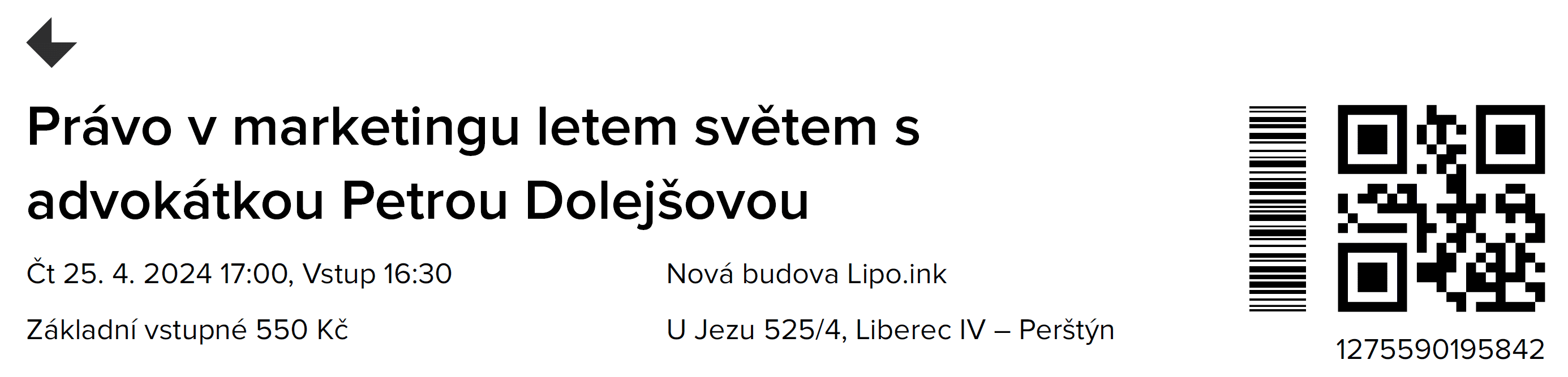
The lecture was given by Petra Dolejšová, and I must say that it was a treat. In a great, light-hearted way, she tackled things that will forever remain foreign to the majority of the population. You can find it on this website https://www.petradolejsova.cz/. This is a quote from one of her blog posts https://www.petradolejsova.cz/blog/firemni-facebook-a-tenka-linie-autorskych-prav
_____________________________________________________________________________________________
Regarding copyright on social networks, there is a bit of unrest and disagreement about what I can actually do with other people’s posts and what is already over the line. In discussions with marketers, I have already encountered the argument that “the owner of all uploaded photos is Facebook anyway, so what are you dealing with?” One of the most common mistakes that I often refute at my trainings is the one about free use of everything that flashes on Facebook . Here and there someone will spread this thesis to the whole internet. Make no mistake!
Photos, articles, videos, maps, infographics – in other words, anything that could make great business Facebook content – is very likely someone else’s work. If you don’t want to deal with boring legal considerations about where exactly the line between copyrighted work and non-copyrighted work is, I recommend treating all of the above as copyrighted work. Ninety-nine percent of the time you will be right.
The fact that someone posted a video or photo on Facebook does not change the fact that only the author can give you permission to use this video or photo for your marketing purposes. And whatever you put on your corporate Facebook, you put it there “for marketing purposes”, even if it’s just a photo of a puppy wishing you a nice weekend.
Also be careful when buying photos from photo banks. If the photos have not been treated with the rights of the author of the photo in a sufficient way and you use the photo, the author will demand compensation for the unauthorized use of the photo on you. That photobank breached its obligations? Quite possibly, but the author usually doesn’t care anymore.
If you want to use someone else’s photo, article, graphic, video on your company profile or website, you are not infringing copyright if you follow three rules:
Share the work (link, embed, frame) – so any changes to the work (for example, even a complete download from the original source!) will be reflected immediately in your contribution. For example, you must not download photos to your computer and upload them to your profile – this would create a duplicate and the author would lose control over it.
Do not expand the range of people to whom the original work was made available. Example? If you make available a video via your profile that the author put on the website as paid content, you cannot make the video available to non-payers by sharing it. The question arises here, what about moving a work from one platform to another? For example, can I post a link to a photo from a private photographer’s website on Facebook? That’s fine – if someone releases a work without further restriction into the world of the Internet, they have to accept that anyone with online access can access it.
Do not share from a source that itself infringes copyright. In other words: check if your link does not lead to an article/photo/video that is placed illegally on the website/Youtube/Facebook etc.
For the sake of completeness, I would like to remind you that it is not only a duty, but also a courtesy to cite the author of the work. Either by a link to his website or by mentioning his name or the title of the work.
_____________________________________________________________________________________________
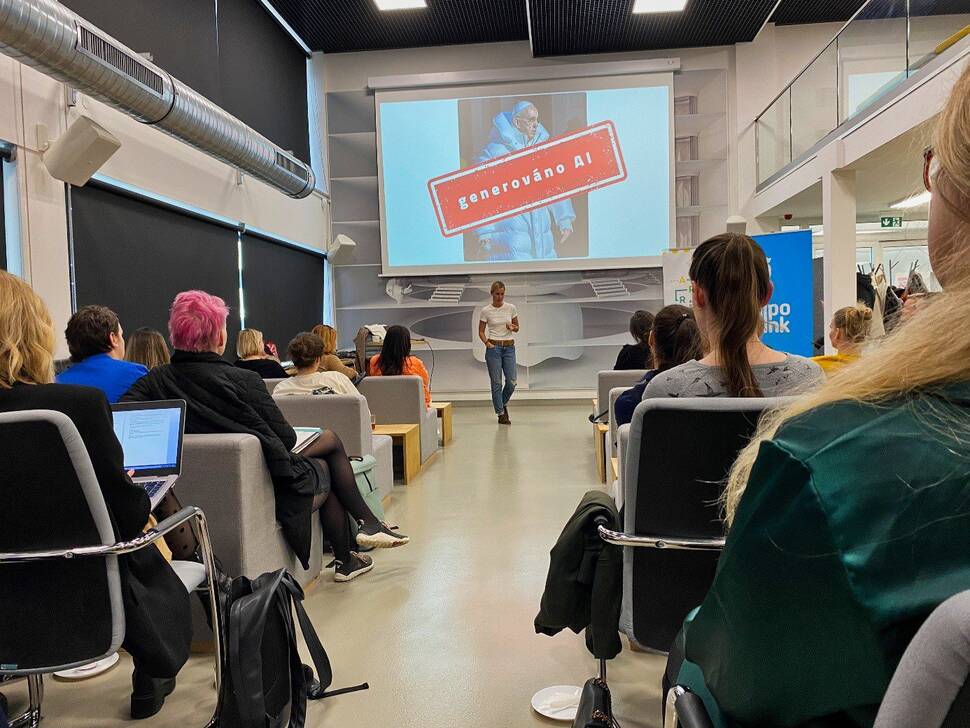
And why do I care? Yes, I’ve used something I didn’t have before. And not wanting to fall into a worse problem, I started working with Photoshop 2024 and its artificial intelligence for generative content. But be careful here too.
What exactly is the copyright for what AI generates? None at all, see e.g. https://www.arws.cz/novinky-v-arrows/vykon-autorskych-a-vlastnickych-prav-ve-vztahu-ke-generativni-umele-inteligenci
Although I own the image generated in this way, I have no copyright to it. It is owned, for example, by OpenAI, the company that created AI. Therefore, in the event that the user uses the content, purely generated by AI without any creative addition of his own, publicly and discovers that someone else has also used such content, he cannot claim any protection, as this content will not be subject to copyright protection. So that’s it, you can try to describe whatever you want in the prompt, and it won’t be yours from the author’s point of view anyway, so anyone can use it if they get to the database of these works.
An extreme example was the situation when the photographer taught the monkey to take pictures. She finally succeeded by taking her own selfie. The photographer then presented the work on Twitter, and since it had a lot of shares, he claimed his copyright for the work. Bridge error. Only a person can create a copyrighted work. The animals will therefore have to establish their own OSA (Authors’ Protection Association).
What does this imply? If I want to create an author’s work with the help of AI, I have to personally put something into it. The paragraphs say:
According to the provisions of § 2, paragraph 1 of Act No. 121/2000 Coll., the Copyright Act (hereinafter referred to as the “Copyright Act”), a work is considered to be a literary work, other artistic work and a scientific work, which is the unique result of the author’s creative activity and is expressed in any objectively perceptible form, including electronic form, (hereinafter referred to as “the work”). Furthermore, based on the provisions of Section 5, Paragraph 1 of the Copyright Act, the author is the natural person who created the work.
But it is sufficient for my purposes. What I do in Firefly is mine, it’s just that anyone else can use it and I don’t get a penny from it.
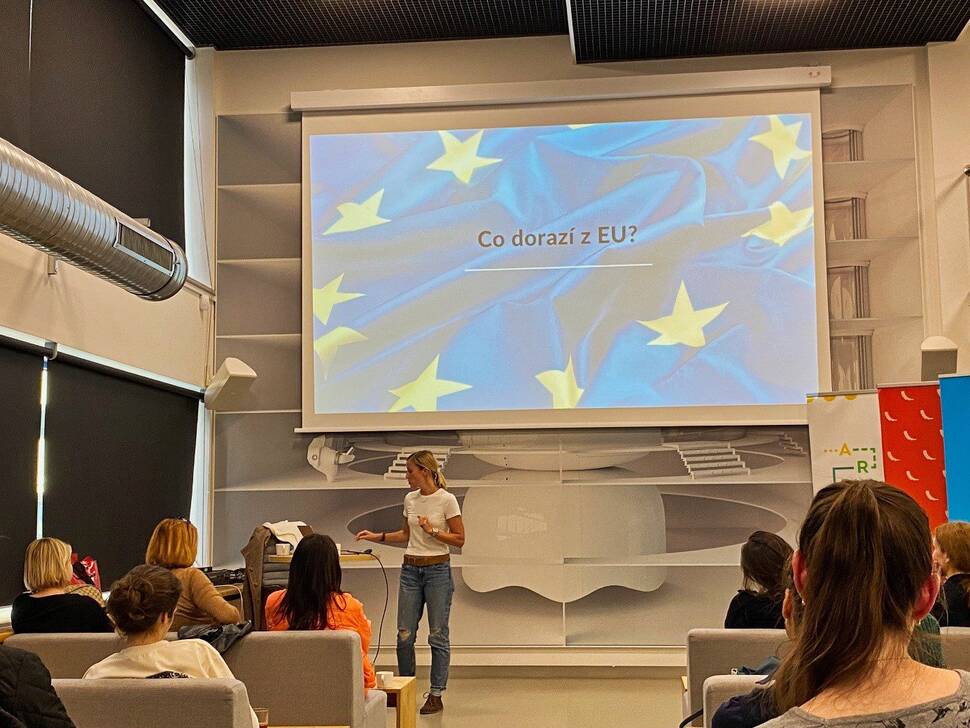
In order to avoid future disputes, this is also what the future regulation of AI required by the EU is based on. Everything AI creates should be identifiable. So it should be traceable to the work that AI was created. If it isn’t already today, it just will be. It seems logical to me, maybe not to some.
But there will be further restrictions that the EU is preparing. They will be determined for AI areas that are prohibited, or regulated, or free. What I said above is true about generative AI. But what does that mean? AI will have to learn again. To teach in the sense that it does not cause more damage than the EU regulation allows.
So what about my creations? So, this image with the lion on the furnace is a good example, because the basis is a licensed image from TAV Vacuum Furnaces, which I used for the generative addition from the AI. So, I should have permission from the author, which in this case I do. The image is labelled so that it is obvious that it was created in AI. I own it because I created it in AI based on my input. But even though I’m human, I don’t have the copyright to it, because it belongs to Adobe.
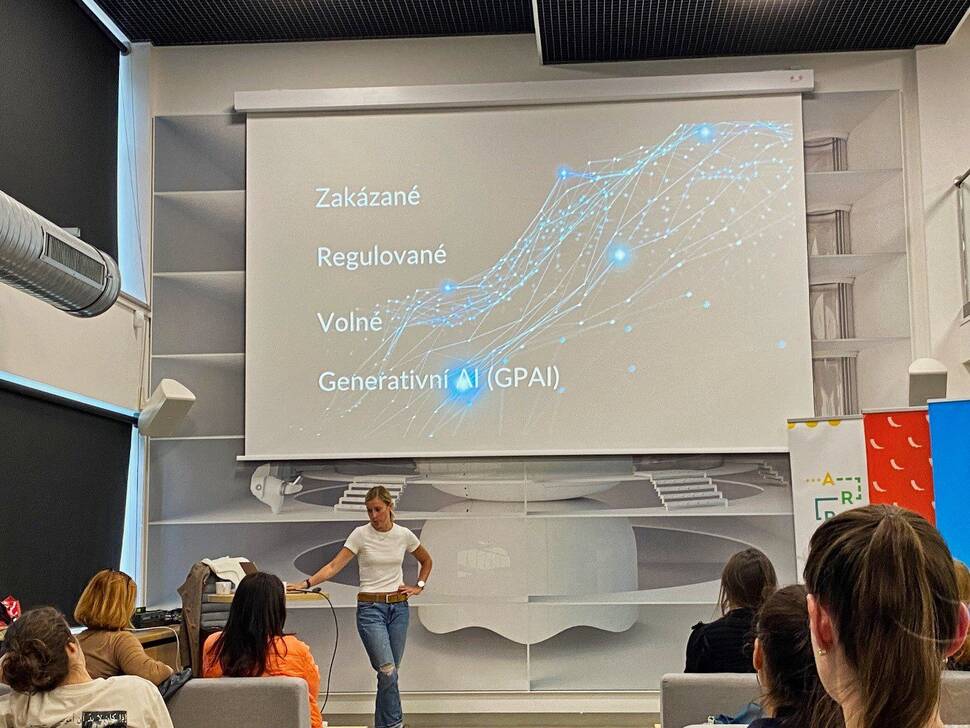
What to say in conclusion? Petra Dolejšová is probably not only a great lawyer, but above all a great lecturer, where she can present a problem in a high-spirited, slightly humorous way in such a way that it is understandable and entertaining for the layman. Thumbs up for me
Jiří Stanislav
April 27, 2024