Energy according to FIT 55

An article regarding the EU agreement on charging CO2 emissions for companies was published today in the Parliamentary Papers. What does it mean? In the near future, consumers and manufactures will have to pay for carbon dioxide (CO2) emissions, and for the energy consumed.
What does it mean? The heat treatment plants that have gas-fired furnaces are a direct polluter. Stills that have electrically heated furnaces but with an Endo atmosphere are also direct polluters.
The heat treater that have electrically heated furnaces are an indirect polluter based on the energy mix for a given state.
Therefore, something must happen in order to prepare the heat treaters for the future. As long as the energy mix in CZ is roughly 390 gCO2/1kWh, and emissions from natural gas only 220 gCO2/1kWh, everyone can sleep peacefully. However, as soon as the energy mix decreases, in 2040 it is expected to reach values of 90 gCO2/1kWh in the CZ, then gas-fired furnaces will be charged with significantly higher emission fees than electrically heated furnaces.
However, the total energy consumption required for heat treatment will also be important. When I graphed the consumption data of older Ipsen TQF type furnaces, and compare these values with vacuum furnaces such as ALD Multichamber, with gas flow quenching, or ICBP ECM Duo Eco, with oil quenching, I am at half the values.
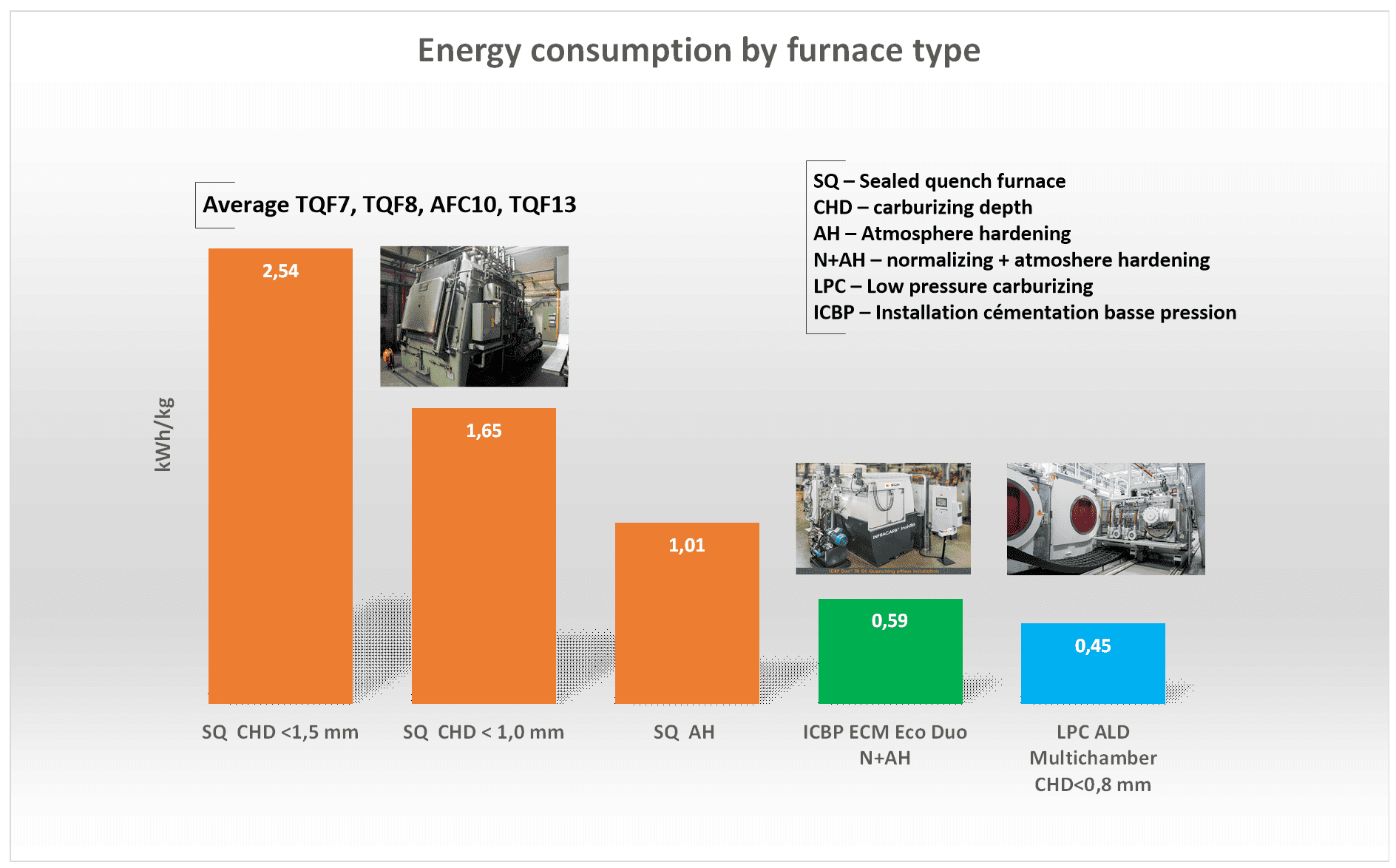
Therefore, if someone is thinking about replacing old furnaces, he will necessarily have to deal with the transition to vacuum furnaces, especially two-chamber or multi-chamber ones. Just as today’s classic multi-purpose furnaces are capable of normalizing, hardening, carburizing or carbonitriding, vacuum furnaces equipped with low-pressure LPC (French ICBP) or carbonitriding are also capable of the same. And since it is mostly a replacement for processes with oil quenching, where cooling rates higher than in the gas stream are needed, vacuum furnaces with oil quenching will find their place in heat treatment processes.
And why not single-chamber? The reason is simple, before opening the furnace, the heating chamber must be cooled together with the batch to the ambient temperature, and vice versa during heating, the heating chamber must also be heated simultaneously with the batch. That’s just extra energy. This is also why single-chamber vacuum furnaces at 15 bar overpressure of gas from SecoWarwick, equipped with LPC, have not proven themselves very well in CZ, as their use is focused only on a narrow range of steels. The future in terms of energy savings is therefore vacuum multi-chamber systems, where the heating chamber is permanently maintained at temperature, while the hardening processes take place in a cold chamber, fully vacuum-separated.
Because I don’t expect that commercial heat treaters will start with a multi-chamber solution, even if it seems the most energetically advantageous, the two-chamber ICBP Eco Duo furnace from ECM represents one of the solutions for the future.
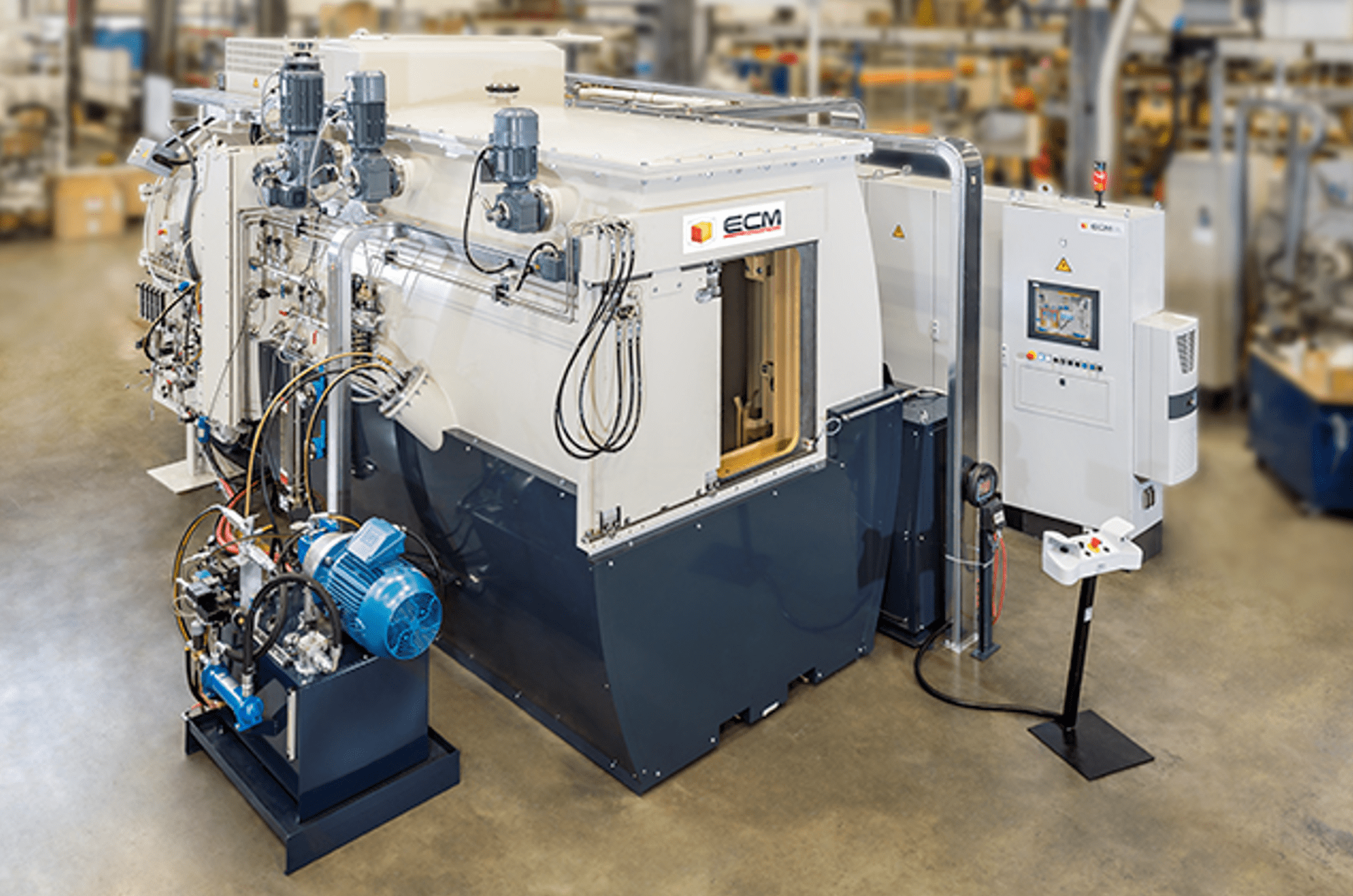
This furnace meets all the requirements to be able to serve under the European FIT 55 program. It is produced in 3 sizes for oil quenching, and there is also a modification for gas quenching. Since it has a sliding entrance door on the side, it can also be integrated into an existing heat treatment line.
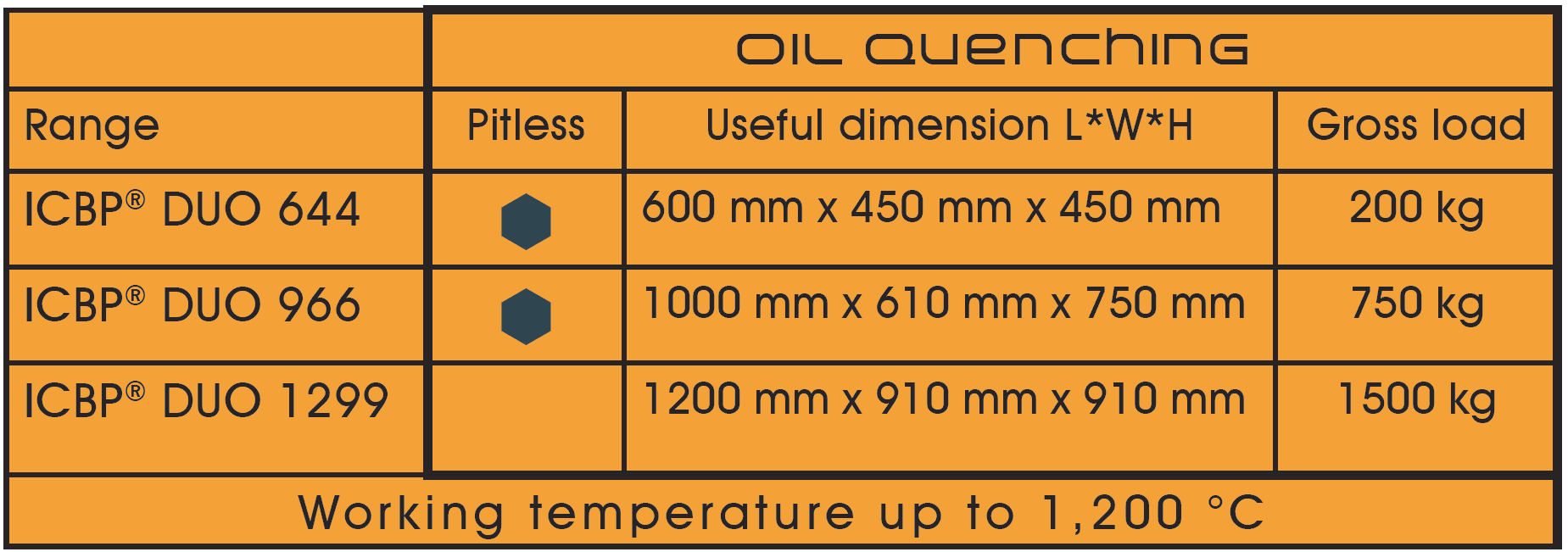
With the largest size ICBP Duo 1299, which roughly corresponds to a TQF11 type furnace, it is even possible to work with two batches in the furnace at the same time, where one is immersed in oil for quenching, and the other can pass into the heating chamber. Such a solution was used by Aichelin furnaces with one-sided loading. This significantly economizes the operation of the furnace compared to ICBP Duo 644 and Duo 966 dimensions, when we have the possibility of only one batch in the furnace, and therefore we have to count on an additional time delay for cooling the batch in oil, usually 30 minutes per process, and 10 minutes for new evacuation of the cold chamber after the new batch is loaded.
From the point of view of energy savings, however, this is a very interesting solution, as well as from the point of view of CO2 emissions. It goes without saying that there is no need for an ENDO generator in this case.
Since such equipment is usually depreciated over twenty years, if we are purchasing it in 2023, we also have to think about the difficulties which this investment will bring us until 2043.
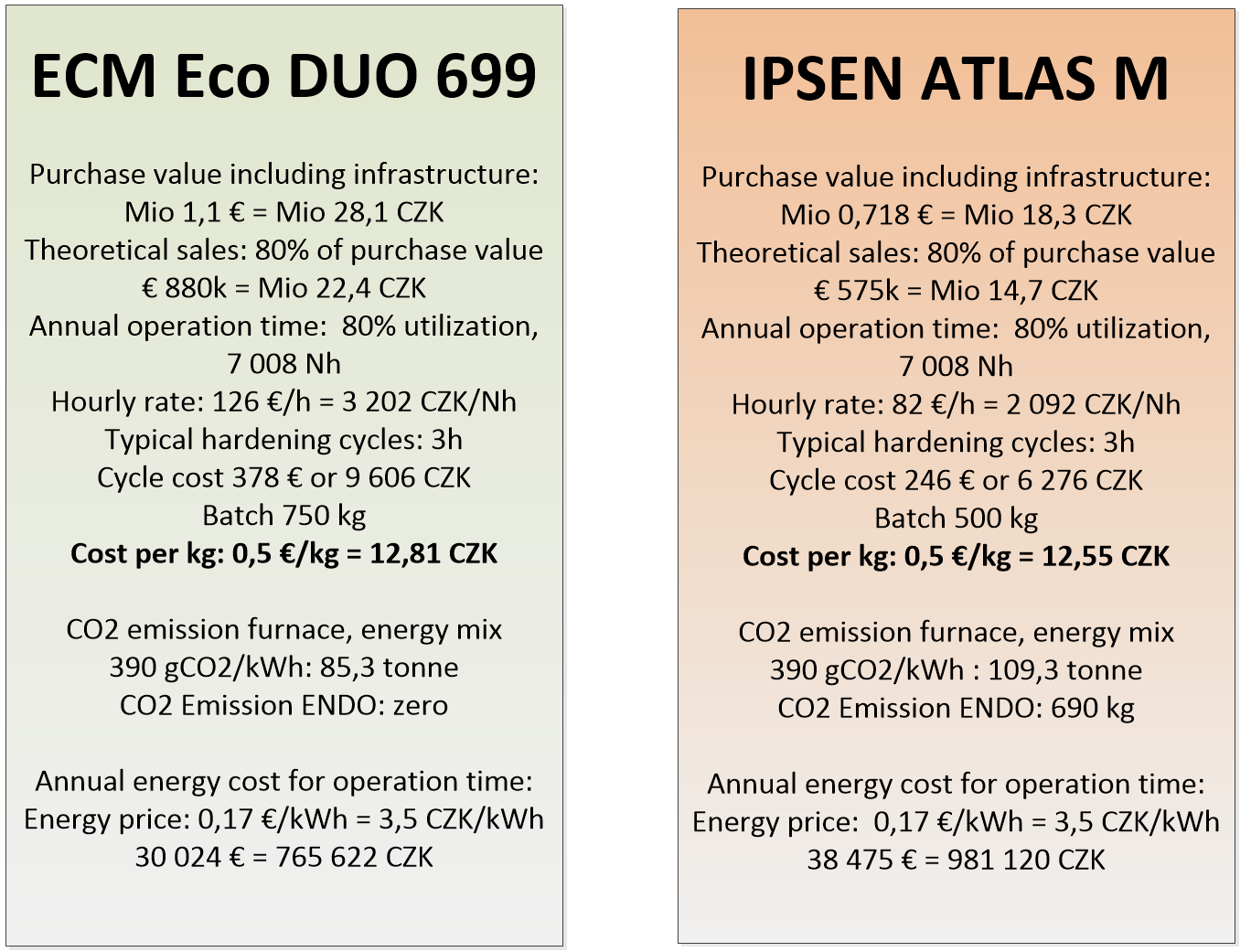
And what are the disadvantages of this solution? The ICBP Duo 966 device will cost about 50% more than the Ipsen Atlas M furnace. But it is only for 500 kg, while the ECM Duo 966 is for 750 kg. At the same time, however, it is necessary to take into account that after the New Year, prices for heat treatment will gradually increase by 100%. This will significantly improve the return on such an investment.
However, the emission fees from the FIT55 program, which the EU is preparing for companies, will also affect the future economy of operation. But they will not distinguish the type of oven, but only CO2 emissions and energy consumption. The final efficiency calculation will therefore be possible only when they become known, however, the advantages of the vacuum solution are obvious from the calculation.
December 19, 2022
Jiří Stanislav