NCK Engineering

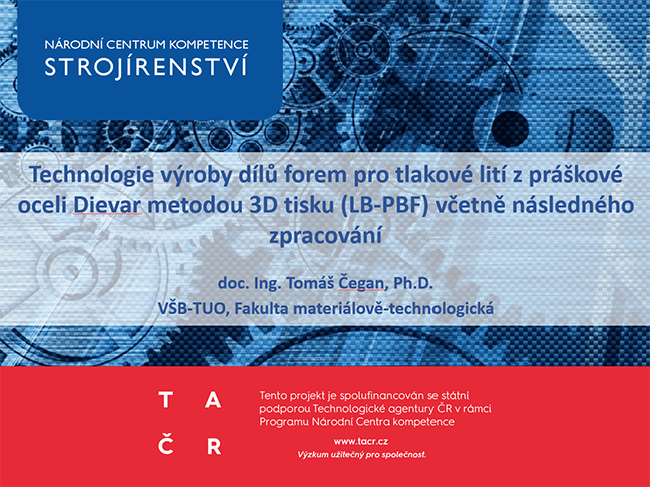
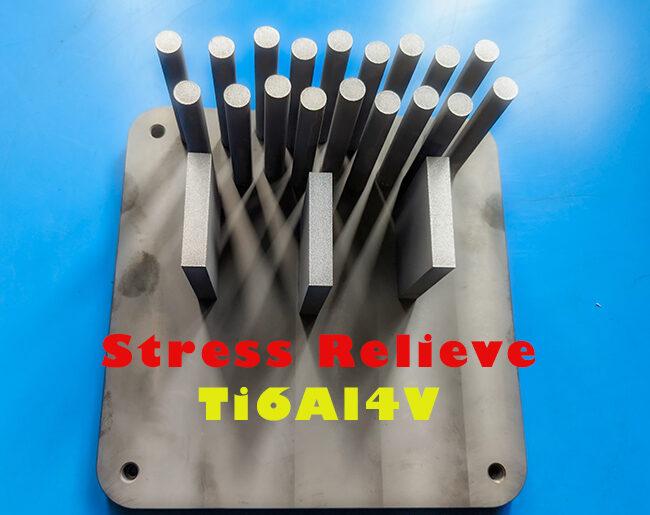
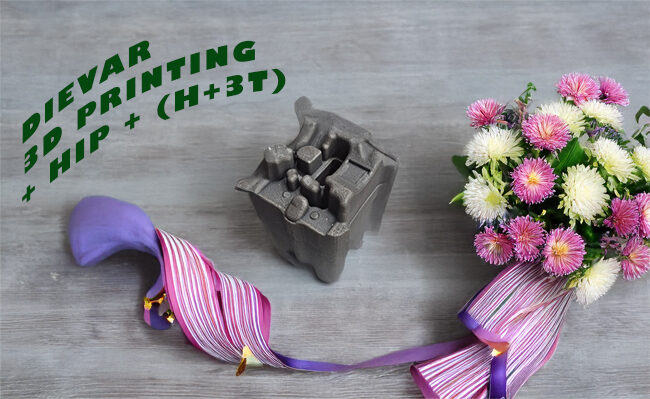
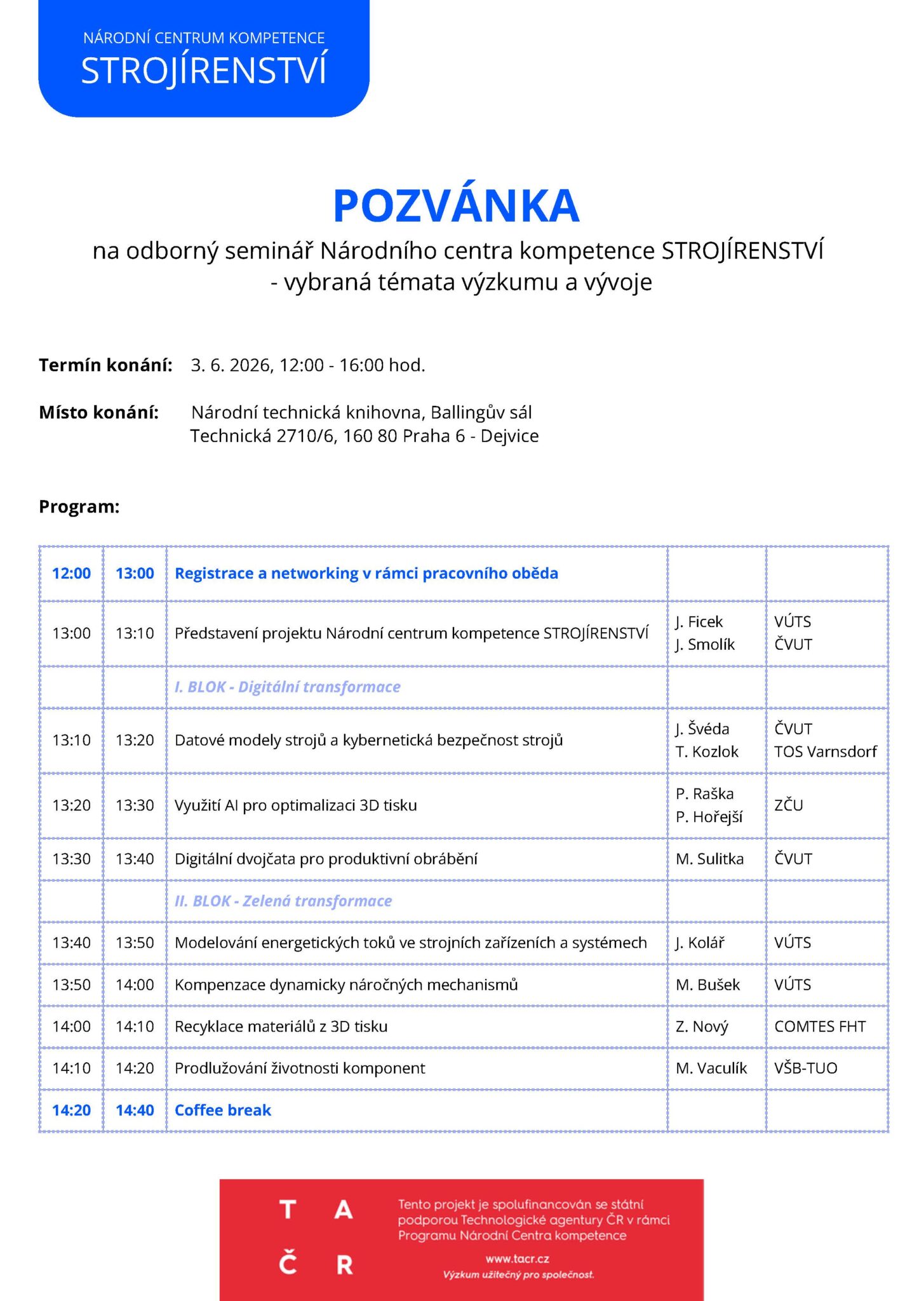
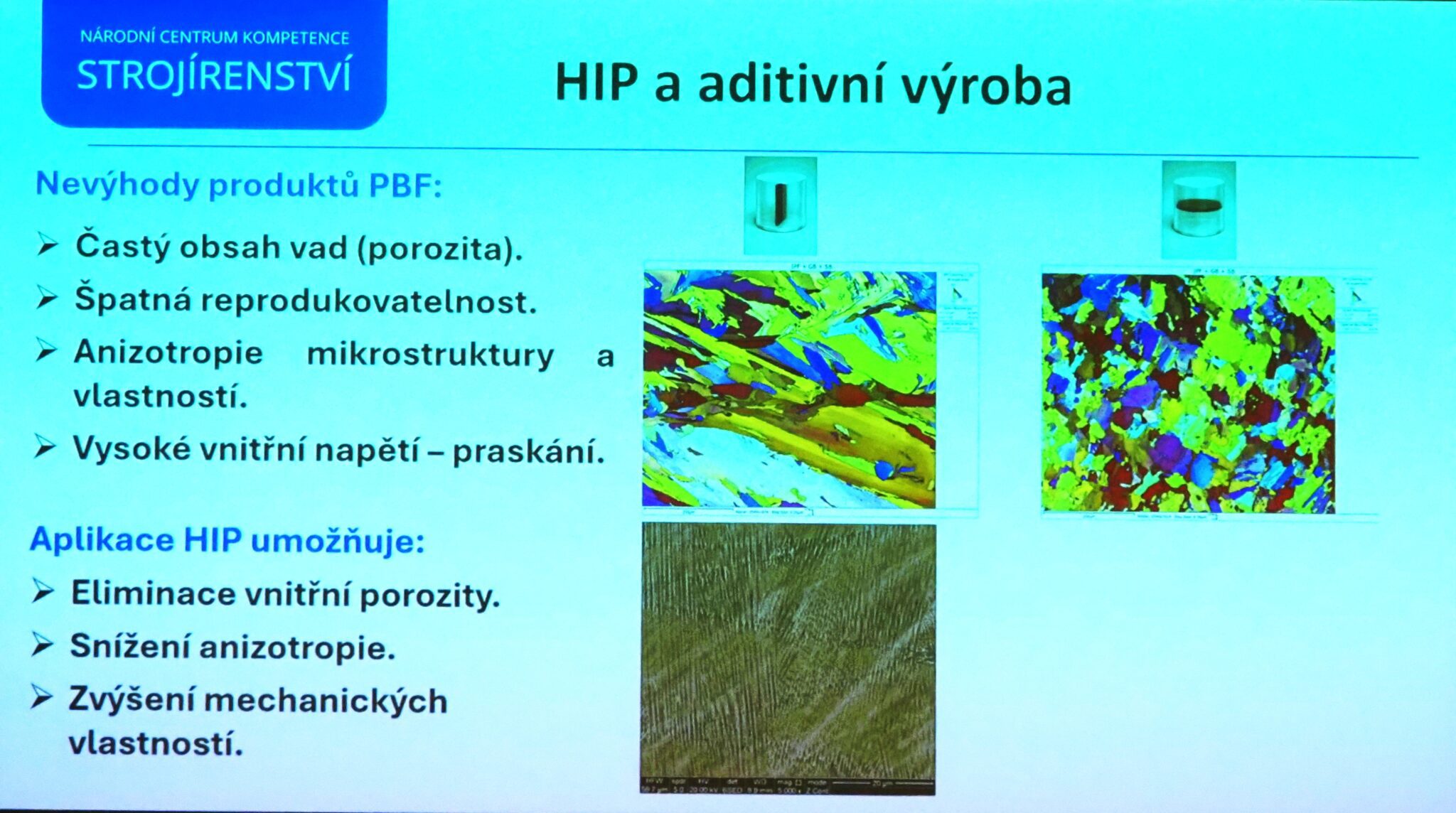
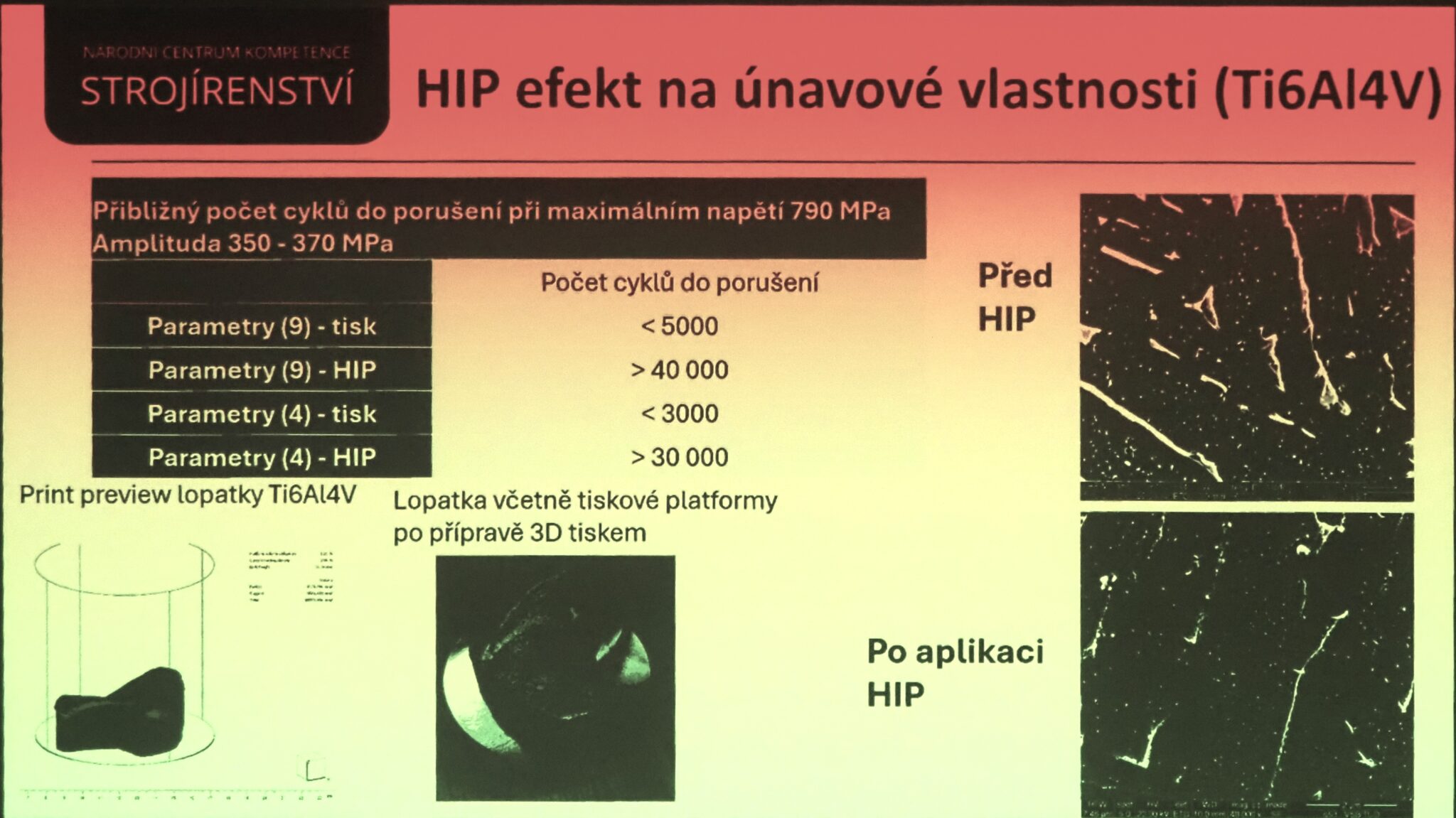
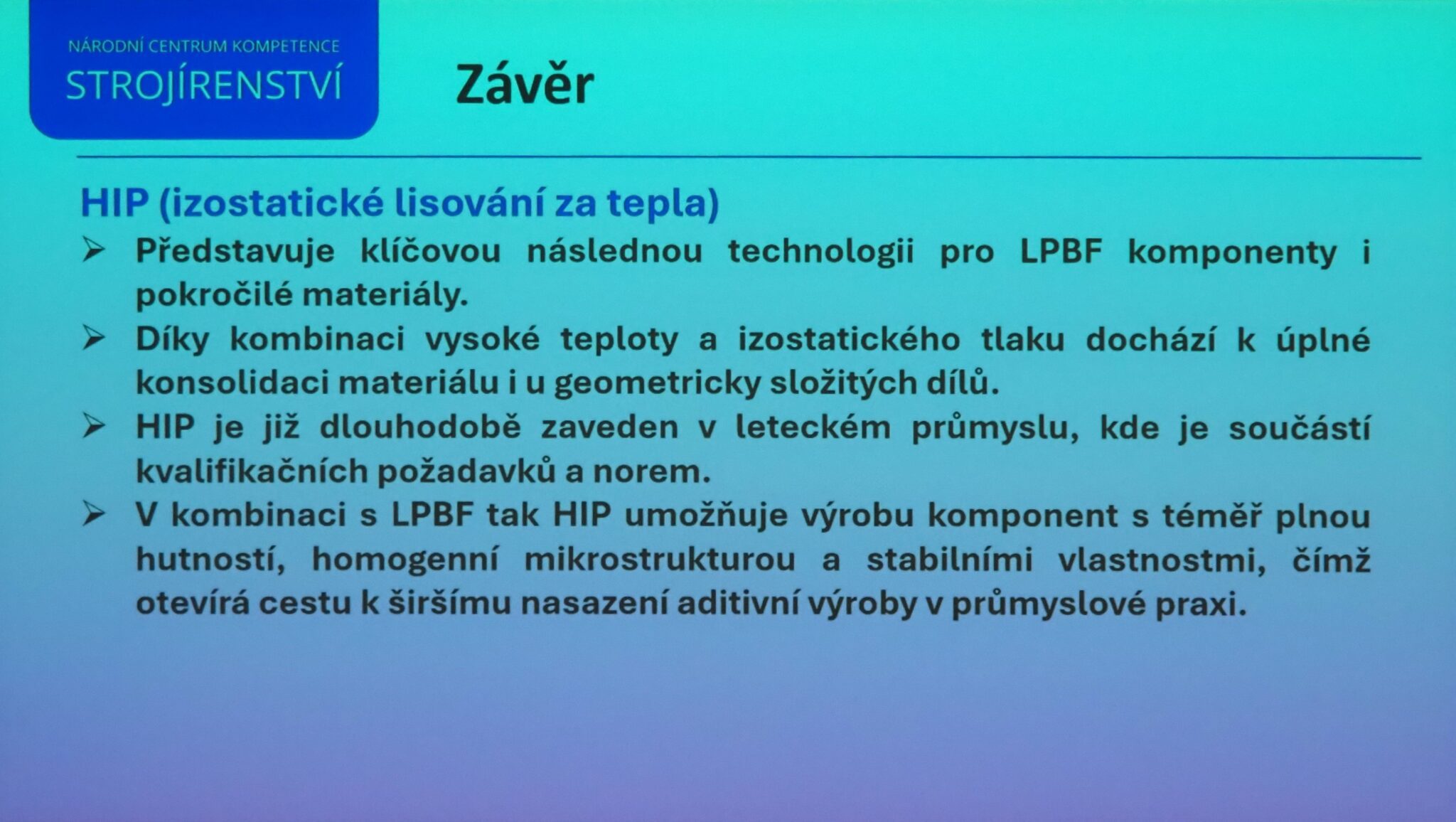
On Wednesday, June 3, a presentation of the results of individual tasks within the NCK was held in Prague. For our task 3D printing and HIP, the results were presented by doc. Ing. Tomáš Čegan, Ph.D. Both for the part related to 3D printing of Ti6Al4V for implantology, and for the part dedicated to printing of Dievar powder steel. In both cases, it was confirmed that without HIP it is very difficult to imagine the direct applicability of 3D printing for critical applications. And what are critical applications?
A critical AM part is a metal component whose failure may cause serious safety, operational or economic consequences, and which therefore requires a qualified manufacturing process, controlled microstructure, full traceability, strict NDT checks and validation according to relevant standards.
1. Functional criticality
The part is part of a system where its failure leads to:
- loss of load-bearing or pressure function,
- failure of a safety or control element,
- threat to life, property or operation.
2. Operational criticality
The part is exposed to extreme conditions such as:
- high temperatures (800–1500 °C),
- high pressures (tens to hundreds of bar),
- cyclic thermal and mechanical stress,
- corrosive, radiation or hydrogen environment,
- magnetic or electric field with high sensitivity to defects.
3. Material criticality
The part requires:
- controlled microstructure and homogeneity,
- low content of inclusions and pores,
- residual stress control,
- precisely defined thermal history,
- validated AM parameters and qualified production process.
4. Inspection and certification criticality
The part is subject to:
- mandatory NDT inspection (RT, CT, UT, PT, MT),
- process qualification according to normative requirements (e.g. AMS, ASTM, ISO, RCC‑M, ASME),
- traceability of material, powder, printing parameters and heat treatment,
- customer or regulator audit regime.
So if I imagine AM technology as a modern way of producing parts at an unreasonable price, but with previously unknown properties, technical, physical, economic, safety, then basically nothing but critical parts is worth printing. And in that case, the use of HIP is a mandatory operation.
=======================================================================================================
Are you solving a similar problem? I will help you with the analysis…
 40+ years of experience in the field
30+ years of experience… HT-PROGRES, Bodycote, Galvamet
cooperation… VŠB, Czechimplant, ECM Technologies, TAV Vacuum Furnaces, GHC Invest
12+ years of expert activity
Want to ask for a solution or want a non-binding consultation? Click on this link, I will usually respond within 24 hours. Contact email
========================================================================================================
Jiří Stanislav, Ing. CSc.
Consultant and forensic expert
========================================================================================================
05/6/2026